Driving in the USVI: Licenses, Roads, Parking and Barges
Traffic in the U.S. Virgin Islands keeps left, even though most cars have the steering wheel on the left. Visitors can drive on a valid U.S. or foreign license for 90 days. Here is what to know about the roads, parking, renting a car on each island and taking one across on the car barge.
VisitingBy USVI Realty Editorial TeamUpdated October 30, 20265 minute read
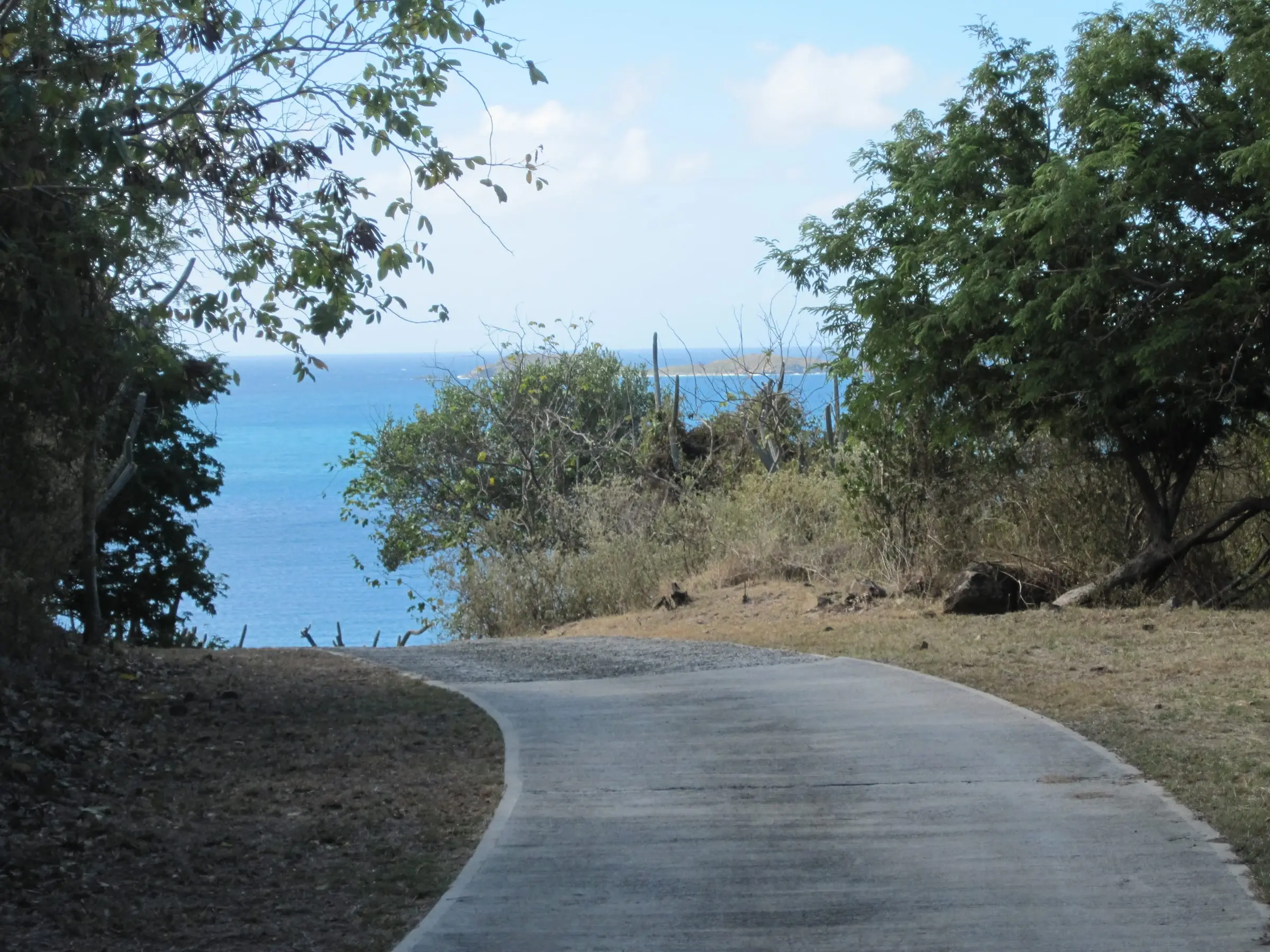
Photo: Thomas Kriese, CC BY 2.0
Driving in the U.S. Virgin Islands takes some adjustment. Traffic keeps to the left, yet most cars have the steering wheel on the left, as on the mainland. Roads climb steeply, curve tightly and sometimes lack shoulders, and parking at popular beaches fills early. Here is what the territory’s agencies and the National Park Service tell drivers, from licenses to the car barge.
Keeping left in a left-hand-drive car
Traffic keeps to the left everywhere in the territory, as both the Department of Tourism and the National Park Service remind visitors. The cars are what make it tricky: the Department of Tourism notes that most have the steering wheel on the left, the same as on the mainland, and asks drivers to take extra care when turning and entering traffic.
If you have never driven on the left, give yourself time on quiet roads before you tackle a busy town or a steep hillside.
Licenses, seat belts and phones
Visitors do not need a local license. The Department of Tourism says a valid U.S. or foreign driver’s license is accepted for 90 days. Seat belts are required by law, and it is illegal to drive while talking on a cell phone.
If you move to the islands, the Bureau of Motor Vehicles (BMV) issues Virgin Islands licenses. It converts licenses from U.S. states and territories and from other countries, and a foreign license also requires a written test. Our moving checklist lists the documents the BMV asks for, and our vehicle registration directory lists its offices.
Renting a car
Rental counters at the airports include Avis, Budget, Hertz and Enterprise at Cyril E. King on St. Thomas, and Avis, Budget, Centerline and Hertz at Henry E. Rohlsen on St. Croix, the Port Authority says. On St. John, agencies rent cars, Jeeps and SUVs near the Cruz Bay ferry dock. Before you sign:
- Insurance. The Department of Tourism says licensed drivers must have valid insurance, and suggests asking your own auto insurer and credit card company whether they cover rentals in the territory. Review the deductibles and damage terms.
- Island limits. Vehicles rented on St. John must stay on St. John. If you rent on St. Thomas and want to take the car across, ask the rental company before you book the barge.
- Pickup. Some St. John agencies meet customers at the ferry dock; others are a short walk or taxi ride away. Ask how it works.
- Timing. The Department of Tourism advises reserving well before your trip, especially in busy seasons.
What the roads are like
The roads demand attention, especially on St. John:
- Steep and narrow. The Department of Tourism describes St. John’s roads as steep, with tight curves and narrow lanes, sometimes without shoulders or guardrails, and asks drivers to slow down and leave room for oncoming vehicles.
- Two main roads. St. John has Centerline Road (Route 10) through the middle of the island and North Shore Road (Route 20) past the north shore beaches, the Park Service says. It calls a vehicle the safest way to get around and does not recommend bicycles on the steep, narrow, winding roads.
- Paved roads only. Off-roading and driving on beaches are prohibited, the Department of Tourism notes.
- Speed. Follow the posted limits. On St. John, the Department of Tourism also asks drivers to slow down on blind curves and be ready to stop suddenly.
Parking
On St. John, parking is the main constraint. The Park Service says:
- parking across the island and the national park is very limited, and lots at the popular north shore beaches can fill by 10 a.m.;
- parking outside designated areas harms vegetation, is unsafe, and leads to fines and towing;
- the designated spaces near the Visitor Center, for the Lind Point and Caneel Hill trails and the playground, need an NPS parking permit;
- there is parking near the vehicle ferry docks, and Cruz Bay has several paid lots.
At the Port Authority’s Creek facility in Cruz Bay, parking is free for two hours, with no overnight or reserved parking. To skip the search for a space, the Park Service suggests a safari taxi to the beaches.
On St. Thomas and St. Croix, the Port Authority runs paid lots at both airports, open from 6 a.m. to 11 p.m., with a maximum daily charge. Downtown, the Blyden Terminal’s metered spaces run from 6 a.m. to 6 p.m. with a two-hour limit and no overnight parking, and the Red Hook ferry terminal has a paid garage. Cars parked illegally on port property can be booted or towed, and cars left in an airport lot for more than 30 days may be impounded. Parking and traffic tickets are paid at the Superior Court’s traffic division.
Taking a car on the barge
Three private companies run car barges between the Noel “Breeze” Boynes Car Ferry Dock in Red Hook and the Theovald Moorehead Dock and Terminal at Enighed Pond in Cruz Bay: Big Red Barge, Global Marine and Love City Car Ferries. The Park Service counts four barges when all are running. The rules that catch people out:
- Tickets are company-specific. A ticket from one company is not valid on another; ask the security guard at the dock which barge you are booked on.
- First come, first loaded. The Port Authority says vehicles board in the order they line up, regardless of reservations, and an online ticket does not guarantee a place on a particular sailing. Arrive 30 minutes to an hour early.
- Dock fees. The Port Authority charges a fee for using the Red Hook car ferry dock, collected at the port.
- Bring your license. Love City Car Ferries says every driver must have a valid driver’s license when boarding, and that passengers may leave their cars once the vehicle is secured.
- Book ahead. Love City takes reservations at least a day in advance; without one, you board first come, first served.
Departure times change with the seasons, so check the Port Authority’s ferry and cargo schedules and the operator’s own site before you go. For passenger ferries, taxis and buses, see Getting Around the USVI, and for the island itself, our St. John guide.

Photo: Jason P. Heym, CC BY-SA 3.0

Photo: Navin75, CC BY-SA 2.0
Questions
Which side of the road do you drive on in the USVI?
The left, everywhere in the territory. Most vehicles still have the steering wheel on the left, as on the mainland, so the Department of Tourism advises taking extra care when turning and entering traffic.
Can I drive in the USVI with my U.S. driver's license?
Yes. The Department of Tourism says a valid U.S. or foreign license is accepted for 90 days. Seat belts are required by law, and it is illegal to drive while talking on a cell phone. People who move to the territory get a Virgin Islands license from the Bureau of Motor Vehicles.
Can I take a rental car from St. Thomas to St. John?
Often, but ask first. Love City Car Ferries says most St. Thomas rental companies allow their vehicles on the car ferry, but you must check with your rental company beforehand. The Department of Tourism notes that vehicles rented on St. John must stay on St. John.
Where can I park at St. John's beaches?
Only in designated areas. The National Park Service says parking across the island and the national park is very limited, lots at the popular north shore beaches can fill by 10 a.m., and parking outside designated areas brings fines and towing. It suggests a safari taxi instead.
Sources
- USVI Travel Tips & FAQs, U.S. Virgin Islands Department of Tourism (accessed October 30, 2026). Driving on the left, the 90-day license rule, seat belts and phones.
- St. John Car & Jeep Rentals, U.S. Virgin Islands Department of Tourism (accessed October 30, 2026). Steering wheel position, road conditions, insurance and the rule that St. John rentals stay on St. John.
- Virgin Islands National Park: Basic Information, National Park Service (accessed October 30, 2026). Driving on the left in the Virgin Islands.
- Virgin Islands National Park: Getting Around, National Park Service (accessed October 30, 2026). St. John's main roads, parking, permits and the number of car barges.
- Drivers License, Virgin Islands Bureau of Motor Vehicles (accessed October 30, 2026)
- Airport Parking and Ground Transportation, Virgin Islands Port Authority (accessed October 30, 2026). Airport parking, booting, towing and impounds, rental car agencies and where to pay tickets.
- Edward Wilmoth Blyden IV Marine Terminal, Virgin Islands Port Authority (accessed October 30, 2026)
- Urman Victor Fredericks Marine Terminal, Virgin Islands Port Authority (accessed October 30, 2026)
- Victor William Sewer Marine Facility (The Creek), Virgin Islands Port Authority (accessed October 30, 2026)
- Ferry and Cargo Schedules, Virgin Islands Port Authority (accessed October 30, 2026). Car barge companies, docks and boarding rules.
- Frequently Asked Questions, Love City Car Ferries (accessed October 30, 2026)
- Big Red Barge, Big Red Barge (accessed October 30, 2026)