




Short-Term Rentals in the USVI
Investing, updated October 29, 2026
An educational look at the costs, rules and risks of owning rental or investment property in the U.S. Virgin Islands, with no income figures and no promised returns.
Last updated October 28, 2026
USVI Realty does not publish income, occupancy or appreciation figures as facts, and we do not promise returns. Where we cite a number, it is labeled as a dated estimate with its source. We are not a brokerage, and nothing here is individual investment, tax or legal advice.
This page covers the costs, rules and risks to understand before you buy a rental or investment property here.
Before you look at any rent figure, add up what the property costs to hold:
Estimate as of October 2026. DPNR’s permit FAQ puts permit fees at 0.5 percent of total construction cost for residential work and 1 percent for commercial work, including multifamily buildings.
Price insurance before you commit, because it can decide whether a purchase makes sense.
In a July 2023 bulletin, the Lieutenant Governor, who also serves as Commissioner of Insurance, described a hard market in which premiums rise and coverage shrinks. Some insurers had left the territory, the remaining insurers were limited in how much they could write, and owners of wooden or mixed-frame buildings could face non-renewal or need surplus lines coverage. The bulletin urged policyholders to renew on time.
The Division’s consumer guide on underinsurance explains that a claim can be reduced if coverage falls below 80 percent of replacement cost, and it advises owners not to exclude windstorm coverage. Ask your insurance producer how a policy treats rental use, lost rental income and periods when the property is empty.
Most homeowners insurance does not cover flood damage, so flood coverage is a separate policy.
Estimate as of October 2026. FEMA lists National Flood Insurance Program limits of up to $250,000 for the building and $100,000 for contents on single-to-four family homes. New policies typically take 30 days to go into effect.
The Atlantic hurricane season runs from June 1 to November 30, and 2017 showed what is at stake. On September 6, 2017, Hurricane Irma’s southern eyewall passed directly over the U.S. Virgin Islands. On September 20, Hurricane Maria passed just south of St. Croix after Hurricane Hunters measured it as a Category 5 storm. The National Weather Service reported wind damage across the entire island, with many wooden houses completely destroyed.
Questions to ask about any property:
The Virgin Islands Territorial Emergency Management Agency (VITEMA) recommends retrofitting to secure and reinforce roofs, windows and doors, including garage doors. Renovations need permits from DPNR’s Division of Permits, whose adopted codes include the 2024 International Residential Code and International Building Code. Work on a permit must start within 180 days of issuance. Proposed development in the coastal zone, or Tier 1, also needs review by DPNR’s Coastal Zone Management program.
Tenants and guests depend on systems you maintain. For cisterns, a guide from DPNR and the U.S. Environmental Protection Agency recommends a structural inspection every three months; draining, cleaning and disinfecting at least every three to five years and after extreme storms; and routine water testing at the owner’s cost.
The Virgin Islands Water and Power Authority (WAPA) supplies electricity and posts outage advisories and a rotational outage schedule on its website. If you add a generator, VITEMA advises keeping it at least 20 feet from windows and doors and never running it indoors.
If the property is in a condominium or community, its governing documents may limit what you can do. Before you buy, read the declaration, bylaws and house rules, and ask the association:
Our communities section and our guide to buying a condo in St. Thomas go further.
Which taxes apply depends on how you rent and where you are a resident. Ask the Virgin Islands Bureau of Internal Revenue (BIR) or a tax adviser how each one applies to you.
The BIR says the hotel room tax applies when an apartment, condominium or residence is rented for less than 90 days in total. The lessor collects it from guests and files Form 722 V.I. with the BIR monthly, by the 30th day of the following month.
Estimate as of October 2026. The BIR’s Tax Structure Booklet describes the hotel room tax as 12.5 percent of the gross room rate. Rates can change, so confirm the current rate with the BIR.
The BIR describes the gross receipts tax as a tax on total receipts from doing business in the territory, without any deduction for expenses. Ask the BIR or your tax adviser whether your rental activity is subject to it and how to file.
Estimate as of October 2026. The same booklet lists a 5 percent rate. Businesses with annual gross receipts under $225,000 pay it only on receipts above $9,000 a month.
The USVI uses a mirror version of the U.S. Internal Revenue Code. IRS Publication 570 treats rent from property in a U.S. territory as income from that territory. Bona fide residents of the USVI generally pay income tax only to the USVI. U.S. citizens and resident aliens who are not bona fide residents but have USVI income file their return with the IRS, send an identical copy to the USVI and use Form 8689 to work out the USVI’s share. Foreign owners should also ask about withholding rules on a future sale.
Ask the Department of Licensing and Consumer Affairs (DLCA) whether renting your property requires a business license. For licenses it issues, DLCA’s checklist includes a trade name or corporate registration, a BIR tax clearance letter, a police records check, zoning approval from DPNR and, for some businesses, fire or health inspections.
If you hire someone to manage the property, ask whether they hold a DLCA real estate license and how they handle rent and deposits. The Real Estate Commission’s rules say a broker managing property should not take any commission, rebate or profit on expenditures made for the owner without the owner’s full knowledge and consent. Our directory lists property managers.
Any property can lose value, sit empty or cost more than planned. We do not publish income, occupancy or appreciation figures as facts, and we do not promise returns.
Before you buy, get your own numbers from the people accountable for them: insurance quotes from a licensed producer, a tax adviser’s view of your filing position and an attorney’s review of the contract and association documents.
To keep learning, subscribe to The USVI Real Estate Insider, our monthly educational newsletter. To compare islands first, start with our island guides and the buying hub.
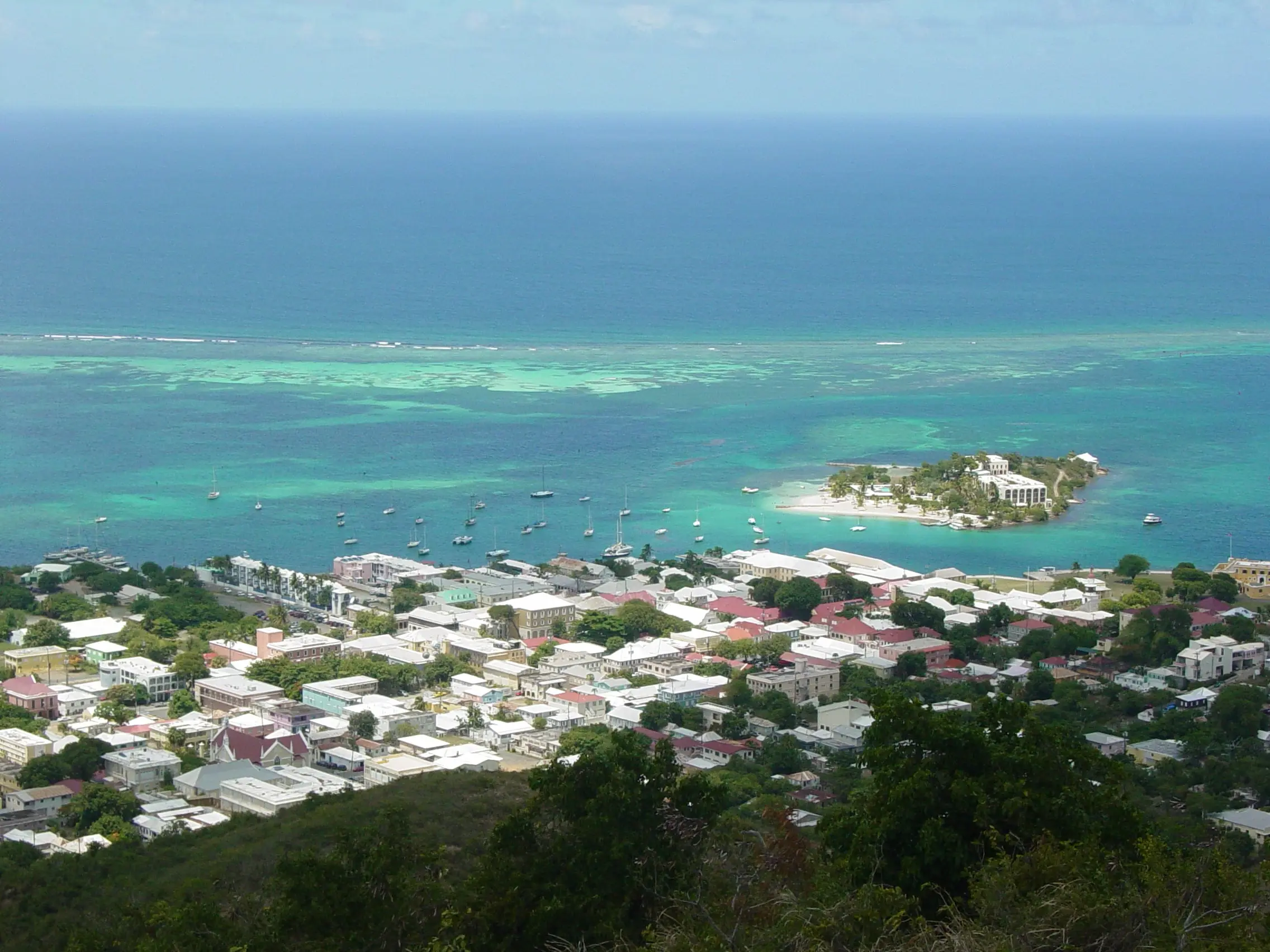
Photo: Jason P. Heym, CC BY-SA 3.0

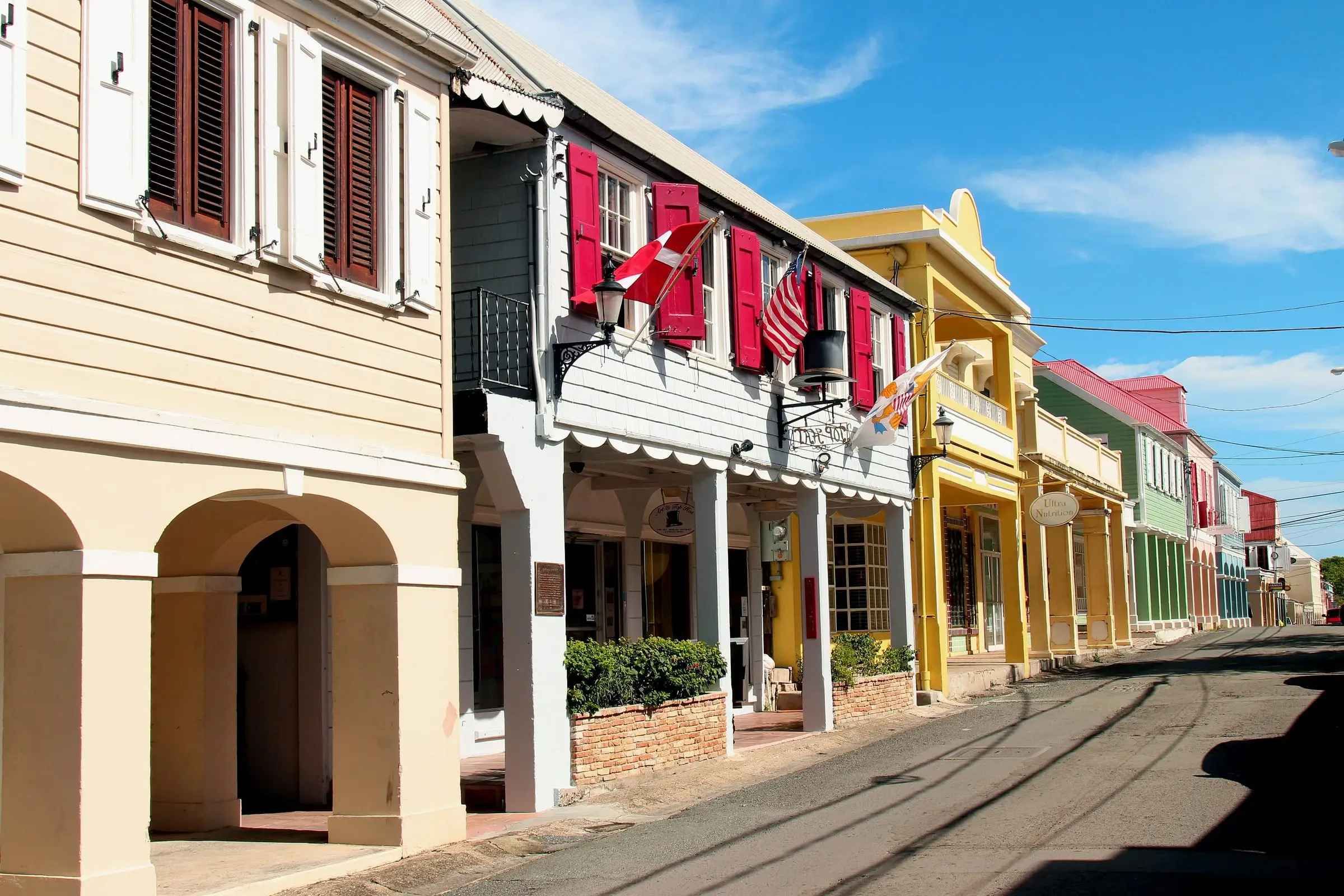
Photo: Navin75, CC BY-SA 2.0
No. We do not publish income, occupancy or appreciation figures as facts, and we do not promise returns. Any figure we cite is labeled as a dated estimate with its source. For projections about a specific property, talk to qualified, independent advisers.
Yes. The Bureau of Internal Revenue says the hotel room tax applies when an apartment, condominium or residence is rented for less than 90 days in total. The lessor collects it from guests and pays it to the BIR monthly on Form 722 V.I.
Not if you do not live there. The Office of the Lieutenant Governor says the homestead tax credit applies only when you are the legal owner and the property is your primary residence, and you cannot claim it on more than one residence.
It can be. A July 2023 bulletin from the Commissioner of Insurance said some insurers had left the territory and that owners of wooden or mixed-frame buildings may face non-renewal. Talk to a licensed insurance producer about coverage before you commit to a property.
Investing, updated October 29, 2026

Buying, updated October 29, 2026
Buying, updated October 29, 2026
Research on owning rental property in the islands, and The USVI Real Estate Insider.