Short-Term Rentals in the USVI
Renting a USVI home for stays of less than 90 days brings the territory's hotel room tax, filed monthly with the BIR on Form 722 V.I. Owners should also ask DLCA about licensing, read their association's rules and confirm insurance before taking guests.
InvestingBy USVI Realty Editorial TeamUpdated October 29, 20267 minute read

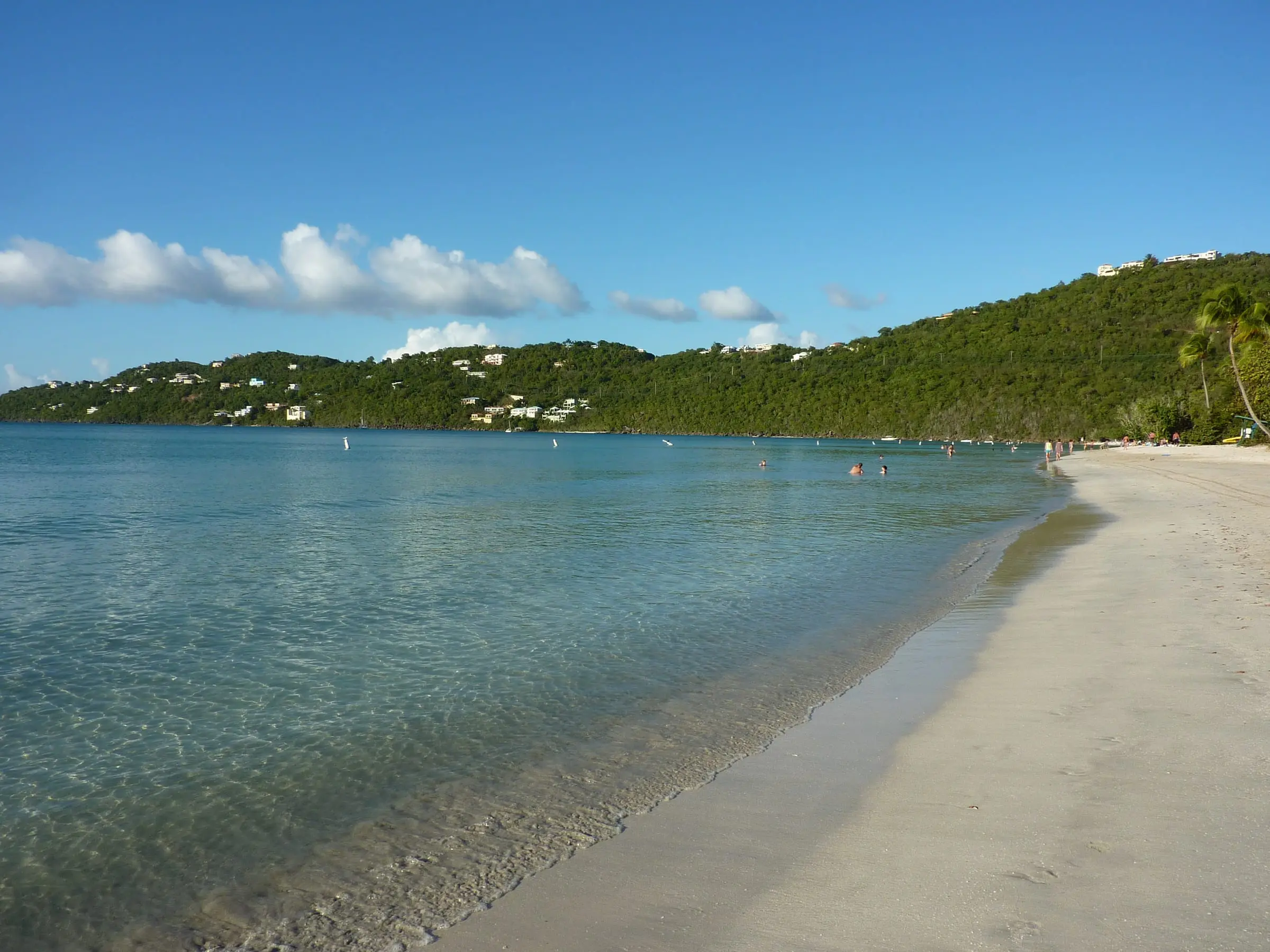
Photo: Sunil Pereira, CC BY-SA 3.0
Renting a home or condo to visitors for a few nights or weeks brings its own tax filing, licensing questions and association rules. This guide explains each of them, along with insurance and what it takes to run a rental from off island.
It is an educational guide. USVI Realty does not list or manage rentals, publish income or occupancy figures, or promise returns, and nothing here is tax, legal or investment advice. Homes kept for occasional use are most common on St. John: in the 2020 Census, 25.1 percent of its housing units were vacant and held for seasonal, recreational or occasional use, against 5.8 percent on St. Thomas and 5.4 percent on St. Croix.
Do I pay hotel room tax on a vacation rental?
Your guests pay it, and you collect it. The Bureau of Internal Revenue (BIR) applies its hotel room tax to anyone who stays in a hotel or guest house, and to anyone who rents or leases an apartment, condominium, timeshare, villa or residence for a day, week or month, when the total rental or lease period is less than 90 days. The hotel or other lessor collects the tax and pays it to the BIR.
Here is how the BIR’s Tax Structure Booklet and the instructions for Form 722 V.I., the Hotel Room Tax Return, describe it:
- The tax is charged on the gross room rate: the total charged for the room or rooms plus added charges such as an energy surcharge or a maintenance fee, but not food, beverages or gratuities.
- It is shown as a separate item on the guest’s bill.
- The return and payment are due within 30 days after the end of each month.
- The return asks you to mark the rental type: hotel, villa, condo, timeshare or other.
- If you owe no tax for a month, the instructions say to enter “NONE” as the total due and file the return anyway.
Estimate as of October 2026. The BIR’s Tax Structure Booklet, in a file dated January 31, 2021, and Form 722 V.I. (revised May 22, 2017) both set the hotel room tax at 12.5 percent of the gross room rate. The form adds a penalty of 15 percent of the tax when payment is late in the first month and 25 percent after that, plus interest of 1 percent a month. Confirm the current rate with the BIR before you set your prices.
If a booking website or a manager collects payment from your guests, ask the BIR who is responsible for collecting and filing the tax, and keep the arrangement in writing. Rentals of 90 days or more fall outside the tax as the BIR describes it.
What other taxes should owners ask about?
Gross receipts tax
The BIR describes its gross receipts tax as a tax on total receipts from doing business in the territory, without any deduction for expenses. Its monthly return, Form 720 V.I., lists activity codes for lessors of residential buildings and for hotels and other lodging places. Ask the BIR whether your rental income is subject to the tax and which return you should file.
Estimate as of October 2026. Form 720 V.I. (revised August 2026) and Form 720-B (revised October 2026) set the gross receipts tax at 5 percent. Businesses with gross receipts of more than $225,000 a year file monthly on Form 720 V.I. Smaller businesses file once a year on Form 720-B and pay 5 percent only on receipts above $9,000 a month.
Income and property tax
How rental income is taxed depends on where you are a resident and how you own the property. Ask the BIR or a tax adviser, and see our investing hub for the main points to raise. For the annual property tax bill, see our guide to property taxes in the USVI.
Do I need a license to rent short term?
Ask the Department of Licensing and Consumer Affairs (DLCA) before you take a booking. DLCA’s published steps for obtaining a business license do not say whether renting a home to short-stay guests requires one, so the answer has to come from DLCA itself.
If DLCA says you need a license, its checklist shows what must be on file before one is issued:
- a certificate of trade name, or a partnership or corporation registration, from the Office of the Lieutenant Governor
- a tax clearance letter from the BIR
- a police records check, which DLCA runs electronically for new applications
- zoning approval from the Department of Planning and Natural Resources (DPNR), which DLCA also reviews electronically
- a fire or health inspection, for the kinds of business that need one
Zoning is worth a question of its own, so ask DPNR whether the property’s zoning allows the use you have in mind. Rules can change, so ask again before you renew, and keep copies of what each office tells you.
Can a condo association ban short-term rentals?
It depends on the association’s governing documents, such as its declaration, bylaws and house rules, and on how those documents can be changed. Before you buy, and again before you list, read them and ask the board in writing:
- Are stays of less than 90 days allowed, and is there a minimum stay?
- Must owners register rentals or guests with the association, and are there fees?
- What insurance must owners who rent carry?
- What rules cover parking, pools, noise and the number of guests?
- Is the board considering any change to the rental rules?
Have a real estate attorney review anything unclear. Our community pages note what each association’s published rules say about short-term rentals, or that we have not confirmed it. Our guide to buying a condo in St. Thomas lists the documents to request.
How should I insure a short-term rental?
The Lieutenant Governor’s office, which regulates insurance, advises owners to review their policies every year with their agent. Its 2019 hurricane brochure adds that you should tell the agent exactly what property you intend to cover and describe it fully. For a short-term rental, that description includes the rental use. Ask:
- Does the policy cover a home rented to short-stay guests?
- What liability coverage applies if a guest is hurt?
- Is lost rental income covered after a storm, and for how long?
- Are the furniture and equipment you supply covered as contents?
- Are there conditions for periods when the home is empty?
Keep the basics in place too. The same office advises never excluding windstorm coverage, insuring at least 80 percent of replacement cost and buying flood insurance separately, because a homeowners policy does not cover flooding. You cannot buy a homeowners policy once a storm has been declared. In a condominium, the master policy belongs to the association and is subject to its board, and owners can buy a separate contents policy.
Coverage can be hard to find. A July 2023 bulletin from the Commissioner of Insurance said some insurers had left the territory and that owners of wooden or mixed-frame buildings may face non-renewal. Our guide to hurricane and flood insurance covers windstorm cover, flood cover and the questions to ask an agent.
How do you manage a rental from off island?
If you live elsewhere, someone on island has to welcome guests, fix problems and prepare the home for storms. Vacation rental managers handle bookings and guests for owners, and our directory lists property managers you can contact directly. Before you hire one, ask:
- Which licenses do you hold? Check them with DLCA’s online license search.
- How do you collect the hotel room tax, and who files Form 722 V.I.?
- What does your fee cover, and what costs extra?
- How often do you inspect the home, and how do you report problems?
- What is your storm plan, from shutters to guest cancellations?
- How do you handle the cistern, water deliveries and water testing?
Read the management agreement before you sign it, and keep your own records of every booking and every filing.
Plan for storm season
NOAA’s National Hurricane Center says the Atlantic hurricane season runs from June 1 to November 30, with its peak on September 10. Agree in writing who puts up the shutters, cuts back tree limbs and clears debris, the steps the Lieutenant Governor’s office lists for protecting property, and who checks the home after a storm. Sign up for Alert VI, VITEMA’s emergency notification system, and for WAPA Alerts, the utility’s messaging system, so you hear what your guests hear.
After a storm, the same office advises photographing and listing the damage, filing claims promptly and making minor temporary repairs to prevent further damage, which it says a homeowners policy allows. It also warns against disaster fraud: ask anyone offering repairs for a copy of their business license and identification, and never pay in full before the work is done.
Keep the water safe
In a home with a cistern, guests bathe, cook and brush their teeth with its water. DPNR’s January 2024 cistern guide calls for inspecting the system every three months, checking weekly for blockages, and draining, cleaning and disinfecting the cistern whenever sludge builds up. It adds that the cistern may need cleaning after extreme rain or flooding, and that routine water testing is the cistern owner’s cost.
Before you count on rental income
USVI Realty does not list vacation rentals, publish income or occupancy figures, or promise returns. Any property can sit empty, cost more than planned or lose value. Get your numbers from the people accountable for them: the BIR for taxes, a tax adviser for your filing position, a licensed insurance producer for quotes and an attorney for the association documents.
To keep learning, read our investing hub, see what the data show about USVI home prices and compare the islands in which USVI island is right for you.

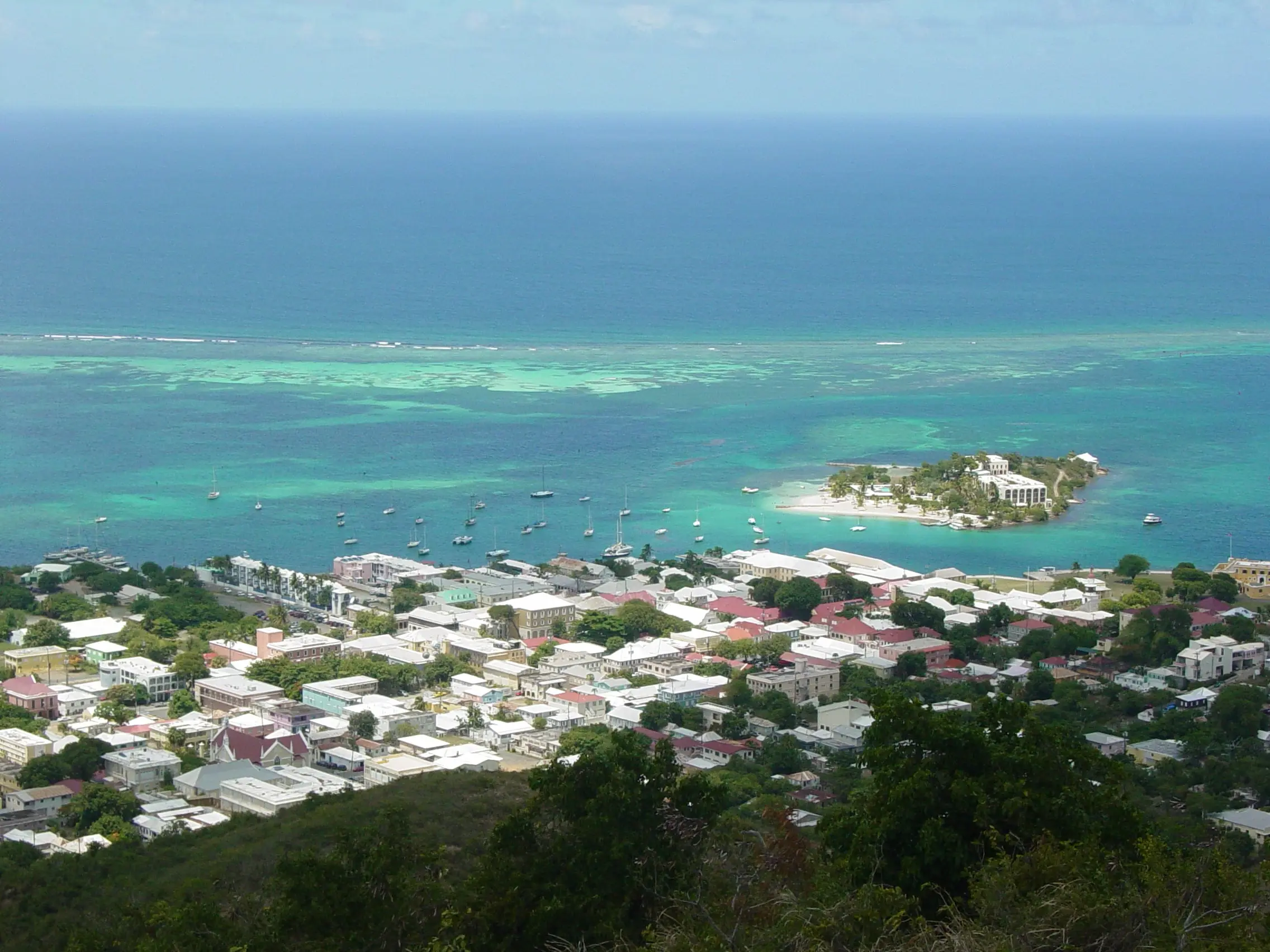
Photo: Jason P. Heym, CC BY-SA 3.0

Photo: Navin75, CC BY-SA 2.0
Questions
Do I pay hotel room tax on a vacation rental?
If the stay is less than 90 days, yes. The BIR applies its hotel room tax to apartments, condominiums, villas, timeshares and residences rented for less than 90 days in total. Guests pay it, and the hotel or other lessor collects it and files Form 722 V.I. with the BIR by the 30th day of the following month. Confirm the current rate with the BIR.
Do I need a license for a short-term rental?
Ask the Department of Licensing and Consumer Affairs (DLCA), because its published licensing steps do not say whether a short-term rental needs a business license. If one is required, DLCA's checklist includes a trade name or business registration, a BIR tax clearance letter, a police records check and zoning approval from DPNR.
Can my condo association ban short-term rentals?
That depends on the association's governing documents, such as its declaration, bylaws and house rules, and on how they can be changed. Read them before you buy, ask the board in writing whether stays of less than 90 days are allowed, and have a real estate attorney review anything unclear.
Who manages vacation rentals?
Vacation rental managers handle bookings and guests for owners, and our directory lists property managers you can contact directly. Ask which licenses they hold, how they collect and file the hotel room tax, what their fee covers and what their storm plan is.
Sources
- Tax Structure Booklet of the U.S. Virgin Islands, Virgin Islands Bureau of Internal Revenue (accessed October 29, 2026). File name dated 2021-01-31; see the Hotel Room Tax and Gross Receipts Tax sections. The copy linked in the BIR site footer (tax_structure.pdf, created March 2022) has the same text for both taxes.
- Forms, Virgin Islands Bureau of Internal Revenue (accessed October 29, 2026). Lists Form 722 V.I., Hotel Room Tax Return (12.5%), published May 22, 2017
- Form 722 V.I.: Hotel Room Tax Return (Rev. 05/22/2017), Virgin Islands Bureau of Internal Revenue (accessed October 29, 2026)
- Form 720 V.I.: Gross Receipts Monthly Tax Return (Rev. 08/2026), Virgin Islands Bureau of Internal Revenue (accessed October 29, 2026)
- Form 720-B: Gross Receipts Annual Tax Return (Rev. 10/2026), Virgin Islands Bureau of Internal Revenue (accessed October 29, 2026)
- Steps for Obtaining a Business License, Department of Licensing and Consumer Affairs (accessed October 29, 2026). Also links to DLCA's online license search
- 2020 Census Demographic Profile, St. John Island: Selected Housing Characteristics (DP4), U.S. Census Bureau (accessed October 29, 2026)
- 2020 Census Demographic Profile, St. Thomas Island: Selected Housing Characteristics (DP4), U.S. Census Bureau (accessed October 29, 2026)
- 2020 Census Demographic Profile, St. Croix Island: Selected Housing Characteristics (DP4), U.S. Census Bureau (accessed October 29, 2026)
- Lieutenant Governor Roach Encourages Residents to Be Ready/Be Insured for the 2026 Hurricane Season, Office of the Lieutenant Governor (accessed October 29, 2026). Undated release for the 2026 hurricane season
- Hurricane Awareness Brochure, Office of the Lieutenant Governor, Division of Banking, Insurance and Financial Regulation (accessed October 29, 2026). 2019 brochure
- Bulletin 2023-02: Availability of Windstorm Insurance Coverage in the Territory, Office of the Lieutenant Governor, Division of Banking, Insurance and Financial Regulation (accessed October 29, 2026). Dated July 7, 2023
- Tropical Cyclone Climatology, NOAA National Hurricane Center (accessed October 29, 2026)
- Hurricanes, Virgin Islands Territorial Emergency Management Agency (accessed October 29, 2026)
- Virgin Islands Water and Power Authority (outage map and WAPA Alerts), Virgin Islands Water and Power Authority (accessed October 29, 2026)
- Your Health and Cisterns: A USVI Comprehensive Guide, Virgin Islands Department of Planning and Natural Resources (accessed October 29, 2026). Dated January 2024