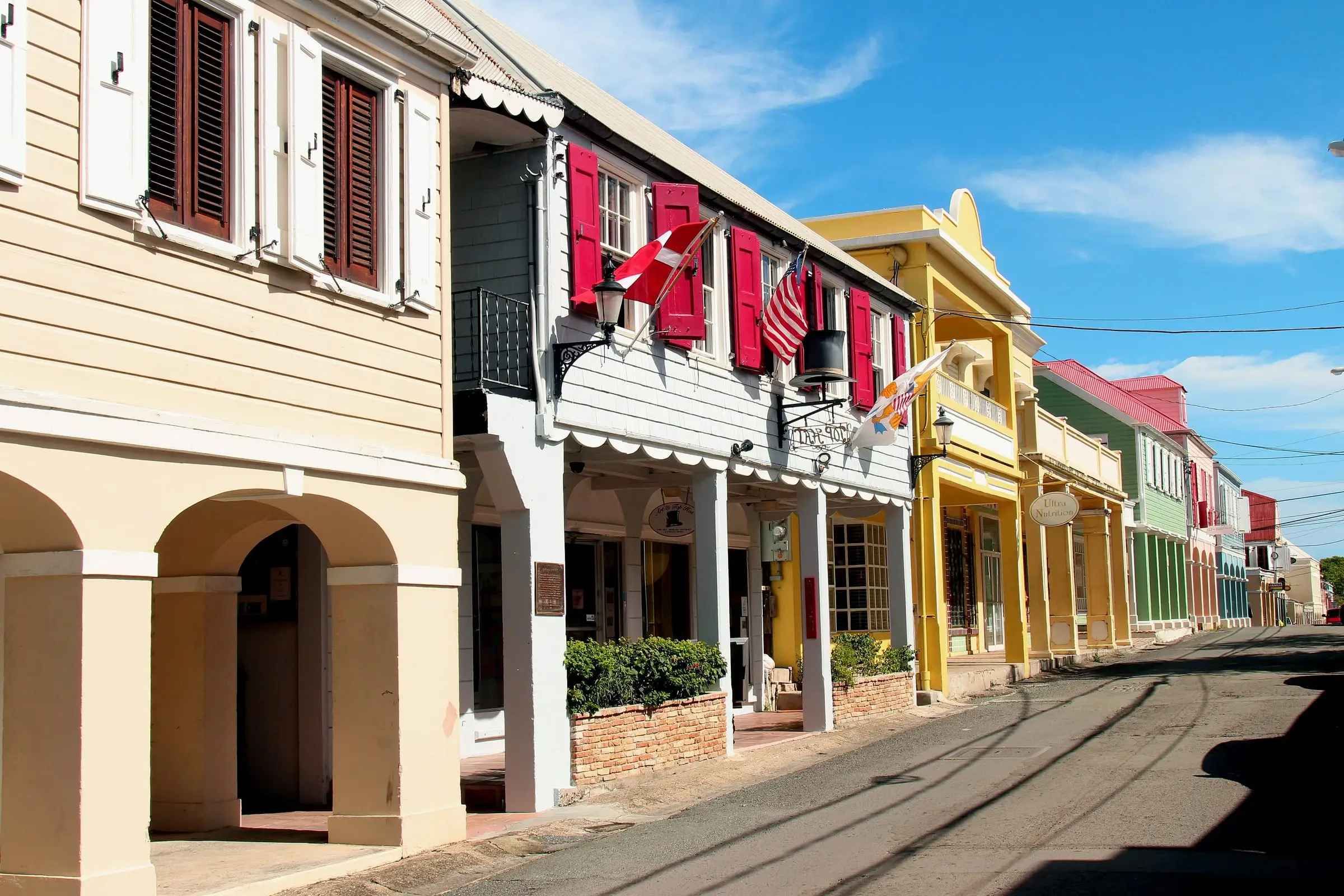
Buying a Condo in St. Thomas
What buying a condo on St. Thomas involves: the association documents to request, storm and insurance questions, rental rules and the licensed professionals to involve.
Buying, St. ThomasBy USVI Realty Editorial TeamUpdated October 28, 20266 minute read
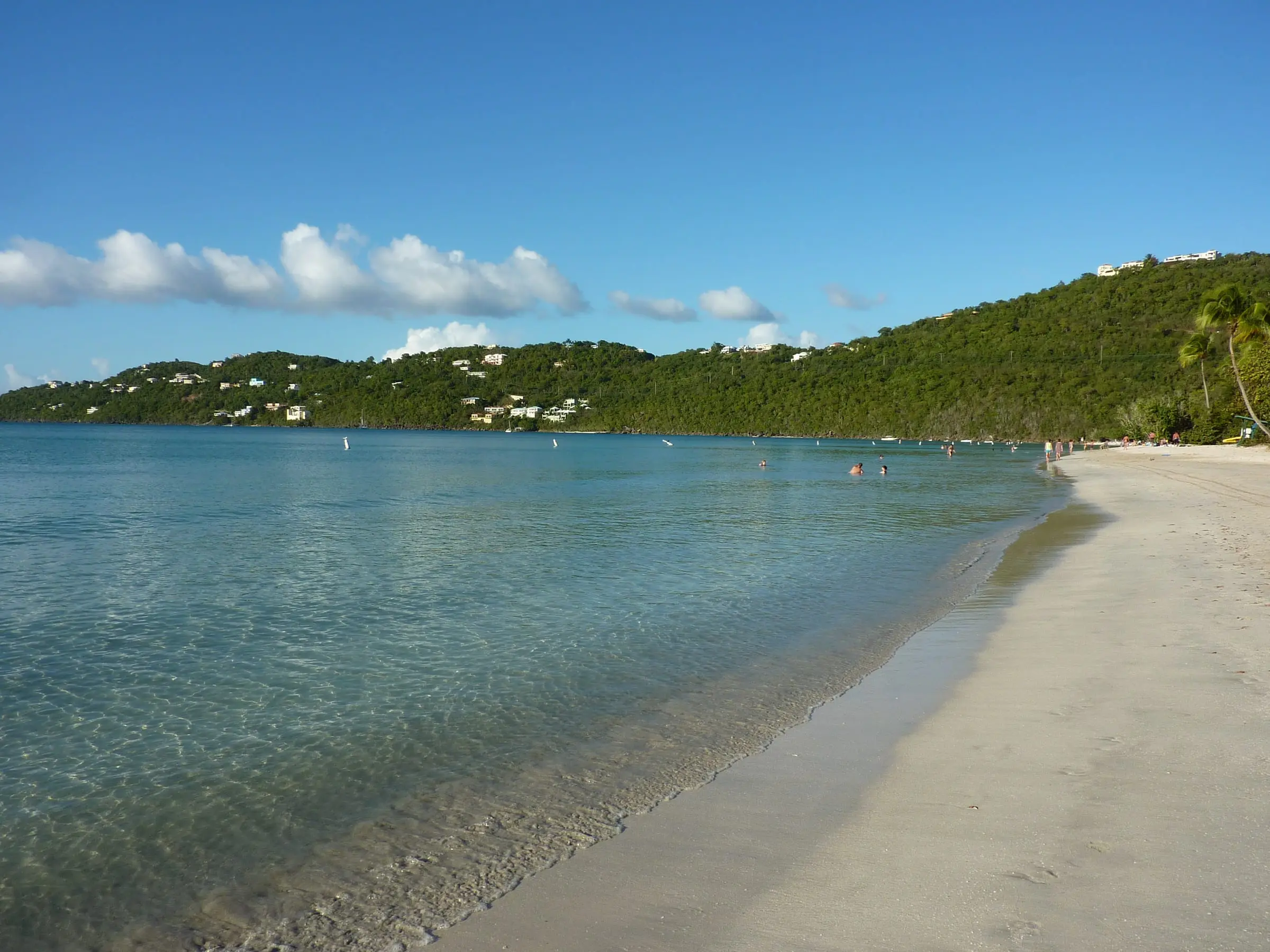
Photo: Gruepig, CC BY-SA 3.0
What a condo purchase involves
When you buy a condominium, you generally buy two things: your unit, and a shared interest in the building, grounds and other common areas. An owners’ association, run by a board, looks after the common areas, sets a budget, collects fees from owners and enforces the rules. Its finances and rules become part of your costs and your daily life, so you are judging the association as much as the unit.
The steps look much like any other purchase, with one more layer of homework:
- Line up financing or proof of funds.
- Make an offer that gives you time to review the association’s documents.
- Have the unit inspected, and learn what you can about the building.
- Get insurance quotes for the unit before you commit.
- Have the title searched and the closing handled by licensed professionals.
At the end, the deed is recorded with the Recorder of Deeds, part of the Office of the Lieutenant Governor, which records property deeds, mortgages and liens. The office says original deeds and mortgages must be submitted directly to it. It also notes that the Virgin Islands Notary Act requires two witnesses, and that a notary may not serve as both a subscribing witness and the notary on a deed. Your attorney and title company should handle these details.
For the wider process and its costs, read our guides to buying property in the USVI and the costs of buying.
Association documents to request
Ask for these early, and read them with your attorney before your review period ends.
- Declaration, bylaws and amendments. These define what you own, what is shared and how owners vote.
- Rules and regulations. Look for limits on rentals, pets, renovations, parking and noise.
- Current budget and recent financial statements. Check what monthly fees pay for and whether the association runs a surplus or a deficit.
- Reserve study and reserve balance. Reserves are money set aside for big repairs such as roofs, waterproofing, elevators and generators. A thin reserve can mean special assessments later.
- Special assessments. Ask about past, current and planned assessments, and what each one paid for.
- Master insurance policy summary. Note what it covers, its deductibles for wind and flood damage, and when it renews.
- Board meeting minutes. Recent minutes show what repairs, disputes and costs are coming.
- Claims and lawsuits. Ask about open insurance claims and any lawsuits involving the association.
- Owner delinquencies. A high share of owners behind on fees can strain the budget.
- Management agreement. Find out who manages the property and how to reach them.
- A statement on the unit’s account. Confirm that the seller’s fees are paid up and that no assessments are owed on the unit.
Insurance and storm considerations
Who insures what
The association’s master policy and your own policy are meant to fit together, but the split varies from one building to the next. Before you commit, ask an insurance producer licensed in the territory to compare the master policy with the coverage you would need for your unit, your belongings, liability and the association’s deductibles. The Division of Banking, Insurance and Financial Regulation, which regulates insurance producers, links to a lookup of companies licensed to sell insurance in the territory.
Ask about flood coverage separately. The Department of Planning and Natural Resources (DPNR) lists floodplain management and the National Flood Insurance Program among the responsibilities of its Division of Permits. Our property insurance directory is a place to start.
Storm history and readiness
The National Hurricane Center lists the Atlantic hurricane season as June 1 to November 30, with a peak around September 10. In September 2017, Hurricane Irma caused widespread catastrophic damage on St. Thomas and St. John, and Hurricane Maria followed two weeks later with flooding and mudslides. The center noted that on St. Thomas and St. John, most roofs, signs and trees had already been damaged by Irma before Maria arrived.
For any building that existed in 2017, ask:
- What damage did the building suffer, and how were repairs paid for: insurance, reserves, loans or special assessments?
- Are any storm repairs still unfinished, or any claims still open?
- How old is the roof, and are windows and doors protected by shutters or impact-rated glass?
- Does the building have a generator, and what does it power?
- How does the building store and supply water?
Power interruptions matter in a building with elevators, pumps or gated entries. The Water and Power Authority (WAPA) posts a rotational outage schedule and an outage map on its website, so ask how the building copes when power goes out.
Rental, pet and renovation rules
Renting your unit
If you hope to rent your condo, the association’s rules come first. Some associations limit or prohibit short-term rentals, set minimum lease terms or require tenants to be registered. Get the current rules in writing, and ask whether owners are discussing changes.
If short-term rentals are allowed, the Bureau of Internal Revenue (BIR) applies its hotel room tax to rentals of an apartment, condominium or residence for a total period of less than 90 days. The lessor collects the tax and remits it to BIR monthly on Form 722 V.I., and the return asks what kind of property was rented, such as a condominium.
Estimate as of October 2026. BIR’s Tax Structure Booklet lists the hotel room tax at 12.5 percent of the gross room rate. Confirm the current rate with BIR.
Ask the Department of Licensing and Consumer Affairs whether renting requires a business license, and ask a tax adviser how rental income would be taxed. Do not count on rental income to cover your costs; occupancy and rates are never guaranteed.
Pets
Read the pet rules closely. Ask about limits on number, size and type, rules for common areas, and whether the rules apply to tenants as well as owners.
Renovations
Check whether the association requires approval before you change the unit, and whether it limits work hours, contractors or materials. DPNR’s Division of Permits enforces the building codes, which DPNR lists as including the 2024 International Building Code and International Residential Code, the 2023 National Electrical Code and the 2024 Uniform Plumbing Code. Ask whether past renovations to the unit were permitted.
If the building is in Charlotte Amalie’s historic district, territorial law requires the Virgin Islands Historic Preservation Commission to act on plans before a structure is altered, restored or demolished. See our Charlotte Amalie guide.
Taxes and closing costs
The Tax Assessor and Tax Collector, both part of the Office of the Lieutenant Governor, handle real property tax. The Tax Assessor offers an online parcel and tax bill search and publishes a Homestead Tax Credit application, so ask whether you would qualify if the unit will be your home. The Tax Collector issues property tax clearance letters; ask your attorney when one is needed for your purchase.
Estimate as of October 2026. The Tax Collector’s page lists a fee of $25.00 for a property tax clearance letter.
Ask your lender early whether it finances units in the specific building. The Division of Banking, Insurance and Financial Regulation regulates banks, mortgage brokers and lenders in the territory.
Questions to ask before you make an offer
- What do monthly fees cover, and when were they last raised?
- How large are the reserves, and when was the last reserve study done?
- Are any special assessments planned or under discussion?
- What does the master policy cover, and what are its storm deductibles?
- How did the building fare in the 2017 hurricanes, and how were repairs paid for?
- What do the rules say about rentals, pets and renovations, and are changes proposed?
- How many owners are behind on fees?
- Is the association involved in any lawsuits?
- How does the building handle water and power outages?
- Are the unit’s property taxes and association fees paid up?
Licensed professionals to involve
- A licensed real estate professional. Brokers and salespersons are licensed through the Department of Licensing and Consumer Affairs, whose site links to a license search.
- A Virgin Islands real estate attorney to review the association documents and the contract. See our real estate attorney directory.
- A home inspector with condo experience, ideally with access to common areas. See our home inspector directory.
- An insurance producer licensed in the territory.
- A mortgage lender, if you are financing. See our mortgage lender directory.
- A title company for the title search and title insurance. See our title company directory.
- A tax adviser if you plan to rent the unit or change your residency.
Thinking about the island as a whole? Read Living in St. Thomas.


Photo: Smallbones, CC0

Photo: Sunil Pereira, CC BY-SA 3.0
Questions
Does the association's insurance cover my unit?
Not necessarily, and not completely. Ask the association for a summary of its master policy, including deductibles, then ask an insurance producer licensed in the territory what the policy covers and what you need to insure yourself.
Can I rent my condo to visitors?
Only if the association's rules allow it. If they do, the Bureau of Internal Revenue applies its hotel room tax to rentals of less than 90 days. Ask the Department of Licensing and Consumer Affairs whether you need a business license, and ask a tax adviser how rental income is taxed.
Do I need approval to renovate a condo?
Usually from the association, and often a building permit from the Department of Planning and Natural Resources. In Charlotte Amalie's historic district, exterior changes also need action by the Virgin Islands Historic Preservation Commission.
Can USVI Realty help me buy a condo?
No. USVI Realty is an educational resource, not a brokerage. We do not list property, represent buyers or sellers, or negotiate. Work with a licensed real estate professional and a Virgin Islands attorney.
Sources
- Recorder of Deeds, Office of the Lieutenant Governor, U.S. Virgin Islands (accessed October 28, 2026)
- Office of the Tax Assessor, Office of the Lieutenant Governor, U.S. Virgin Islands (accessed October 28, 2026)
- Office of the Tax Collector, Office of the Lieutenant Governor, U.S. Virgin Islands (accessed October 28, 2026)
- Banking, Insurance and Financial Regulation, Office of the Lieutenant Governor, U.S. Virgin Islands (accessed October 28, 2026)
- Requirements for Real Estate Commission Licensure and Examination, Virgin Islands Department of Licensing and Consumer Affairs (accessed October 28, 2026)
- Tax Structure Booklet of the U.S. Virgin Islands, Virgin Islands Bureau of Internal Revenue (accessed October 28, 2026)
- Division of Permits, Virgin Islands Department of Planning and Natural Resources (accessed October 28, 2026)
- Building Permits, Virgin Islands Department of Planning and Natural Resources (accessed October 28, 2026)
- Historic Districts Guide, Version 1.0, Virgin Islands Historic Preservation Commission and DPNR (accessed October 28, 2026). Quotes Title 29, Chapter 3, Section 285 of the Virgin Islands Code.
- Tropical Cyclone Climatology, NOAA National Hurricane Center (accessed October 28, 2026)
- Tropical Cyclone Report: Hurricane Irma (AL112017), NOAA National Hurricane Center (accessed October 28, 2026)
- Tropical Cyclone Report: Hurricane Maria (AL152017), NOAA National Hurricane Center (accessed October 28, 2026)
- Virgin Islands Water and Power Authority, Virgin Islands Water and Power Authority (accessed October 28, 2026)