What Are the Costs of Buying Property in the USVI?
The taxes, fees, professional costs and insurance to research beyond the purchase price in the USVI, with official figures dated and the right office to ask for the rest.
BuyingBy USVI Realty Editorial TeamUpdated October 28, 20269 minute read
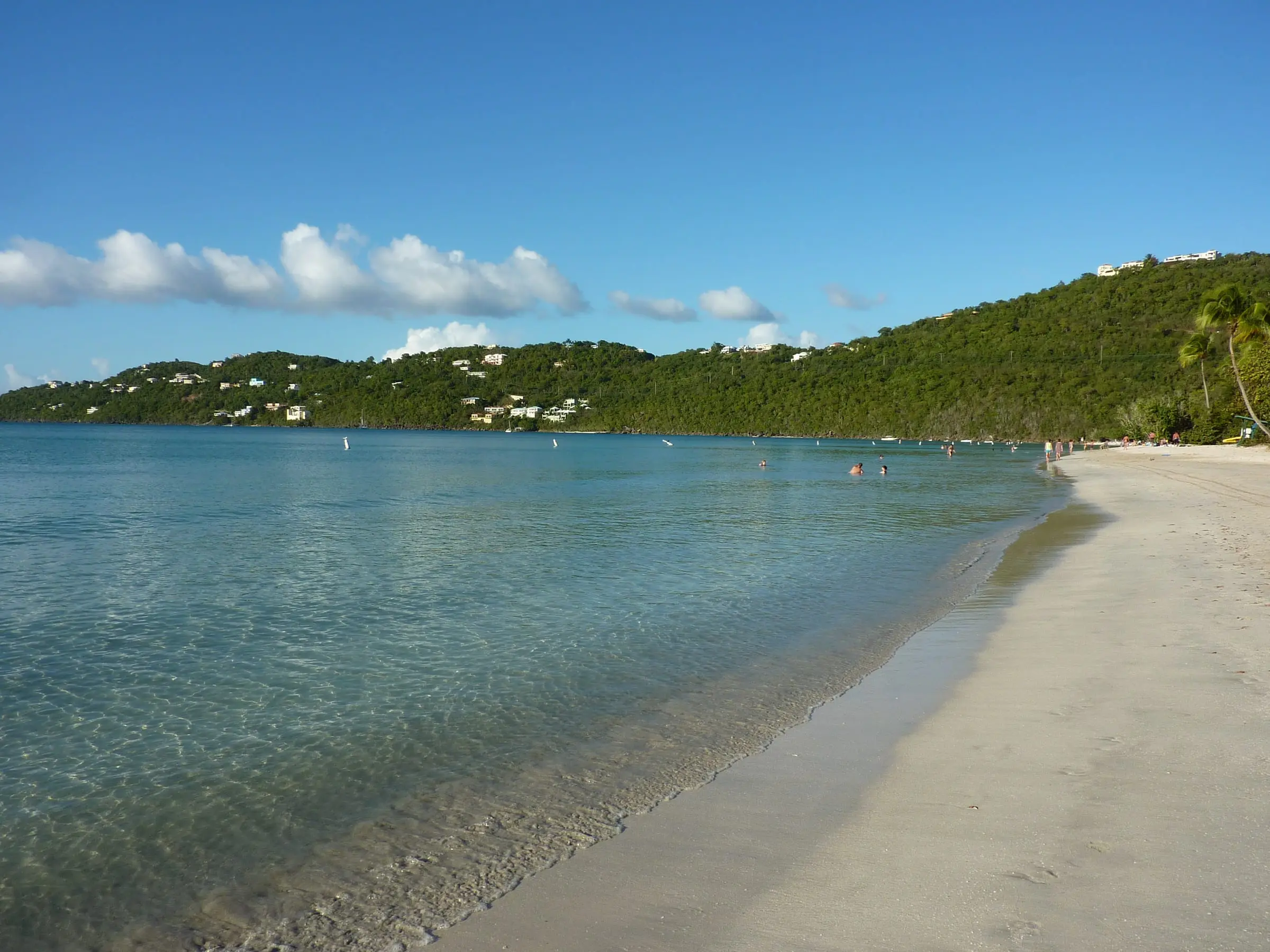
Photo: Gruepig, CC BY-SA 3.0
USVI Realty is an educational resource. We do not represent buyers or sellers, and we do not give legal, tax or financial advice. This guide lists the costs to research beyond the purchase price when you buy in St. Thomas, St. Croix or St. John.
We include a dollar figure only when a government office publishes it, and we label it with a date. Where we found no official figure, we say so and tell you whom to ask. We never estimate a fee ourselves, because amounts depend on the property, the price and the professionals you hire.
Start with your Loan Estimate
If you are borrowing, two federal forms will do much of the budgeting work for you. The Consumer Financial Protection Bureau (CFPB) explains that your lender must give you a Loan Estimate within three business days of receiving your application, and a Closing Disclosure at least three business days before closing. Compare the two line by line.
The CFPB also notes:
- When you buy a home, you generally pay the costs associated with the transaction. The seller may pay some, depending on the contract or the law.
- Typical costs include appraisal fees, tax service fees, title insurance, government taxes and prepaid items such as property taxes, homeowners insurance and interest until your first payment is due.
- A seller credit often comes with a higher price, and a lender credit can mean a larger loan or a higher interest rate. Either way, you are still paying those costs, just through the loan.
If you are paying cash, there is no Loan Estimate. Ask your attorney for a written estimate of the closing costs instead.
Government taxes and fees at closing
Stamp tax on the deed
The territory taxes deeds that transfer real property. In a 2002 decision, the U.S. Court of Appeals for the Third Circuit quoted the Virgin Islands Code provision imposing a stamp tax on the transfer of title to real property, and noted that the Recorder of Deeds refused to record the deed in that case until the tax was paid.
We did not find a current stamp tax schedule published by the territorial government, so we do not list a rate here. The Lieutenant Governor’s recording requirements say each new deed needs an original, signed and notarized Sales Valuation Affidavit stating the actual sales price. When a transfer is not a sale, the affidavit states the Tax Assessor’s current assessment instead.
Ask the Recorder of Deeds or your attorney:
- What is the current stamp tax schedule?
- Which value is it based on for this transfer?
- Who pays it under your contract?
Recording fees
The Recorder of Deeds records deeds, mortgages, liens and other documents. We did not find a current recording fee schedule on its web page. Ask the Recorder what fees apply to your deed, your mortgage and any other documents. The St. Croix office is at 340-773-6449 and the St. Thomas and St. John office is at 340-774-2991. Original deeds and mortgages must be submitted directly to the office rather than by e-recording.
Property tax clearance
Your attorney may ask for proof that the property taxes are paid. The Office of the Tax Collector takes requests for a tax clearance letter only at its St. John, St. Thomas and Sunny Isle (St. Croix) offices. The Lieutenant Governor’s office has also said that owners who have paid all taxes due can request a tax clearance certificate through the online property tax portal.
Estimate as of October 2026. The Office of the Tax Collector lists the fee for a tax clearance letter as $25.00.
Ask your attorney how the current year’s property tax will be divided between you and the seller at closing.
Professional fees
None of the professional fees below has an official published rate. Get written quotes and ask what each one includes.
Attorney and closing services
The Virgin Islands Real Estate Commission’s rules say a broker or salesperson should recommend that each purchaser retain an attorney to pass upon the marketability of the title and the other legal questions involved. The Commission’s code of ethics also asks brokers to recommend legal counsel, and title insurance, when the interest of any party requires it. Ask the attorney whether the fee is flat or hourly, and whether it covers contract review, title review, the closing and recording.
Title search and title insurance
The CFPB notes that most lenders require you to buy a lender’s title insurance policy, which protects the lender. An owner’s policy protects you if someone later claims an interest in the home. Ask your attorney or title company to quote both, and check how they appear on your Loan Estimate.
Home inspection and the cistern
The CFPB says a home inspection is different from an appraisal, but you generally need both. Ask the home inspector what the inspection covers and what it costs.
Plan separately for the cistern. A January 2024 guide from the Department of Planning and Natural Resources (DPNR) and the U.S. Environmental Protection Agency (EPA) says that if you do not know when a cistern was last drained, cleaned and disinfected, that should be done first, and it treats routine water quality testing as the owner’s cost. EPA recommends using a laboratory certified to analyze regulated drinking water contaminants. Ask for quotes for cleaning and testing before you close.
Survey
The CFPB describes a survey as a drawing of your property showing the location of the lot, the house and any other structures. The Department of Licensing and Consumer Affairs (DLCA) has a board for architects, engineers and land surveyors. Ask your attorney whether an existing recorded survey will do or a new one is needed, then get a quote from a licensed surveyor.
Appraisal
The CFPB notes that when you borrow money to buy a home, your lender generally requires a form of appraisal, and appraisal fees are among the typical closing costs. You may want a second kind of appraisal for insurance: the Lieutenant Governor’s office suggests hiring an appraiser to determine a home’s replacement cost value. DLCA has a separate board for real estate appraisers.
Lender fees
Lender charges appear on your Loan Estimate, and every lender uses the same standard form, which makes them easier to compare. Ask each lender to explain any charge you do not understand.
Real estate professionals
Ask any agent, in writing, how they are paid and by whom. The Commission’s code of ethics says a broker may not accept compensation from more than one party without the full knowledge of all parties.
Insurance costs
Homeowners and windstorm coverage
The Lieutenant Governor’s office has described a hard insurance market in the territory, particularly for homeowners. In a July 2023 bulletin, it said it had approved partial rate increases for some insurers to keep coverage available, and that some insurers said their reinsurers considered the increases insufficient. The same bulletin says owners of wooden or mixed frame homes may face non-renewal or be unable to find coverage in the admitted market, which may leave surplus lines coverage as the option.
The office’s 2026 hurricane season guidance adds:
- Do not exclude windstorm coverage.
- Buy coverage for at least 80 percent of your home’s replacement cost value.
- You cannot buy a homeowners policy once a storm has been declared.
- You can have the premium escrowed with your property tax payment, or use premium financing.
- If you have a mortgage, buy your own policy, because force-placed coverage may cover only the mortgage balance.
Ask a licensed insurance producer for quotes early, before you are committed to the purchase, and ask how the windstorm deductible works. More in hurricane and flood insurance for USVI homes.
Flood insurance
FEMA notes that most homeowners insurance does not cover flood damage and that there is typically a 30-day waiting period for a National Flood Insurance Program (NFIP) policy to take effect. Homes in high-risk flood areas with mortgages from government-backed lenders are required to have flood insurance.
Estimate as of October 2026. NFIP coverage limits published by FEMA and by the Lieutenant Governor’s office are up to $250,000 for a home’s structure and up to $100,000 for its contents.
Condominium coverage
The Lieutenant Governor’s office notes that a condominium owner does not have a separate building policy: the policy belongs to the association as a whole and is subject to its board of directors. You can buy a separate contents policy. Ask the association for its master policy, including the deductible, and whether owners have been charged for past storm losses.
Ongoing costs after closing
Real property tax
The Office of the Tax Assessor assesses property and the Office of the Tax Collector collects the tax. We did not find current real property tax rates published by the territorial government, so ask the Tax Assessor which property class applies to the parcel and what the current rate is. For tax year 2024, bills were issued in June and were payable without added interest or penalties until August 30, 2024. More in property taxes in the USVI.
If the home will be your primary residence, ask about homestead credits.
Estimate as of October 2026. The Tax Assessor’s published requirements list a general homestead credit of $400, plus one other credit for those who qualify ($500 senior, $500 disability or $650 veteran). A minimum tax of $180 applies to all homestead credits.
The Lieutenant Governor’s delinquency notice also refers to public sewer system user fees alongside property taxes. Ask whether any such fees apply to the parcel.
Association dues
The CFPB notes that condo or HOA fees are usually paid separately from your monthly mortgage payment. Ask the association for the current dues, what they cover, the reserve balance, any planned special assessments and the rules on renting.
Permits for renovation work
If you plan to renovate, budget for permits from DPNR’s Division of Permits. Work must begin within 180 days after a permit is issued.
Estimate as of October 2026. DPNR’s published formula sets the permit fee at 0.5 percent of total construction cost for residential projects (one- and two-family dwellings and accessories) and 1 percent for commercial projects, including multifamily dwellings.
Water and power
The Virgin Islands Water and Power Authority (WAPA) supplies electricity and water, so ask the seller for recent bills. For homes with cisterns, the DPNR and EPA guide recommends inspecting the cistern for structural damage quarterly and cleaning and disinfecting it every three to five years at a minimum, and after extreme storms. The directory lists cistern and water services on each island.
Summary: costs and whom to ask
Estimate as of October 2026. Official figures below were published by the offices named in the sources. “None published” means we found no official figure, so ask the professional listed.
| Cost item | Official figure | Whom to ask |
|---|---|---|
| Stamp tax on the deed | No current schedule found | Recorder of Deeds, your attorney |
| Recording fees | No current schedule found | Recorder of Deeds |
| Tax clearance letter | $25.00 | Office of the Tax Collector |
| Attorney and closing services | None published | USVI real estate attorney |
| Title search and title insurance | None published | Title company or attorney |
| Home inspection | None published | Home inspector |
| Cistern cleaning and water testing | None published | Inspector, certified laboratory |
| Survey | None published | Licensed land surveyor |
| Appraisal | None published | Lender, licensed appraiser |
| Lender fees | Shown on your Loan Estimate | Lender |
| Homeowners and windstorm insurance | None published | Licensed insurance producer |
| Flood insurance (NFIP) | Coverage up to $250,000 building, $100,000 contents | Agent who sells NFIP policies |
| Annual real property tax | No current rates found | Office of the Tax Assessor |
| Homestead tax credit | $400 general credit | Office of the Tax Assessor |
| Condo association dues | Set by each association | Association or its manager |
| Renovation permits | 0.5% of construction cost (residential) | DPNR Division of Permits |
For the order in which these costs come up, read Buying Property in the USVI: A Complete Guide.
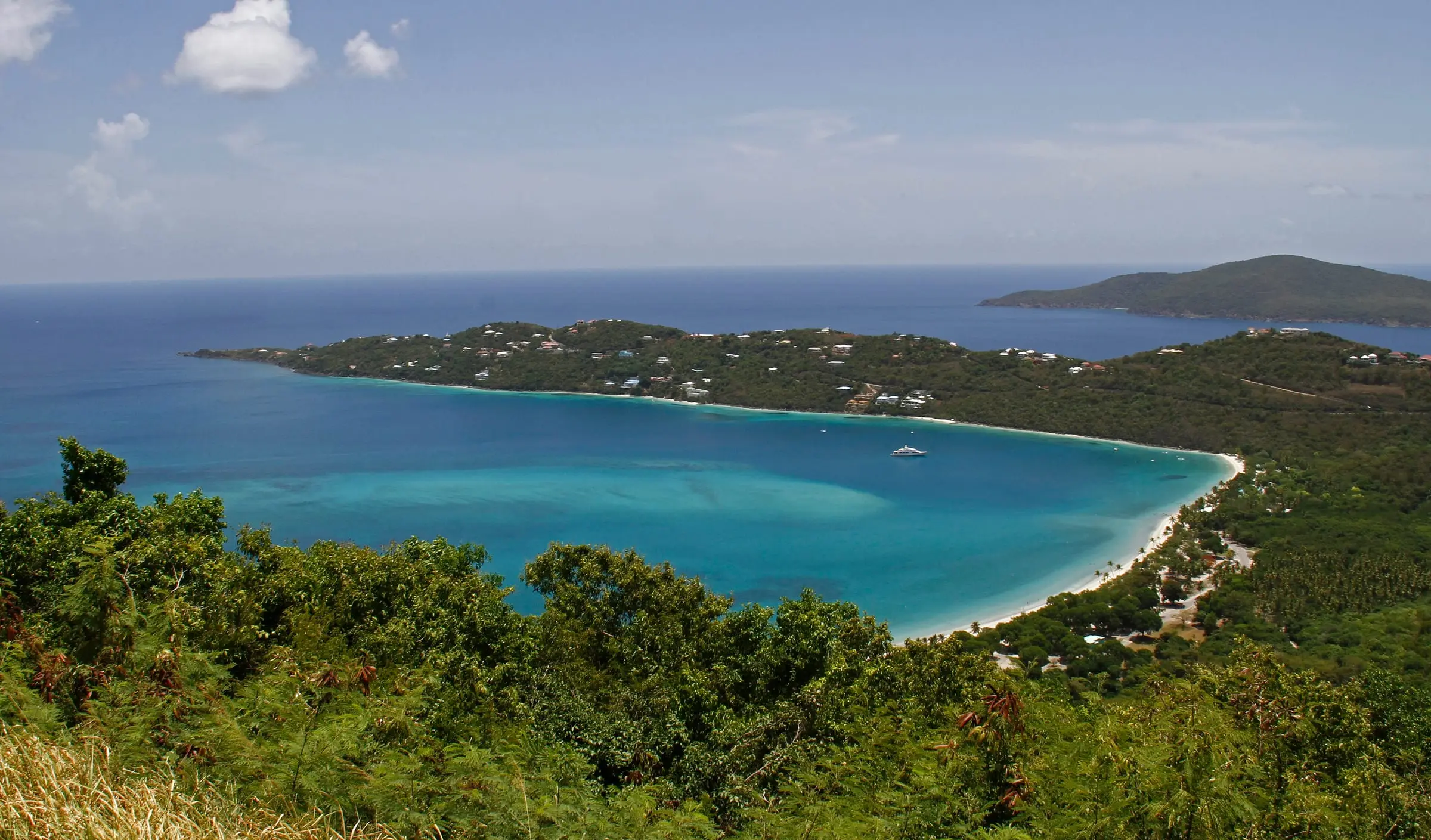
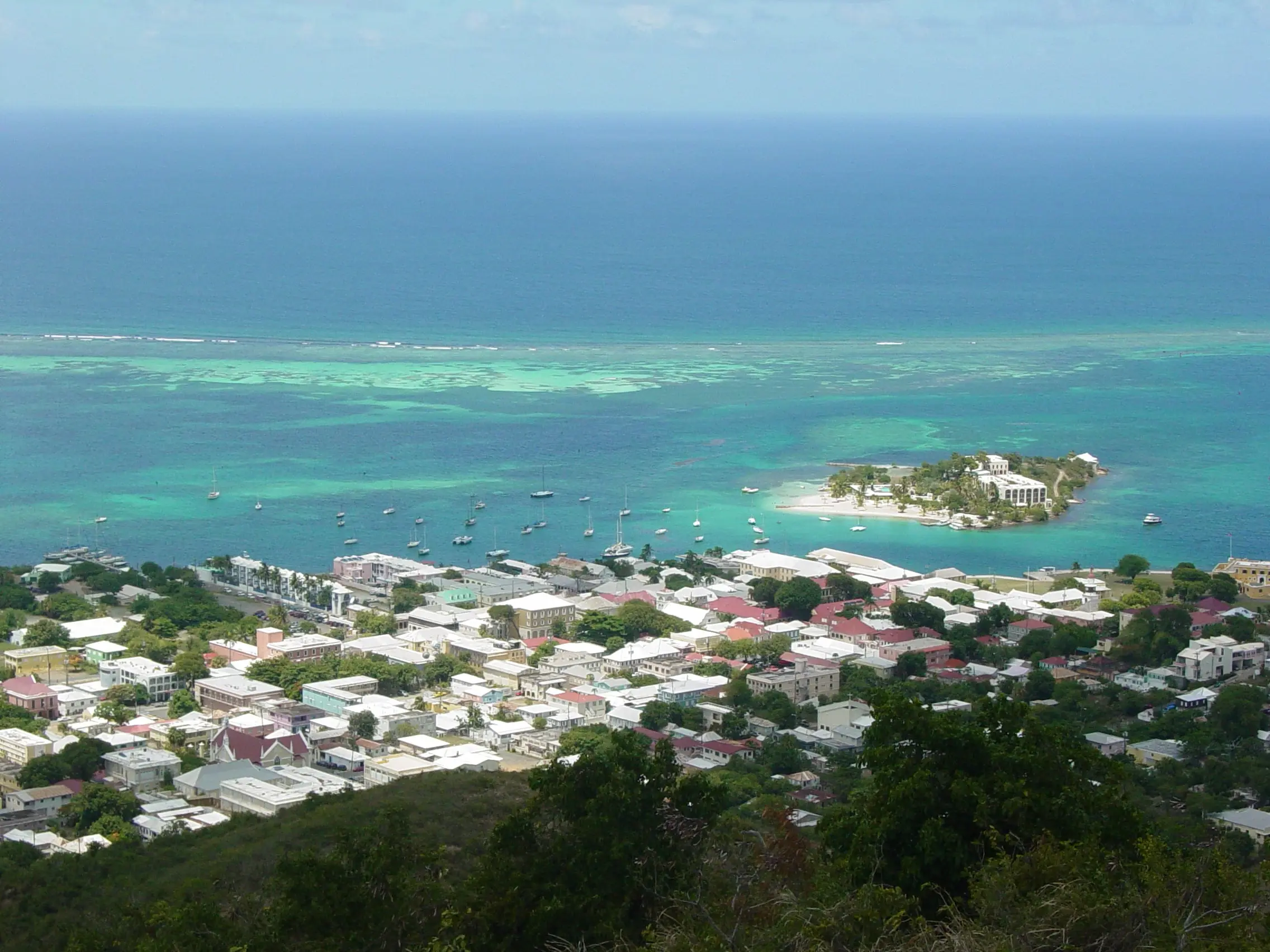
Photo: Jason P. Heym, CC BY-SA 3.0

Photo: Navin75, CC BY-SA 2.0
Questions
What closing costs do buyers pay in the USVI?
Expect government charges (the stamp tax on the deed, recording fees and a tax clearance letter, which the Office of the Tax Collector lists at $25.00 as of October 2026), professional fees (attorney or closing services, title search and insurance, inspection, survey and appraisal) and, if you borrow, lender fees. Your lender's Loan Estimate lists the loan-related costs, and your attorney can confirm the rest.
What is the stamp tax rate on a USVI property purchase?
We did not find a current stamp tax schedule published by the territorial government, so we do not list a rate. Ask the Recorder of Deeds in the Office of the Lieutenant Governor or your USVI attorney for the current schedule and how it applies to your purchase price.
Who pays closing costs?
The Consumer Financial Protection Bureau notes that buyers generally pay the costs of their purchase, though the seller may pay some, depending on the contract or the law. Your purchase contract sets who pays what, so review it with your attorney.
Is flood insurance required?
FEMA says homes in high-risk flood areas with mortgages from government-backed lenders are required to have flood insurance. Even when it is not required, FEMA notes that most homeowners insurance does not cover flood damage.
How much is the annual property tax?
We did not find current real property tax rates published by the territorial government. Ask the Office of the Tax Assessor which property class applies and what the current rate is, and ask about homestead credits if the home will be your primary residence.
Sources
- What fees or charges are paid when closing on a mortgage and who pays them?, Consumer Financial Protection Bureau (accessed October 28, 2026)
- What is a Loan Estimate?, Consumer Financial Protection Bureau (accessed October 28, 2026)
- What is a Closing Disclosure?, Consumer Financial Protection Bureau (accessed October 28, 2026)
- What is owner's title insurance?, Consumer Financial Protection Bureau (accessed October 28, 2026)
- Mortgage key terms, Consumer Financial Protection Bureau (accessed October 28, 2026)
- Schedule a home inspection, Consumer Financial Protection Bureau (accessed October 28, 2026)
- BA Properties Inc. v. Government of the Virgin Islands, No. 00-2771 (2002), U.S. Court of Appeals for the Third Circuit (accessed October 28, 2026)
- Recording Requirements (Sales Valuation Affidavit and new deeds), Office of the Lieutenant Governor, U.S. Virgin Islands (accessed October 28, 2026)
- Recorder of Deeds, Office of the Lieutenant Governor, U.S. Virgin Islands (accessed October 28, 2026)
- Office of the Tax Collector, Office of the Lieutenant Governor, U.S. Virgin Islands (accessed October 28, 2026)
- Lieutenant Governor Roach reminds taxpayers of real property tax payment deadline (2024), Office of the Lieutenant Governor, U.S. Virgin Islands (accessed October 28, 2026)
- Office of the Tax Assessor, Office of the Lieutenant Governor, U.S. Virgin Islands (accessed October 28, 2026)
- Homestead Tax Credit Requirements, Office of the Lieutenant Governor, Office of the Tax Assessor (accessed October 28, 2026)
- 2026 Real Property Tax Delinquency List, Office of the Lieutenant Governor, U.S. Virgin Islands (accessed October 28, 2026)
- Virgin Islands Real Estate Commission Rules and Regulations, Virgin Islands Real Estate Commission (accessed October 28, 2026)
- Department of Licensing and Consumer Affairs: boards and License Search, Virgin Islands Department of Licensing and Consumer Affairs (accessed October 28, 2026)
- Lieutenant Governor Roach encourages residents to Be Ready/Be Insured for the 2026 hurricane season, Office of the Lieutenant Governor, U.S. Virgin Islands (accessed October 28, 2026)
- Bulletin 2023-02: Availability of Windstorm Insurance Coverage in the Territory, Office of the Lieutenant Governor, Division of Banking, Insurance and Financial Regulation (accessed October 28, 2026)
- Flood Insurance, Federal Emergency Management Agency (accessed October 28, 2026)
- What U.S. Virgin Islands Consumers Need to Know About Flood Insurance (2019 brochure), Office of the Lieutenant Governor, Division of Banking, Insurance and Financial Regulation (accessed October 28, 2026)
- Flood Insurance an Important Resource for Floridians (NFIP coverage limits), Federal Emergency Management Agency (accessed October 28, 2026). FEMA release dated September 16, 2024, marked as archived; used only for the NFIP coverage limits, which match the 2019 territorial brochure.
- Division of Permits FAQs, Virgin Islands Department of Planning and Natural Resources (accessed October 28, 2026)
- Your Health and Cisterns: A USVI Comprehensive Guide (January 2024), Virgin Islands Department of Planning and Natural Resources and U.S. Environmental Protection Agency (accessed October 28, 2026)
- Cisterns in the U.S. Virgin Islands (EPA Region 2 fact sheet, August 11, 2021), U.S. Environmental Protection Agency (accessed October 28, 2026)
- Virgin Islands Water and Power Authority, Virgin Islands Water and Power Authority (accessed October 28, 2026)