Property Taxes in the USVI: How They Work
The Lieutenant Governor's office assesses USVI real property at 100 percent of fair market value and taxes the value, less exemptions, at the millage rate that applies under the Virgin Islands Code. Here is how bills, the homestead credit, clearance letters and appeals work.
BuyingBy USVI Realty Editorial TeamUpdated October 29, 20269 minute read
USVI Realty is an educational resource, not a tax adviser. This guide explains how real property tax works in the U.S. Virgin Islands, using the Office of the Lieutenant Governor’s own pages, forms and notices. Rules, deadlines and amounts change, so confirm anything that affects your bill with the office or with a tax professional.
Property tax is run by the Real Property Tax Division of the Office of the Lieutenant Governor. The Office of the Tax Assessor values property, approves exemptions and credits, and certifies the tax roll to the Office of the Tax Collector, which collects the tax. Collection moved to the Lieutenant Governor’s office from the Department of Finance under Act 6976, enacted in December 2007.
How is a property assessed?
The Tax Assessor is responsible for discovering, valuing and listing all real property in the territory. In its own description of the job, the office says:
- Real property is assessed at 100 percent of fair market value.
- The Virgin Islands does not assess personal property.
- The tax comes from multiplying the property’s value, less exemptions, by the applicable millage rate, as required by Section 2301 of Title 33 of the Virgin Islands Code.
Assessments are not frozen. In June 2022, the Lieutenant Governor’s office said some properties had been reassessed based on improvements made from 2018 to 2022, verified through its field inspections, and on sales of property in their area. The same notice said some condominium owners had been taxed at the incorrect millage rate, and that the office would send corrected supplemental bills.
To see what the office has on file for a parcel, use the Parcel Search on the Tax Assessor’s Citizen Access Portal at propertytax.vi.gov. The Tax Assessor says the portal also shows sales data for whole neighborhoods, provides copies of tax bills and takes payments. Our guide to USVI home prices explains where to find sales data and how to read it.
How much are property taxes in the USVI?
The Tax Assessor points to Section 2301 of Title 33 of the Virgin Islands Code for the millage rates. We did not find the rates on the Lieutenant Governor’s property tax pages, and rates quoted elsewhere online conflict, so we do not repeat any here. To find out what a specific property owes:
- Look up the parcel’s recent bills with the Tax Bill Search on the portal.
- Ask the Tax Assessor what type of property the parcel is recorded as, its assessed value and the millage rate that applies to it.
- Ask which credits or exemptions are applied, and whether the bill includes other charges.
Tax bills can carry more than tax. In 2022 the office said government properties that pay no property tax still owe sewer fees on their tax bills, and its 2026 delinquency notice covers public sewer system user fees along with taxes. Ask whether any such fees apply to the parcel you own or are buying.
If you are buying, have your attorney confirm the figures and explain how the year’s tax will be divided at closing. Our guide to closing costs in the USVI covers the rest of the bill at closing.
When are property tax bills due?
Bill dates and deadlines change from year to year, so check your bill and the Lieutenant Governor’s announcements.
Estimate as of October 2026. For tax year 2024, the Lieutenant Governor’s office said bills were issued in June and carried a June 30, 2024 date, but legislation made them payable until August 30, 2024 without added interest or penalties. Taxes not paid by that date became delinquent.
If a bill does not arrive, the office says it is the owner’s responsibility to tell the Tax Assessor. The Tax Assessor’s forms include a change of address form, so keep your mailing address current.
You can pay in two ways:
- In person at any Tax Collector office, which accepts checks, cash, money orders, ATM, debit and credit cards (Visa and Mastercard only).
- Online at propertytax.vi.gov, where the portal says only Visa card payments are accepted.
Estimate as of October 2026. The Office of the Tax Collector lists service fees of $2.00 for a copy of a tax bill, $4.00 for a copy of a paid tax bill and $15.00 for a status sheet.
What happens if you pay late?
Unpaid taxes become delinquent and can lead to what the office calls Final Collection Activity, which can include publication, auction sale or judicial foreclosure.
The office’s delinquency list, dated as of September 1, 2026, covers tax years 2025 and earlier. It quotes Section 2496 of Title 33: unless the delinquent taxes and public sewer system user fees, with interest, are paid within 30 days of publication, the property will be attached and sold. The notice says residential, commercial and timeshare properties will be scheduled for auction sale or foreclosure unless the taxes are paid or an installment payment plan is arranged within 30 days.
If you are behind, ask the Tax Collector about:
- An installment payment plan. A property with a current plan is not sent for Final Collection Activity.
- Probate. A property in probate should be registered with the Tax Collector by presenting the probate or adjudication order. The 2026 notice says registered probated properties get a waiver of interest and penalties and are not scheduled for Final Collection Activity.
Estimate as of October 2026. In 2024, the Lieutenant Governor’s office said payment plans require a 15 percent down payment of all outstanding taxes, interest, penalties and fees, and can be started and kept up online.
Is there a homestead tax credit?
Yes. The Tax Assessor grants a homestead credit to owners who live in the property as their primary residence, and one more credit to those who qualify. Its published requirements and application set these conditions:
- You must be the legal owner, and the home must be your primary residence. You cannot claim the credit on more than one residence or in another district.
- The credit does not apply to vacant land.
- Permanent residency in the Virgin Islands is required on January 1, and you must have lived in the territory for 6 months.
- The application is due to the Office of the Tax Assessor by March 1.
- You need a valid Virgin Islands ID, such as a driver’s license or voter registration. A passport is accepted only with a current stamped USVI income tax return.
- You need a current WAPA electric bill and a current income tax return filed and stamped by the Bureau of Internal Revenue. If you do not file a USVI return, you provide a notarized statement explaining why, with copies of other income, such as a Social Security statement.
The application also asks whether a qualifying family member (a spouse, parent or child) lives in the home, and it says the Tax Assessor makes the final determination.
Estimate as of October 2026. The Tax Assessor’s requirements, posted in 2025, list a general homestead credit of $400. You may add one of: a veteran credit of $650, a senior credit of $500 (age 60 or older) or a disability credit of $500 (as determined by the Social Security Administration). The senior and disability credits require individual gross income under $30,000 and household income under $50,000. A minimum tax of $180 applies to all homestead credits. The application, revised in 2022, also lists a Certificate of Visitability credit of 20 percent of the taxes levied and a Circuit Breaker credit of up to $5,000 under Section 2305c of Title 33.
The veteran credit is open to veterans and to widows or widowers of veterans, and asks for a DD214 showing an honorable discharge. National Guard members qualify with 20 or more years of service, or more than 30 consecutive days deployed in a war zone. The Visitability credit requires a certificate from the Department of Planning and Natural Resources. The Tax Assessor also lists farmland credits or exemptions, and a Class 1 inheritance tax credit application.
You do not have to apply every year. In March 2023, the Lieutenant Governor said owners who already receive a homestead credit need not submit a new application unless their place of residence or ownership status has changed.
Claim only what you qualify for. By signing the application, the owner agrees to legal penalties, including fines under Section 2305(i) of Title 33, for failing to supply information the Tax Assessor requests. The owner also agrees that the Tax Assessor may put a lien on the property if the owner received a homestead exemption they were not entitled to.
How do you get a tax clearance letter?
Your attorney may ask for proof that a property’s taxes are paid before a sale closes. The Office of the Tax Collector issues property tax clearance letters, and it takes requests only at its St. John, St. Thomas, Sunny Isle (St. Croix) and Frederiksted (St. Croix) locations. Its web page offers a Tax Status and Tax Clearance Certificate Request form. In 2024 the office said owners who have paid all taxes due can also request, pay for and receive a Tax Clearance Certificate through the online portal.
Estimate as of October 2026. The Office of the Tax Collector lists the fee for a tax clearance letter as $25.00. Its request form, posted in 2020, gives 3 to 5 business days for a clearance certificate and lists a $100.00 fee to expedite it in 2 business days.
How do you review or appeal an assessment?
If you think your assessed value is wrong, the Lieutenant Governor’s office described two routes in its notice for the 2024 bills:
- Informal review. File an informal review with the Office of the Tax Assessor in your district within 45 calendar days after the tax bill is issued.
- Formal appeal. File a formal appeal with the Board of Tax Review. The office said to contact the Virgin Islands Department of Finance at (340) 774-4750 to file.
The notice covered the 2024 bills, so confirm the current deadline and process before you file. Gather your evidence first:
- the parcel record from the portal, to check what the office has on file and which credits are applied;
- recent sales of similar properties, which the portal shows by neighborhood;
- a written opinion of value from a licensed appraiser, if the amount at stake justifies one (see our appraisers directory);
- photos and records of anything the assessment may have missed, such as damage.
For advice on your own case, talk with a tax professional or a real estate attorney.
Whom should you contact?
| What you need | Office | Contact |
|---|---|---|
| Assessed value, credits, a missing bill, address changes | Office of the Tax Assessor | 340-774-2991 (St. Thomas and St. John), 340-773-6449 (St. Croix) |
| Payments, clearance letters, payment plans, delinquency | Office of the Tax Collector | 340-774-2991 (St. Thomas and St. John), 340-773-6449 (St. Croix) |
| A formal appeal to the Board of Tax Review | Department of Finance | 340-774-4750, per the 2024 notice |
| Parcel records, bills and online payment | Citizen Access Portal | propertytax.vi.gov |
The offices list addresses at 5049 Kongens Gade, St. Thomas, and 1131 King Street, Suite 101, Christiansted, St. Croix. For other public offices, see our government offices directory.
Where to go next
Buying a home? Read Buying Property in the USVI and our guide to hurricane and flood insurance, another yearly cost of owning. For a full household budget, see the cost of living in the USVI.
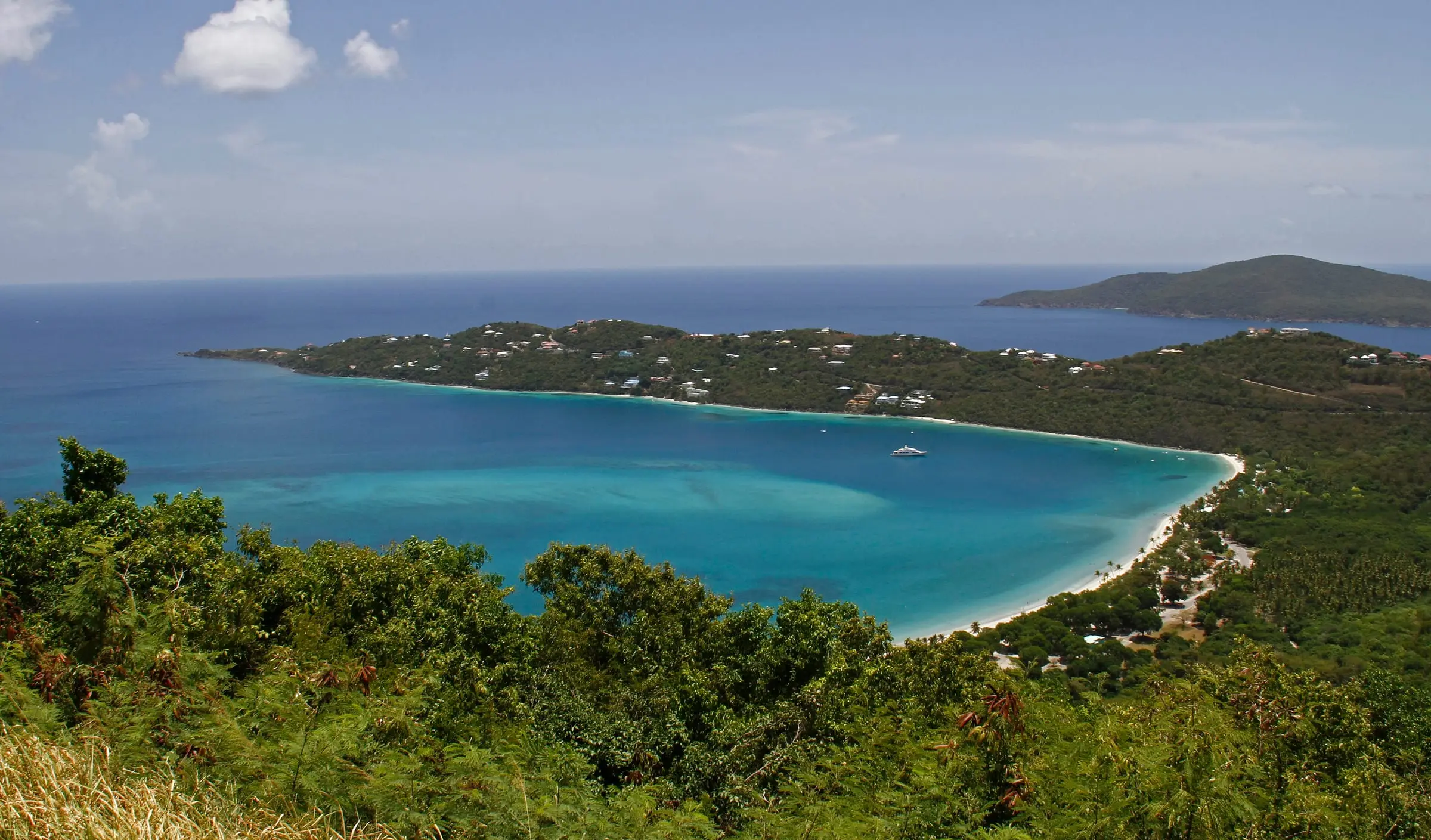
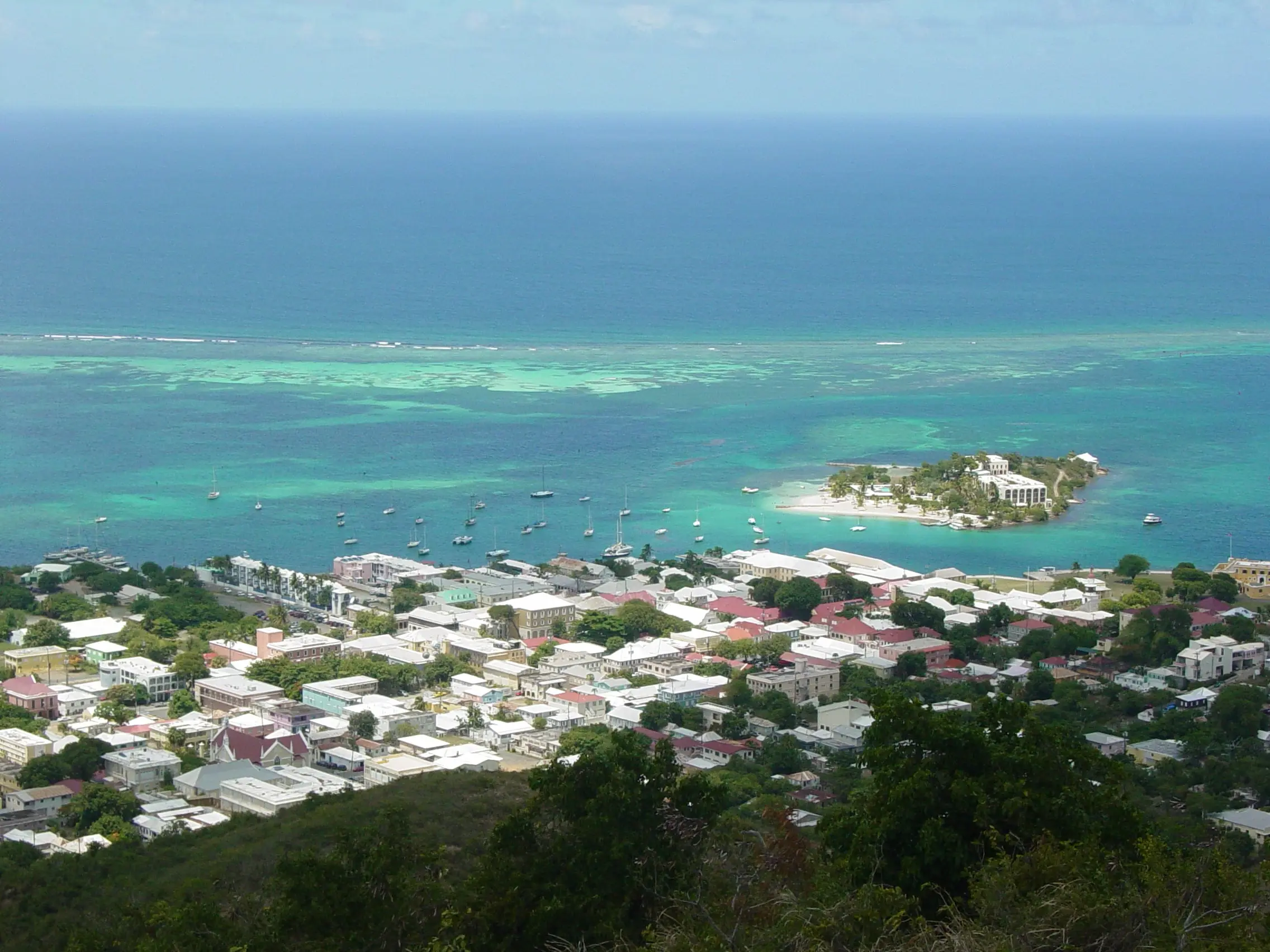
Photo: Jason P. Heym, CC BY-SA 3.0

Photo: Navin75, CC BY-SA 2.0
Questions
How much are property taxes in the USVI?
It depends on the property's assessed value, its type and any credits. The Tax Assessor multiplies the value, less exemptions, by the applicable millage rate under Section 2301 of Title 33 of the Virgin Islands Code. We did not find the current rates on the Lieutenant Governor's pages, so look up a parcel's past bills at propertytax.vi.gov and ask the Tax Assessor for the rate that applies.
How is a property assessed?
The Office of the Tax Assessor values all real property in the territory and says it is assessed at 100 percent of fair market value. Personal property is not assessed. In 2022 the office said some properties had been reassessed after field inspections verified improvements, and based on sales in their area.
Is there a homestead credit?
Yes. Owners who live in the home as their primary residence can apply to the Tax Assessor by March 1 for the general homestead credit, listed at $400, plus one other credit if they qualify, such as the $650 veteran credit. A minimum tax of $180 applies. Owners who already receive the credit need not reapply unless their residence or ownership changes.
When are property tax bills due?
It varies by year. For tax year 2024, bills were issued in June and could be paid until August 30, 2024 without added interest or penalties. Check your bill and the Lieutenant Governor's announcements, and tell the Tax Assessor if a bill does not arrive.
Are rates different on St. John?
We found no statement from the Lieutenant Governor's office of a separate rate for St. John. The Tax Assessor applies the applicable millage rate under the Virgin Islands Code to each property's value, and in 2022 the office corrected bills for condo owners taxed at the incorrect millage rate. Ask the Tax Assessor which rate applies to a specific parcel.
Sources
- Office of the Tax Assessor, Office of the Lieutenant Governor, U.S. Virgin Islands (accessed October 29, 2026). Portal links, forms and contact details
- Office of the Tax Collector, Office of the Lieutenant Governor, U.S. Virgin Islands (accessed October 29, 2026). Service fees, payment methods, clearance letter locations and Act 6976
- Tax Status and Tax Clearance Certificate Request (Document Request form), Office of the Lieutenant Governor, Division of the Tax Collector (accessed October 29, 2026). Fees and processing times for reprints, status reports and clearance certificates
- Citizen Access Portal: Welcome from the Office of the Tax Assessor, Office of the Lieutenant Governor, Real Property Tax Division (accessed October 29, 2026). Assessment at 100 percent of fair market value, Section 2301 and online services
- Homestead Tax Credit Requirements, Office of the Lieutenant Governor, Office of the Tax Assessor (accessed October 29, 2026). Posted January 2025
- Application for Homestead and Other Tax Credits, Office of the Lieutenant Governor, Office of the Tax Assessor (accessed October 29, 2026). Form revised as of June 1, 2022
- Lieutenant Governor Roach reminds taxpayers of real property tax payment deadline, Office of the Lieutenant Governor, U.S. Virgin Islands (accessed October 29, 2026). Release dated August 1, 2024
- Office of the Lieutenant Governor addresses property tax issues following 2022 bill distribution, Office of the Lieutenant Governor, U.S. Virgin Islands (accessed October 29, 2026). Release dated June 9, 2022
- Lieutenant Governor Roach addresses concerns regarding homestead tax credits, Office of the Lieutenant Governor, U.S. Virgin Islands (accessed October 29, 2026). Release dated March 2, 2023
- 2026 Real Property Tax Delinquency List, Office of the Lieutenant Governor, U.S. Virgin Islands (accessed October 29, 2026). Listing of tax year 2025 and prior years, as of September 1, 2026