Hurricane and Flood Insurance for USVI Homes
Hurricane wind damage is covered only if your homeowners policy includes windstorm coverage, and flood, including storm surge, needs a separate flood policy from the NFIP or a private insurer. The USVI's insurance regulator advises never excluding windstorm and insuring at least 80 percent of replacement cost.
BuyingBy USVI Realty Editorial TeamUpdated October 29, 20269 minute read
In the U.S. Virgin Islands, insuring a home against storms takes two policies: a homeowners policy that includes windstorm cover, and a separate flood policy. This guide explains how each works, who regulates insurers in the territory, why windstorm cover has been hard to find and what to ask an agent.
USVI Realty is not an insurer or an insurance agent, and nothing here is advice on a specific policy. Coverage, prices and availability change, so confirm everything with a licensed insurance producer.
When is hurricane season, and when should you buy?
NOAA’s National Hurricane Center says the Atlantic hurricane season runs from June 1 to November 30. The peak is September 10, with most activity between mid-August and mid-October.
Two timing rules make it worth shopping early. The Lieutenant Governor’s office, which regulates insurance, says you cannot buy a homeowners policy once a storm has been declared. And FEMA says there is typically a 30-day waiting period before a new National Flood Insurance Program (NFIP) policy takes effect, with exceptions such as a policy required by a government-backed lender.
Does homeowners insurance cover hurricanes?
It covers wind damage only if the policy includes windstorm coverage. The territory’s insurance division defines windstorm as wind violent enough to damage insured property and says windstorm coverage is generally included in basic coverage. The Lieutenant Governor’s office tells owners not to exclude it.
Deductibles
A deductible is the portion of an insured loss, in dollars, that you pay yourself. The Lieutenant Governor’s office advises knowing your deductibles and how much you would pay out of pocket in a total loss, and asking the producer who sold you the policy if you are unsure. Ask whether a separate deductible applies to windstorm or hurricane damage, how it is calculated and what it would come to in dollars for your home.
Replacement cost and the 80 percent rule
Replacement cost is the cost of replacing property without a deduction for depreciation. Actual cash value is replacement cost minus depreciation. Most property policies also have a coinsurance clause: if you insure for less than the amount it sets, usually at least 80 percent of the property’s value, you share a larger part of any loss.
The Division’s underinsurance guide lists other ways owners end up underinsured: improvements not disclosed to the agent, dwelling-only cover that leaves out contents, loss of use and other structures, and construction costs that rise after the policy is bought. It says insurers must explain these conditions and have each applicant for new or renewal homeowners coverage sign a notice. To set the amount, the Lieutenant Governor’s office suggests hiring an appraiser for a replacement cost value.
Condos, renters and mortgages
If you own a condominium, the office says the building policy belongs to the association as a whole and is subject to its board, and you can buy a separate contents policy. Renters should buy renter’s insurance for their contents.
With a mortgage, the loan agreement makes you responsible for keeping the home insured. The Division’s force-placed insurance brochure explains that if your cover lapses, the lender can buy a policy that protects only its loan balance, covers only the dwelling and generally costs more than one you buy yourself. Escrowing premiums or using premium financing helps you avoid that.
Do you need flood insurance in the USVI?
FEMA says most homeowners insurance does not cover flood damage. Flood cover is a separate policy, sold through agents and insurers that take part in the NFIP, which FEMA manages, or in some instances by a private insurer, as the Division’s flood brochure notes. The territory takes part in the NFIP: FEMA’s Community Status Book lists the Territory of the Virgin Islands, covering all three islands, in the program’s regular phase since October 15, 1980.
Wind or water?
A hurricane can bring both kinds of damage, and they fall under different policies. A FEMA fact sheet explains that flood insurance covers physical damage directly caused by a flood, such as storm surge, heavy rainfall or an overflowing body of water. It does not cover wind-driven rain, or water that comes in through a roof damaged by wind, which a homeowners policy may cover. After a hurricane, you may need to file claims with both insurers.
Estimate as of October 2026. A January 2025 FEMA release lists NFIP limits of up to $250,000 for the building and $100,000 for contents on single-family to four-family homes. Ask an agent whether those limits would rebuild your home, and what a private flood policy would offer instead.
Is flood insurance required?
FEMA says homes in high-risk flood areas with mortgages from government-backed lenders are required to have flood insurance. The Division’s 2019 flood brochure adds that some lenders require it outside high-risk areas too, and that about 20 percent of flood insurance claims come from outside high-risk zones. If your lender says you must buy flood insurance and you want to appeal, the brochure says to contact the Department of Planning and Natural Resources (DPNR) for a review.
How do you check a home’s flood zone?
FEMA calls its Flood Map Service Center the official online location for its flood hazard mapping products. Enter an address to find its flood zone and view a FIRMette of the community’s Flood Insurance Rate Map. High-risk zones have designations that begin with A or V. FEMA describes Zone A as an area with a 1 percent annual chance of flooding, or a 26 percent chance over the life of a 30-year mortgage.
The maps in force are not new. FEMA’s Community Status Book gives April 16, 2007 as the territory’s current effective map date. FEMA has also developed advisory flood hazard data for the islands, including advisory base flood elevations, and DPNR’s flood plain page links to FEMA’s advisory map. DPNR’s Division of Permits handles floodplain management and the NFIP in the territory, so ask it which maps and elevations apply before you build, rebuild or buy.
Who regulates insurance in the USVI?
The Division of Banking, Insurance and Financial Regulation, part of the Office of the Lieutenant Governor. By statute, the Lieutenant Governor is the Commissioner of Insurance. The Division licenses and regulates insurance companies and insurance producers, publishes bulletins and takes complaints on its insurance complaint form. Its web page also links to an online lookup of licensed insurers and producers, so you can check an agent before you buy.
Why is windstorm cover hard to find?
In Bulletin 2023-02, dated July 7, 2023, the Commissioner of Insurance described a hard market, in which premiums rise and coverage shrinks. Some reinsurers and direct insurers had left the territory, and the insurers that remained were limited in how much coverage they could write. Reinsurers had also required insurers to reduce the wooden or mixed-frame construction in their portfolios, treating wooden structures as more vulnerable to windstorms. Owners of those homes, the bulletin said, may face non-renewal or be unable to get cover in the admitted market.
The Division approved partial rate increases for some insurers, and some insurers said their reinsurers considered them insufficient. The bulletin urged policyholders to renew on time, because a home whose policy lapses may be hard to insure again.
Surplus lines cover
When licensed insurers will not cover a home, the option may be the surplus lines market. The Division’s 2022 flyer explains that surplus lines insurers are not admitted in the territory and that only specially licensed surplus lines brokers may place this cover. For homeowners insurance, the broker must first make two diligent searches with admitted insurers. The flyer lists the trade-offs: rate and form filings are not approved, the policies are not protected by the Virgin Islands Insurance Guaranty Association, rates may be higher and complaints may be harder to escalate. The Division also publishes a list of eligible surplus lines insurers.
How do roofs, shutters and construction come up?
They come up when you apply. An insurance application asks for the information a company uses to decide whether to accept a risk, modify it or decline it, and the Division advises giving an adequate description of the property. The 2023 bulletin shows why: reinsurers treat wooden structures as high risk. The Lieutenant Governor’s office also advises using every discount your insurer offers, and notes that a claim can cost you a no-claim discount. Ask which features, such as shutters, roof type or concrete construction, affect your premium or eligibility.
FEMA’s assessment teams saw the difference after Hurricanes Irma and Maria in 2017. Their compendium report, published in September 2019, says that after Hurricane Marilyn in 1995 the territory developed a new building code. Homes built to the post-Marilyn codes or to DPNR’s Stronger Home Guide generally performed well, although external gutters were frequently blown off. Structural damage showed up mostly in homes built before Marilyn, or built later without following the new code, and older steel roof frames could blow off entirely. Roofs rebuilt under FEMA’s post-Marilyn roofing program generally performed well.
Many homes predate that code. In the 2020 Census, 72.3 percent of housing units on St. Thomas, 66.6 percent on St. Croix and 47.8 percent on St. John were built before 1990.
The Division’s hurricane brochure calls permanent shutters the best protection, with plywood panels cut to fit each window as a lower-cost approach. VITEMA recommends retrofitting to secure and reinforce the roof, windows and doors, including garage doors. DPNR’s Division of Permits lists the 2024 International Residential Code and International Building Code among its current codes, so ask it whether roof, window or shutter work needs a permit. Our directory lists roofers, hurricane shutter and window suppliers and home inspectors.
What should you ask an insurance agent?
Our directory of property insurance agents is a place to start. Check any agent’s license through the Division’s lookup, then ask:
- Which insurers can you place my home with, and are they admitted or surplus lines?
- Does the policy include windstorm coverage, and what is the windstorm or hurricane deductible in dollars?
- Is the home insured at replacement cost or actual cash value, and does the limit meet the coinsurance clause?
- Are contents, other structures and loss of use covered, or only the dwelling?
- What do you need to know about the roof, windows, shutters and construction, and which discounts apply?
- For a condo, what does the association’s policy cover, and what must I insure myself?
- Is the address in a high-risk flood zone, and what would NFIP and private flood cover cost?
- How does renewal work, and what happens if a payment is late?
- Will renting the home to tenants or guests change the cover? Our guide to short-term rentals has more questions.
- After a storm, how do I file a claim, and how quickly must I report it?
What should you do after a storm?
The Lieutenant Governor’s office advises photographing and listing the damage, filing a claim as soon as possible and making minor temporary repairs to prevent further damage. For flood claims, FEMA’s fact sheet says to give prompt written notice, keep damaged items apart and photograph them before you throw them away. You may protect the property, for example with a tarp, but should not repair damage before the adjuster visits. Ask anyone offering repairs for a business license and identification, and never pay in full before the work is done.
Estimate as of October 2026. The office’s 2026 hurricane season release says public adjusters are licensed by the Commissioner of Insurance and, under Bulletin 2017-06 of September 29, 2017, may not charge a fee above 5 percent of the insurance proceeds they recover for a homeowner.
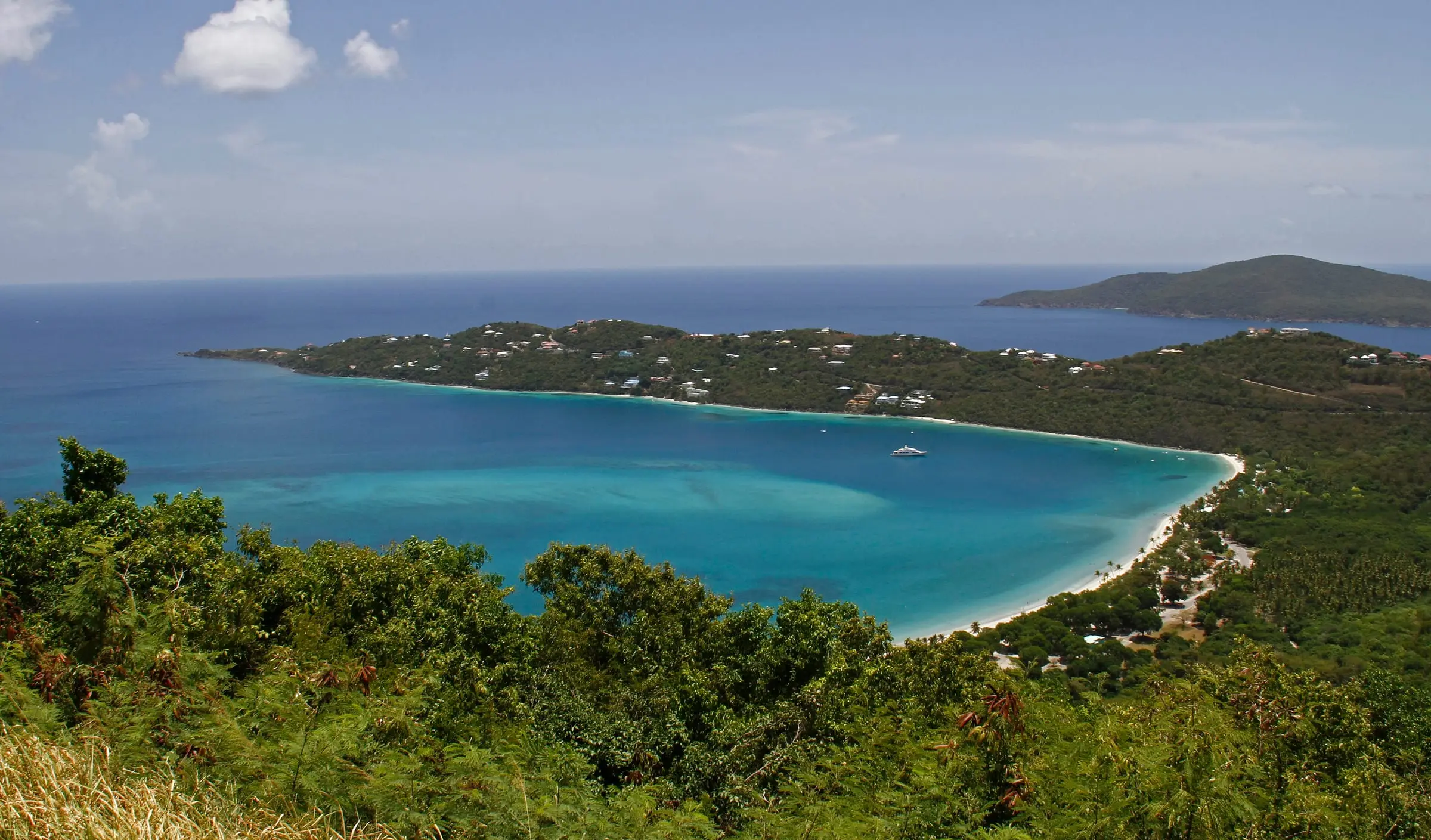
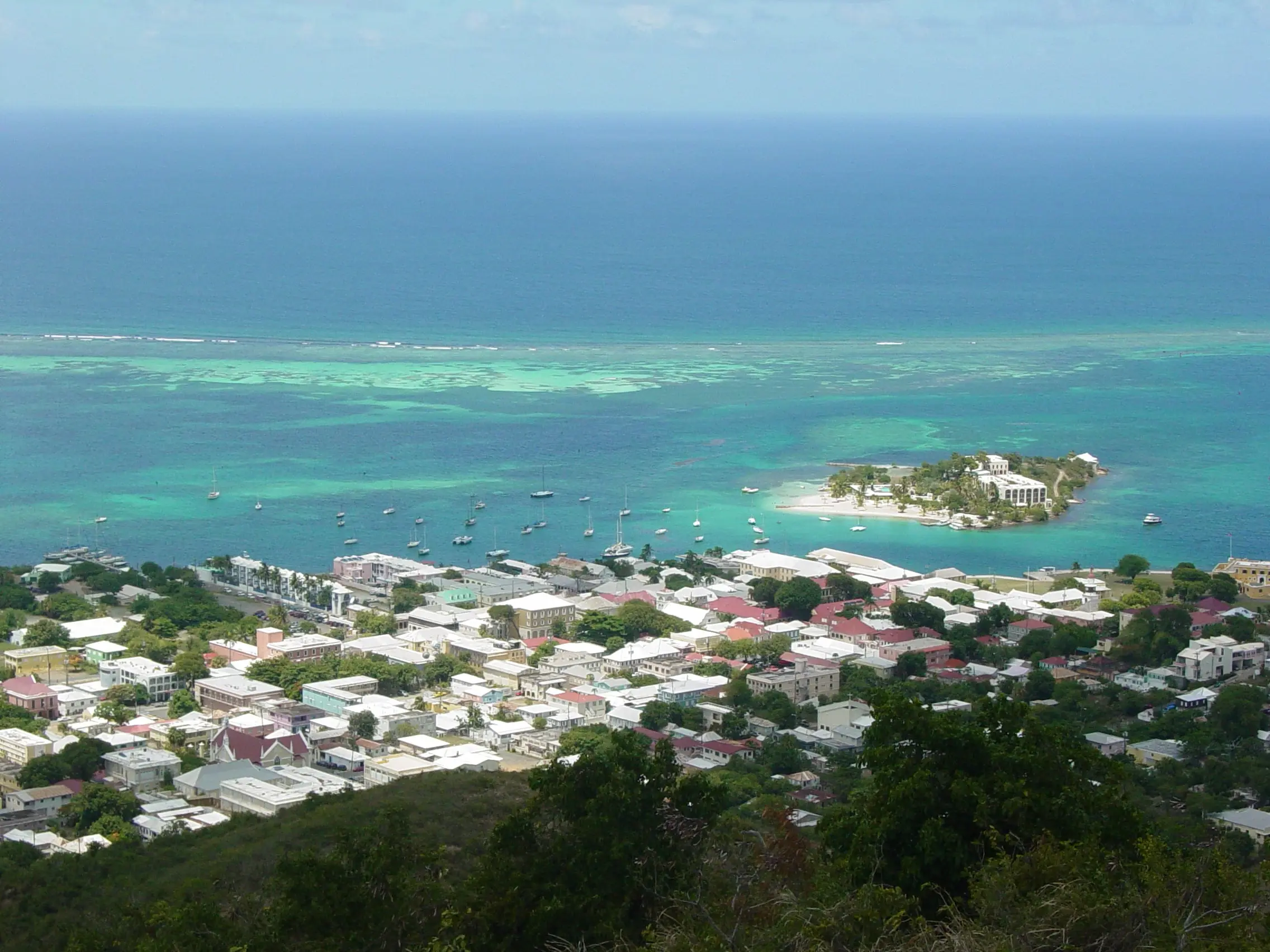
Photo: Jason P. Heym, CC BY-SA 3.0
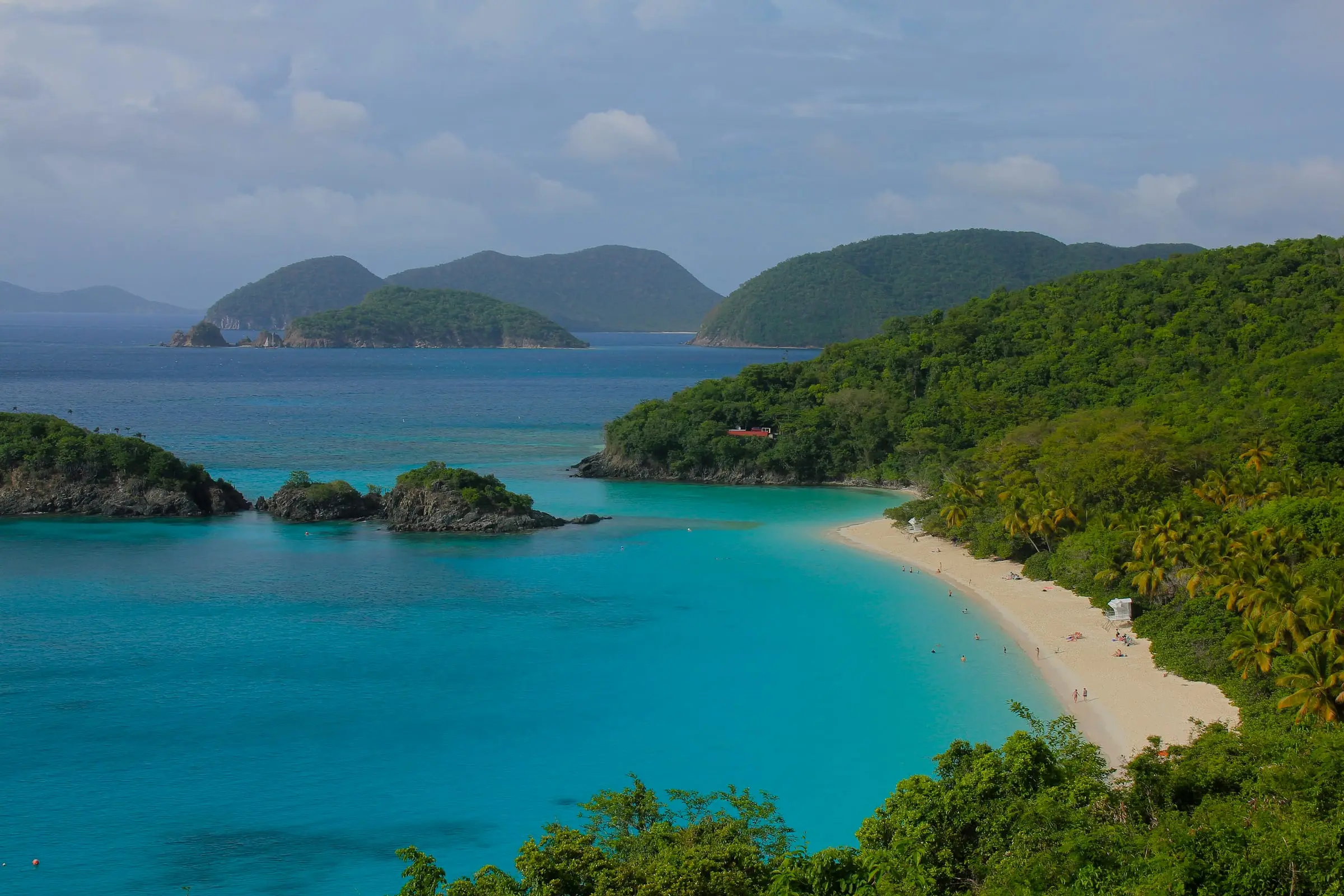
Photo: Navin75, CC BY-SA 2.0
Questions
Does homeowners insurance cover hurricanes?
It covers hurricane wind damage only if the policy includes windstorm coverage, which the territory's insurance regulator says not to exclude. Homeowners policies do not cover flooding, including storm surge, so flood needs its own policy. Check your windstorm deductible so you know what you would pay yourself.
Do I need flood insurance?
FEMA says homes in high-risk flood areas with mortgages from government-backed lenders must have flood insurance, and some lenders require it elsewhere. Even when it is not required, most homeowners policies do not cover flood damage. New NFIP policies typically take 30 days to go into effect.
Who regulates insurance in the USVI?
The Division of Banking, Insurance and Financial Regulation, in the Office of the Lieutenant Governor, who is by statute the Commissioner of Insurance. It licenses and regulates insurance companies and producers, publishes bulletins and takes consumer complaints.
Why is windstorm cover hard to find?
In a July 2023 bulletin, the Commissioner of Insurance described a hard market: some insurers and reinsurers had left the territory, and the insurers that remained were limited in how much they could write. Reinsurers also wanted less wooden or mixed-frame construction, so owners of those homes may face non-renewal and may need surplus lines cover, which may cost more and is not protected by the territory's guaranty association.
Sources
- Tropical Cyclone Climatology, NOAA National Hurricane Center (accessed October 29, 2026)
- Banking, Insurance and Financial Regulation, Office of the Lieutenant Governor (accessed October 29, 2026)
- Bulletin 2023-02: Availability of Windstorm Insurance Coverage in the Territory, Office of the Lieutenant Governor, Division of Banking, Insurance and Financial Regulation (accessed October 29, 2026). Dated July 7, 2023
- Lieutenant Governor Roach Encourages Residents to Be Ready/Be Insured for the 2026 Hurricane Season, Office of the Lieutenant Governor (accessed October 29, 2026). Undated release for the 2026 hurricane season; cites Bulletin 2017-06 of September 29, 2017 on public adjuster fees
- Lieutenant Governor Roach Reminds Public to Be Prepared for 2024 Atlantic Hurricane Season, Office of the Lieutenant Governor (accessed October 29, 2026). Undated release for the 2024 hurricane season; cited for its advice on deductibles and separate policies
- Insurance Terms Brochure, Office of the Lieutenant Governor, Division of Banking, Insurance and Financial Regulation (accessed October 29, 2026). 2019 brochure
- How to Avoid Being Underinsured: A Consumer's Guide, Office of the Lieutenant Governor, Division of Banking, Insurance and Financial Regulation (accessed October 29, 2026). 2019 brochure
- Hurricane Awareness Brochure, Office of the Lieutenant Governor, Division of Banking, Insurance and Financial Regulation (accessed October 29, 2026). 2019 brochure
- What U.S. Virgin Islands Consumers Need to Know About Flood Insurance, Office of the Lieutenant Governor, Division of Banking, Insurance and Financial Regulation (accessed October 29, 2026). 2019 brochure
- Force-Placed Insurance Brochure, Office of the Lieutenant Governor, Division of Banking, Insurance and Financial Regulation (accessed October 29, 2026). 2019 brochure
- Surplus Lines Flyer, Office of the Lieutenant Governor, Division of Banking, Insurance and Financial Regulation (accessed October 29, 2026). 2022 flyer
- Flood Insurance, Federal Emergency Management Agency (accessed October 29, 2026). Page last updated October 20, 2026
- Protect Your Property: Flood Insurance is Vital in New Mexico, Federal Emergency Management Agency (accessed October 29, 2026). Press release dated January 28, 2025; cited for national NFIP coverage limits
- Wind Damage Versus Floodwater Damage: What You Need to Know When Filing a Claim, Federal Emergency Management Agency (accessed October 29, 2026). Fact sheet released May 19, 2023; FEMA marks it as archived
- Flood Maps, Federal Emergency Management Agency (accessed October 29, 2026)
- Know Your Flood Risk: Homeowners, Renters or Business Owners, Federal Emergency Management Agency (accessed October 29, 2026)
- Community Status Book Report: Virgin Islands, Federal Emergency Management Agency (accessed October 29, 2026)
- Mitigation Assessment Team Compendium Report: 2017 Hurricane Season (FEMA P-2054), Federal Emergency Management Agency (accessed October 29, 2026). September 2019; see sections 2.2.2 and 3.2.2.1 on the USVI
- Division of Permits, Virgin Islands Department of Planning and Natural Resources (accessed October 29, 2026)
- Flood Plain Information and Advisory Maps, Virgin Islands Department of Planning and Natural Resources (accessed October 29, 2026)
- Hurricanes, Virgin Islands Territorial Emergency Management Agency (accessed October 29, 2026)
- 2020 Census Demographic Profile, St. Thomas Island: Selected Housing Characteristics (DP4), U.S. Census Bureau (accessed October 29, 2026)
- 2020 Census Demographic Profile, St. Croix Island: Selected Housing Characteristics (DP4), U.S. Census Bureau (accessed October 29, 2026)
- 2020 Census Demographic Profile, St. John Island: Selected Housing Characteristics (DP4), U.S. Census Bureau (accessed October 29, 2026)