Living in St. Thomas
What daily life on St. Thomas involves, from neighborhoods, utilities and driving on the left to hurricanes, schools and taxes, with a source for every figure.
Moving, St. ThomasBy USVI Realty Editorial TeamUpdated October 28, 20266 minute read
St. Thomas at a glance
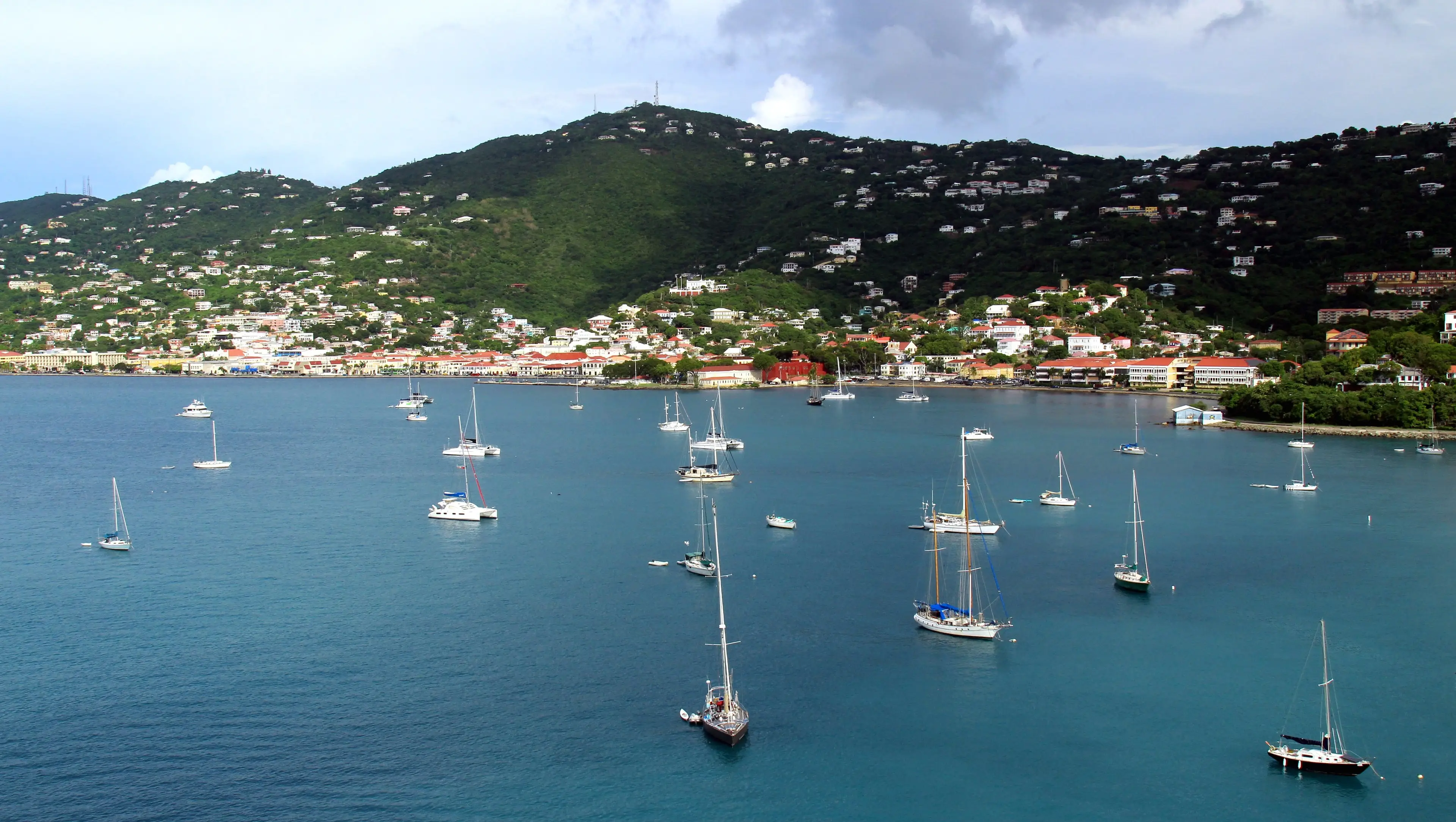
St. Thomas is the most populous of the U.S. Virgin Islands, with 42,261 residents in the 2020 Census. It is home to Charlotte Amalie, the territorial capital, and to Cyril E. King Airport, the gateway for travelers bound for St. John, which has no airport of its own.
The islands became a U.S. territory when the United States bought them from Denmark in 1917, and U.S. citizenship was conferred on Virgin Islanders in 1927. Federal authority over the territory has rested with the U.S. Department of the Interior since 1931.
The island has fewer people than it did a decade earlier. The 2020 Census counted 18.2 percent fewer residents than in 2010, while the number of housing units rose 3.6 percent.
Estimate as of October 2026. Population and housing figures are 2020 Census counts from the U.S. Census Bureau, the most recent full count for the territory.
Choosing where to live
The Census Bureau divides St. Thomas into seven subdistricts, and each holds many estates, the land divisions you will see in addresses. Estate boundaries are primarily those of the former plantations at the time of the 1917 transfer.
- Charlotte Amalie: the capital and the largest subdistrict by population, with 14,477 residents in 2020, a historic downtown and the downtown ferry terminal. See our Charlotte Amalie guide.
- East End: home to Red Hook and its ferry terminal for St. John. Its housing units grew 18.9 percent between 2010 and 2020. See Red Hook and the East End.
- Northside, Southside, Tutu and West End: each with its own mix of estates, covered in our St. Thomas island guide.
- Water Island: a separate island with 164 residents in 2020.
Before you choose, drive the roads you would use every day, at the hours you would use them. Our estate map shows where each estate lies.
Renting first
Renting before you buy lets you learn an area’s roads, water supply and storm exposure.
Short stays while you look
If you book a furnished place for less than 90 days, expect hotel room tax on the rent. The Bureau of Internal Revenue (BIR) applies it to guests who rent an apartment, condominium or residence for a total period of less than 90 days.
Estimate as of October 2026. BIR’s Tax Structure Booklet lists the hotel room tax at 12.5 percent of the gross room rate. Confirm the current rate with BIR.
Questions for a long-term lease
- Who pays for electricity and water, and how is water supplied?
- Who maintains any cistern, generator and storm shutters?
- What happens to the lease, and the rent, if a storm damages the home?
- Are pets allowed, and do condo association rules apply to tenants?
- What are the renewal terms and the security deposit?
If someone presents themselves as a real estate licensee, you can check the license with the Department of Licensing and Consumer Affairs, whose site links to a license search. Our renting section has more.
Power and water
The Water and Power Authority (WAPA) supplies electricity and publishes water rates and water quality reports for St. Thomas and St. John. Its rates are approved by the Public Services Commission.
Estimate as of October 2026. WAPA’s most recent posted rate breakdown, as of March 1, 2022, puts residential electricity at 40.85 cents per kWh for the first 250 kWh and 43.47 cents per kWh after that, including the fuel charge, plus a $4.86 monthly customer charge. The fuel charge changes with filings to the Public Services Commission, so check a current bill or ask WAPA before you budget. See our cost of living guide for how the charges add up.
Service interruptions are worth planning for. WAPA’s website posts a rotational outage schedule and an outage map, and it offers a sign-up for WAPA alerts. When you look at a home, ask for recent power bills, how the home gets its water (a WAPA connection, a cistern or both) and what backup power it has.
Getting around
Driving
“We drive on the left here in the Virgin Islands,” the National Park Service reminds visitors. It asks drivers to take extra care when turning, pulling out into traffic or crossing the road, and asks pedestrians to walk facing traffic.
Taxis and buses
Taxi rates are set by the Virgin Islands Taxi Cab Commission and approved by the Legislature. The Virgin Islands Port Authority (VIPA) says official taxis have a dome light and “TP” on the license plate, and suggests confirming the rate before you get in.
VITRAN, the territory’s public transit system, is run by the Department of Public Works and provides public transportation and paratransit on St. Thomas, St. John and St. Croix.
Estimate as of October 2026. The Department of Public Works lists VITRAN fares, effective July 18, 2024, of $2.00 for adults and $1.50 for students with school ID. Riders 60 and older and riders with a disability ride free with valid ID.
Ferries and flights
VIPA says many residents commute by ferry to work, school, medical appointments and family visits. The Red Hook to Cruz Bay crossing to St. John takes about 15 minutes, a passenger ferry also runs from downtown Charlotte Amalie, and three private companies run car barges from Red Hook. A ferry to St. Croix runs from the Charlotte Amalie waterfront Thursday through Monday.
Estimate as of October 2026. VIPA lists a one-way Red Hook to Cruz Bay fare of $6 for residents with a valid USVI ID ($8.15 for non-residents) and a one-way fare of $60 on the St. Croix ferry.
Cyril E. King Airport is about two miles west of Charlotte Amalie. For the airport checkpoint, VIPA reminds adults to carry valid identification, such as a REAL ID-compliant license or a passport.
Hurricanes and storm readiness
The National Hurricane Center lists the Atlantic hurricane season as June 1 to November 30. The peak is around September 10, with most activity between mid-August and mid-October.
The 2017 season shows why preparation matters. In September 2017, Hurricane Irma caused widespread catastrophic damage on St. Thomas and St. John, including collapsed homes, businesses and power lines, according to the National Hurricane Center. Two weeks later, Hurricane Maria brought heavy rain, flooding and mudslides.
- Ask any landlord or seller about shutters, roof condition and storm history.
- Get insurance quotes early. The Division of Banking, Insurance and Financial Regulation links to a lookup of companies licensed to sell insurance in the territory.
- Keep supplies and important papers ready before the season starts, and sign up for utility alerts.
Our property insurance directory is a place to start.
Schools and higher education
The Virgin Islands Department of Education runs two districts, St. Thomas/St. John and St. Croix, and its website has a school registration page for new students. The department reports 10,412 enrolled students for the 2024-2025 school year.
Estimate as of October 2026. Enrollment figure as reported on the Department of Education’s website.
The University of the Virgin Islands, founded in 1962, describes itself as a public, co-ed, land-grant HBCU. Its Orville E. Kean Campus is on St. Thomas, at 2 John Brewers Bay.
Taxes and paperwork
Taxes in the territory work differently from the mainland. BIR’s Tax Structure Booklet says the Internal Revenue Code applies in the Virgin Islands under a “mirror system,” and that bona fide residents file Form 1040 with the Virgin Islands and pay tax on their worldwide income there. Residents with income from outside the Virgin Islands also attach V.I. Form 1040 INFO.
Bona fide residence depends on three tests described in the booklet: a presence test, a tax home test and a closer connection test. One way to meet the presence test is to be in the Virgin Islands for at least 183 days during the year. These rules are detailed, so plan your move with a tax adviser who knows the territory.
If you buy a home, the Office of the Lieutenant Governor handles deeds and property tax, and the Tax Assessor publishes a Homestead Tax Credit application. Our guides to buying property in the USVI and buying a condo in St. Thomas cover the details.
Before you move: a checklist
- Visit more than once, ideally in and out of hurricane season.
- Pick two or three areas and drive your daily routes.
- Ask for recent power and water bills on any home you consider.
- Get insurance quotes for the specific property.
- Check school registration requirements if you have children.
- Talk with a tax adviser about residency before you change your tax filing.
- Rent first if you can, and read the whole lease.
Comparing islands? Read St. Thomas vs. St. Croix.

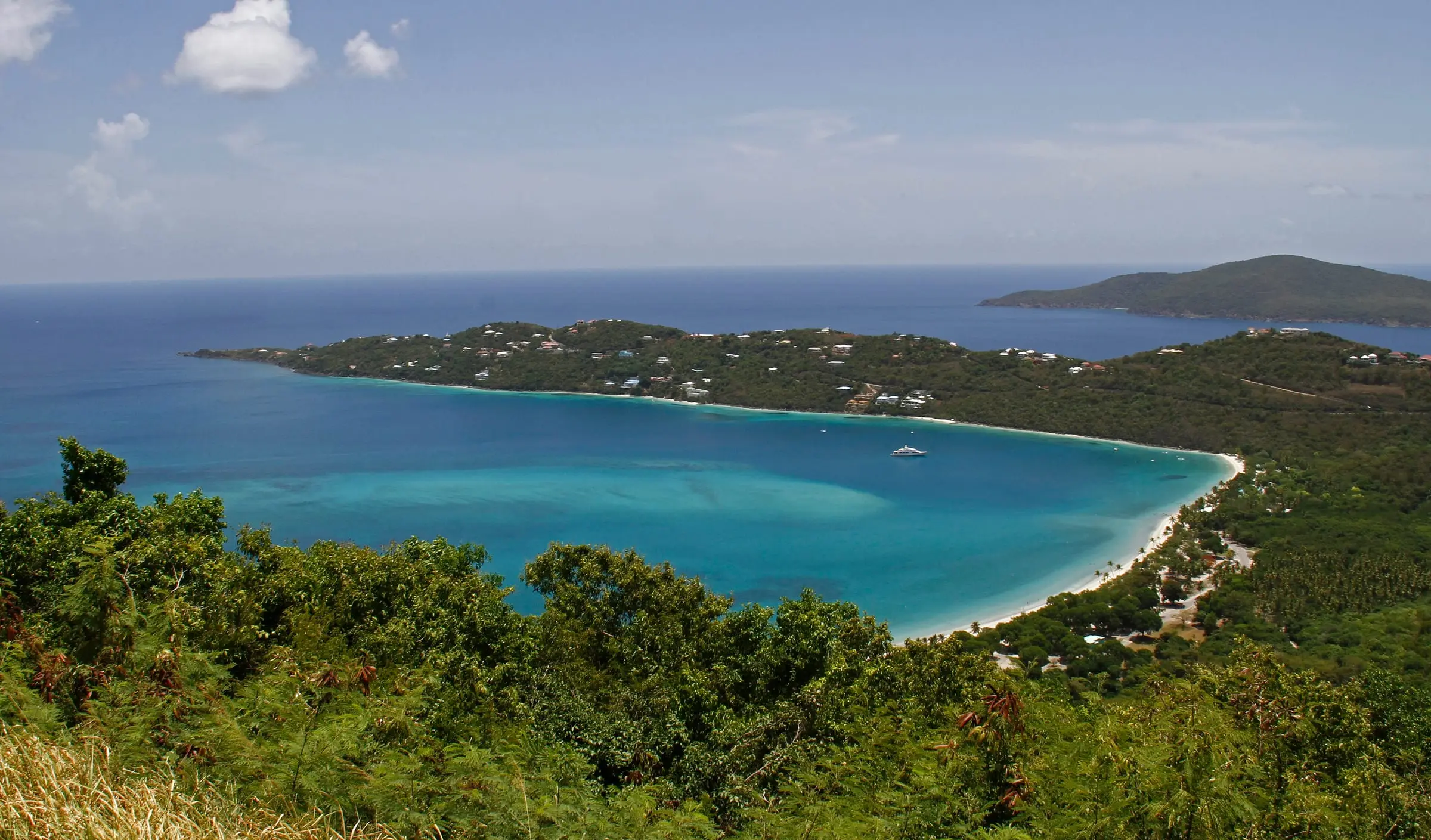
Photo: Smallbones, CC0

Photo: Sunil Pereira, CC BY-SA 3.0
Questions
Which side of the road do people drive on in St. Thomas?
The left. The National Park Service tells visitors, "We drive on the left here in the Virgin Islands," and asks drivers to pay extra attention when turning, pulling out into traffic or crossing the road.
What ID do I need to fly out of St. Thomas?
The Virgin Islands Port Authority says adults 18 and older must show valid identification at the airport checkpoint, such as a REAL ID-compliant license or a passport. Check your airline's requirements before you travel.
Do St. Thomas residents file income taxes with the IRS?
The Bureau of Internal Revenue's Tax Structure Booklet says bona fide residents of the Virgin Islands file Form 1040 with the Virgin Islands and pay tax on their worldwide income there. Whether you qualify depends on residency tests, so ask a tax adviser.
Is this guide legal, tax or financial advice?
No. It is general information to help you plan. For decisions about your own move, talk with a tax adviser, an insurance professional and, if you are buying, a licensed real estate professional and a Virgin Islands attorney.
Sources
- 2020 Island Areas Censuses: U.S. Virgin Islands (Tables 1 to 4), U.S. Census Bureau (accessed October 28, 2026)
- Table 1. Population of the United States Virgin Islands: 2010 and 2020, U.S. Census Bureau (accessed October 28, 2026)
- Table 3. Housing Unit Counts of the United States Virgin Islands: 2010 and 2020, U.S. Census Bureau (accessed October 28, 2026)
- Geography glossary: estates and census subdistricts, U.S. Census Bureau (accessed October 28, 2026)
- U.S. Virgin Islands, U.S. Department of the Interior, Office of Insular Affairs (accessed October 28, 2026)
- Virgin Islands National Park: Directions, National Park Service (accessed October 28, 2026)
- Virgin Islands National Park: Basic Information, National Park Service (accessed October 28, 2026)
- Edward Wilmoth Blyden IV Marine Terminal, Virgin Islands Port Authority (accessed October 28, 2026)
- Seaport Schedules, Virgin Islands Port Authority (accessed October 28, 2026)
- Cyril E. King Airport, St. Thomas, Virgin Islands Port Authority (accessed October 28, 2026)
- Travel FAQ, Virgin Islands Port Authority (accessed October 28, 2026)
- Airport Parking and Ground Transportation, Virgin Islands Port Authority (accessed October 28, 2026)
- VITRAN Fares, Virgin Islands Department of Public Works (accessed October 28, 2026)
- About VITRAN, Virgin Islands Department of Public Works (accessed October 28, 2026)
- Virgin Islands Water and Power Authority, Virgin Islands Water and Power Authority (accessed October 28, 2026)
- Electric Rates Breakdown: As of March 1, 2022, Virgin Islands Water and Power Authority (accessed October 29, 2026)
- Kilowatt Per Hour Rate, Virgin Islands Water and Power Authority (accessed October 28, 2026)
- Tropical Cyclone Climatology, NOAA National Hurricane Center (accessed October 28, 2026)
- Tropical Cyclone Report: Hurricane Irma (AL112017), NOAA National Hurricane Center (accessed October 28, 2026)
- Tropical Cyclone Report: Hurricane Maria (AL152017), NOAA National Hurricane Center (accessed October 28, 2026)
- Banking, Insurance and Financial Regulation, Office of the Lieutenant Governor, U.S. Virgin Islands (accessed October 28, 2026)
- Virgin Islands Department of Education, Virgin Islands Department of Education (accessed October 28, 2026)
- University of the Virgin Islands, University of the Virgin Islands (accessed October 28, 2026)
- Tax Structure Booklet of the U.S. Virgin Islands, Virgin Islands Bureau of Internal Revenue (accessed October 28, 2026)
- Office of the Tax Assessor, Office of the Lieutenant Governor, U.S. Virgin Islands (accessed October 28, 2026)
- Requirements for Real Estate Commission Licensure and Examination, Virgin Islands Department of Licensing and Consumer Affairs (accessed October 28, 2026)