Moving to the USVI: A Practical Checklist
Moving to the USVI can mean lining up eight things: shipping and registering a car, a Virgin Islands driver's license, pet entry papers, power and water, internet and phone, school registration, health care and a mailing address. This checklist shows what each office asks for.
MovingBy USVI Realty Editorial TeamUpdated October 29, 20268 minute read
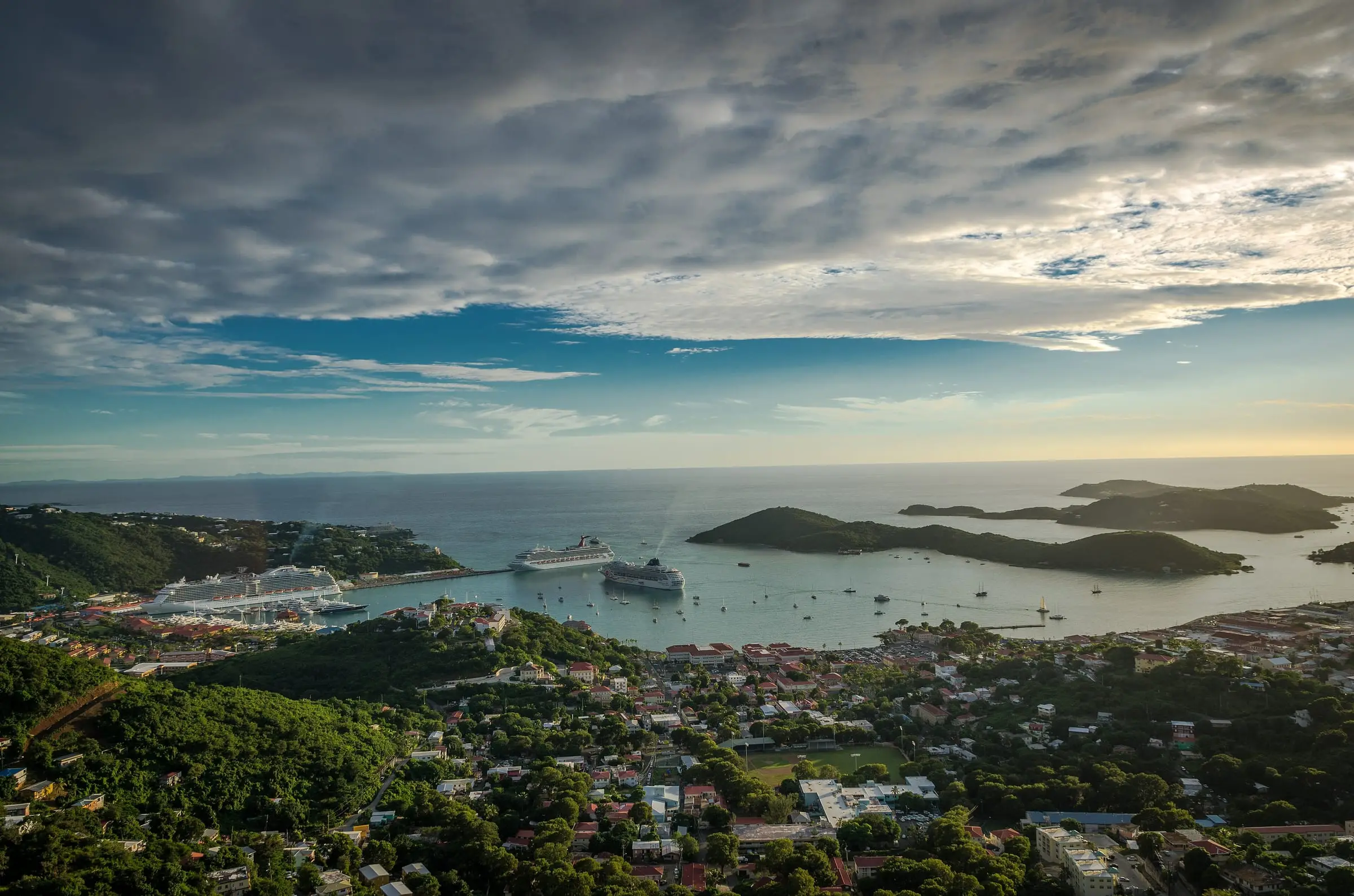
Photo: Sunil Pereira, CC BY-SA 3.0
In some ways, moving to the U.S. Virgin Islands is a move within the United States. U.S. Customs and Border Protection says U.S. citizens traveling directly from a U.S. territory “are not considered to have left the country” and do not need to present a passport, and mail between the states and the territory is domestic mail. In other ways, the islands run their own systems. Here is what the official offices ask for. It is general information, not legal or tax advice.
How do you ship a car and register it?
Cars and household goods arrive by sea. The Port Authority’s cargo ports include Crown Bay on St. Thomas, for containerized and general cargo, and the Wilfred Allick Transshipment Center on St. Croix, for roll-on/roll-off and lift-on/lift-off cargo. For St. John, ask your shipper how the car will cross from St. Thomas; privately owned car barges run between Red Hook and Enighed Pond in Cruz Bay.
Get written quotes from more than one shipper. Start with our car shipping and container and household shipping directories, and see storage if your goods arrive before your home is ready. For a financed car, the Bureau of Motor Vehicles (BMV) says you need a letter from the lienholder authorizing the shipment and titling.
To register a vehicle never registered in the territory, the BMV asks for:
- the original certificate of title;
- proof of valid insurance, since automobile liability coverage is required;
- the Highway User’s Tax form, which it also calls the Road Tax Form;
- the buyer’s ID and the shipping documents;
- for a car with a lien, an original letter from the lender and a copy of the title.
Start with a BMV moving permit, which lets you take the car to inspection; the BMV says every vehicle entering the territory for the first time must be inspected. After that, most vehicles need an annual inspection, though privately owned vehicles up to 10 years old are exempt in some renewal years. BMV offices on each island are listed under vehicle registration. And remember: “We drive on the left here in the Virgin Islands,” as the National Park Service tells visitors.
Estimate as of October 2026. BIR’s Tax Structure Booklet, as posted in 2026, says a vehicle registered in the Virgin Islands for the first time pays a highway users tax based on its unladen weight, at sixteen cents per pound with a minimum of $25. The BMV’s 2026 fee page lists a $20 moving permit and a $54 certificate of title. Confirm current amounts with BIR and the BMV.
How do you get a Virgin Islands driver’s license?
The BMV converts a valid license from a U.S. state or territory. Book an appointment online, complete the application, surrender your unexpired license and bring a driving record from your state dated within 30 days; the BMV verifies the license with the issuing state. You also need one identity document, such as a U.S. passport or certified birth certificate, a document showing your full Social Security number and two proofs of address from different sources, such as a lease and a utility bill.
You can choose a REAL ID license or a Limited Purpose license. The BMV says a Limited Purpose license cannot be used for federal purposes, and the Port Authority notes that since May 7, 2025, licenses that are not REAL ID-compliant are no longer accepted at airport checkpoints. Converting a foreign license adds a written test. Once you hold a Virgin Islands license, report any change of name or address to the BMV within ten days.
Estimate as of October 2026. The BMV’s license page lists a $55 fee to convert a state or territory license, plus a late fee of $10 a month, up to $250, where one applies, and a $15 verification fee for foreign licenses.
Can you bring your pet?
Yes, with paperwork. For dogs and cats coming from the U.S. mainland or Puerto Rico, the Virgin Islands Department of Agriculture says:
- An accredited veterinarian must inspect the animal and issue a health certificate within 10 days of arrival, on an APHIS 7001 form, an official state certificate of veterinary inspection or an electronic certificate from a NASAHO-approved company. Certificates designed by individual businesses are not accepted.
- The certificate must show the veterinarian’s accreditation number and the rabies vaccination date, product and lot number.
- Every dog and cat must be currently vaccinated against rabies or have an adequate titer result from the past 12 months. After a first vaccination, wait 10 days before arrival. Animals too young to be vaccinated cannot enter.
- Email the certificate to veterinaryservices@doa.vi.gov at least one business day before you arrive.
An animal without valid rabies papers can be confiscated and quarantined for at least 10 days at the owner’s expense. Pets from other countries, and other species, follow separate rules, so contact the department first. Its page shows no revision date, so confirm the rules before you book.
The Port Authority notes that each airline has its own pet policy. Ask landlords and condominium associations about pets before you sign, and note that pets are prohibited on park beaches in Virgin Islands National Park on St. John. See pet relocation.
How do you set up power and water?
The Virgin Islands Water and Power Authority (WAPA) produces and distributes electricity and drinking water in the territory. Its residential Application and Contract for Service has spaces for a refundable deposit and service fees, WAPA also posts a Landlord-Tenant Form, and the application says all transactions can be done by phone or email. WAPA’s website has an outage map and an alerts sign-up.
Piped water does not reach every home. WAPA distributes drinking water to almost 13,000 customers through water lines and standpipes. In the 2020 Census, the public system was a water source for 37.8 percent of homes on St. Thomas, 42.1 percent on St. Croix and 20.5 percent on St. John, while 72.6, 70.1 and 85.2 percent reported a cistern, catchment, tanks or drums. Homes could report more than one source.
Cisterns need care. A January 2024 guide hosted by the Department of Planning and Natural Resources (DPNR) estimates that 90 percent of USVI homes have active cisterns. It recommends a cistern large enough for three months of drinking water, inspecting the system weekly, cleaning and disinfecting it every three to five years at a minimum, and keeping a separate emergency supply of about 1 gallon per person per day, ideally for two weeks.
Before you sign a lease or buy, ask who pays WAPA, how the home gets its water, when the cistern was last cleaned and who pays for water deliveries. See utilities, and our guide to the cost of living for rates.
How do you get internet and phone service?
The Public Services Commission (PSC) regulates telephone and cable TV utilities, along with electric, water and ferryboat utilities, and its website has a complaint form. Its page does not list internet service. In the 2020 Census, 80.1 percent of occupied homes on St. Thomas, 78.1 percent on St. Croix and 80.6 percent on St. John had a broadband internet subscription, and 95 to 98 percent had telephone service available.
Ask the landlord or seller which providers serve the address and whether a line is already installed. If you will work from home, test the connection before you commit, and ask about backup power.
Where do children go to school?
Children from 5 through 18 must be enrolled in a public, private, parochial or home-school program, according to the Virgin Islands Department of Education. It runs public schools in two districts, St. Croix and St. Thomas/St. John, and its Student Services Registration Division decides which school a child attends. Kindergarten children must turn 5 by December 31 of the entry year, and public pre-K children must turn 4 by then.
Complete the district’s online pre-registration in PowerSchool, then bring original documents in person to the district registration office, with the child and a parent or legal guardian. Students moving from off-island schools can enroll year-round. The department asks for:
- a birth certificate, plus a Social Security card in the St. Croix District;
- the parent or guardian’s government-issued photo ID, and any guardianship papers;
- the latest report card, or an official transcript for grades 9 to 12, plus any IEP or 504 Plan;
- a V.I. immunization card or a certified exemption letter, and a health clearance from a Department of Health clinic;
- proof of residency, such as a deed or a current WAPA bill for owners, or a signed lease with a WAPA bill or rent receipt for renters.
The St. Croix District registers students at 2133 Hospital Street in Christiansted, and the St. Thomas/St. John District at 8262 Crown Bay on St. Thomas. The department lists 31 registered non-public schools, each holding its Certificate of Operation: 14 on St. Thomas, 15 on St. Croix and 2 on St. John. See schools.
Where do you go for health care?
The federal Centers for Medicare & Medicaid Services lists two acute care hospitals in the territory, both with emergency services: Roy Lester Schneider Hospital on St. Thomas and the Gov. Juan F. Luis Hospital and Medical Center in Christiansted, St. Croix. St. John has no hospital. A 2021 release from the territory’s Office of Disaster Recovery said the Myrah Keating Smith Health Center provides 24-hour emergency and outpatient services from a modular facility, pending a FEMA-approved replacement for the building hurricanes closed in 2017. Check its current services before you move.
Ask your insurer which island providers are in its network, and find the emergency care nearest your new home. See healthcare.
How do mail and addresses work?
Mail between the states and the Virgin Islands is domestic mail, but a few rules differ:
- Format. USPS Publication 28 says Virgin Islands addresses follow its national standards and use the abbreviation VI, not USVI. Valid city lines are ST THOMAS (for Charlotte Amalie), ST JOHN (for Cruz Bay), and CHRISTIANSTED, FREDERIKSTED or KINGSHILL on St. Croix.
- Estates and lots. Street names can include estate names, such as Estate Bovoni; our estate map shows where each estate lies. The Postal Service notes that lot numbers are physical identifiers, not part of a mailing address, so ask the landlord or seller what mailing address the home uses.
- Customs forms. Under the Domestic Mail Manual, any item containing goods rather than documents, mailed from the Virgin Islands to the states or Puerto Rico, needs a customs form (PS Form 2976 or 2976-A), whatever the mail class or weight.
When your address changes, update the BMV and WAPA, which posts a mailing address change form. Our government offices directory lists the offices you will deal with.
Your moving checklist
- Get written shipping quotes, and a lienholder letter for a financed car.
- Keep the title, insurance and shipping papers for the BMV.
- Book a BMV appointment to convert your license.
- Have your pet’s health certificate issued within 10 days of arrival.
- Ask about WAPA service, the cistern and internet before you sign.
- Pre-register children online and gather original documents.
- Check insurance networks and find your nearest emergency care.
- Confirm your mailing address, and talk with a tax adviser about residency before you change how you file; Living in St. Thomas explains the basics.
Still choosing an island? Start with Which USVI Island Is Right for You? Renting first? Read our guide to long-term rentals.
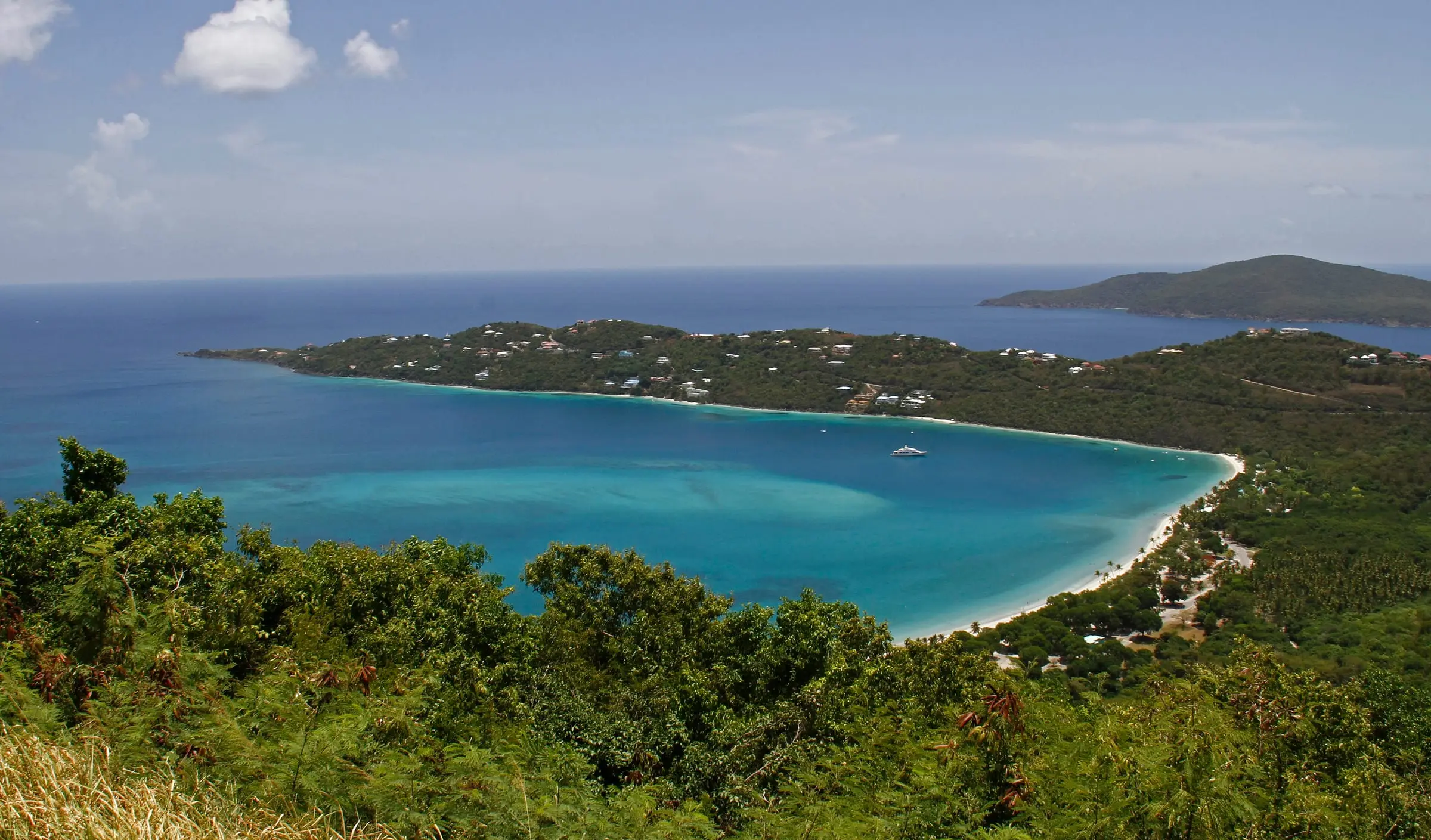
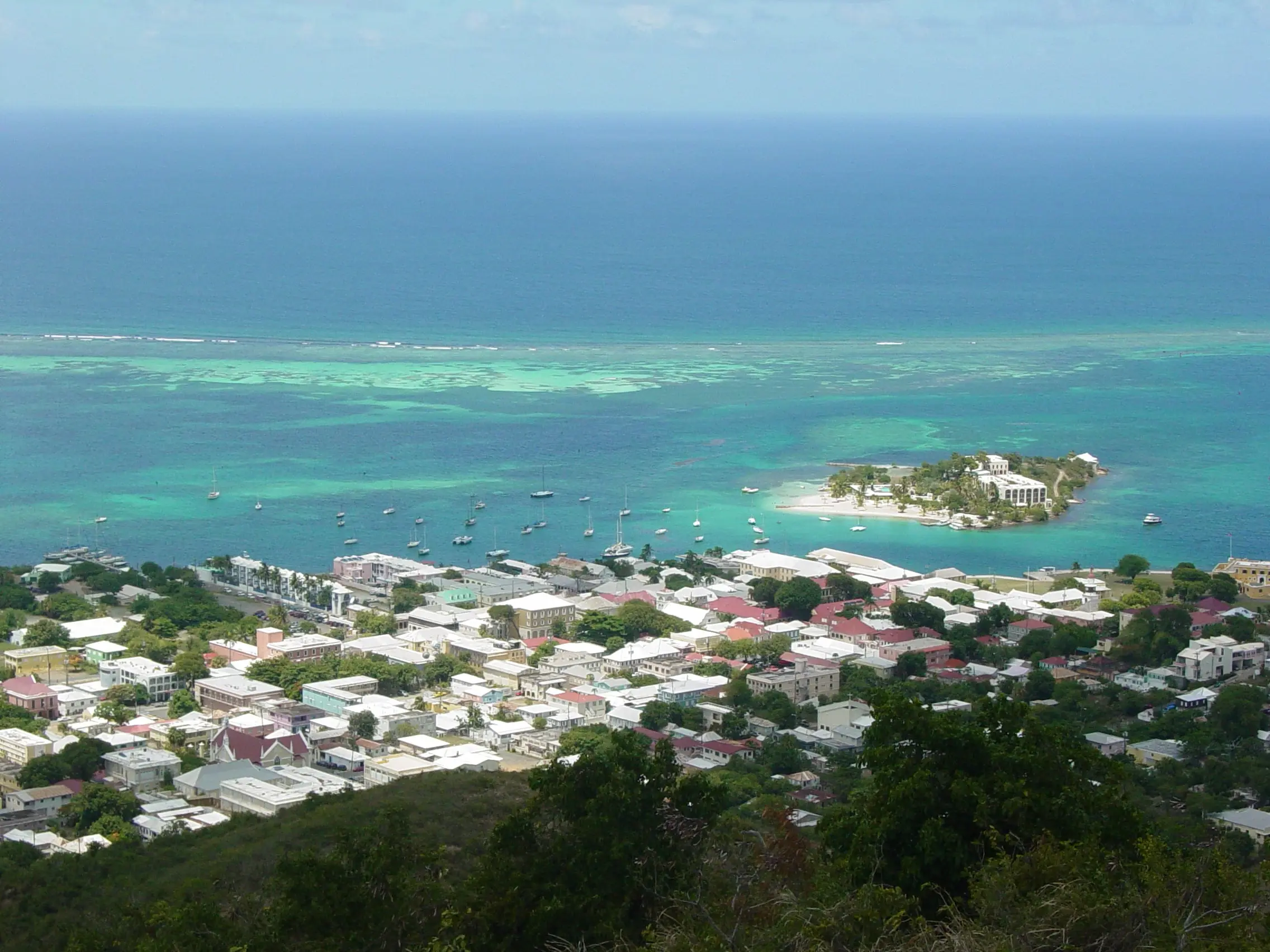
Photo: Jason P. Heym, CC BY-SA 3.0
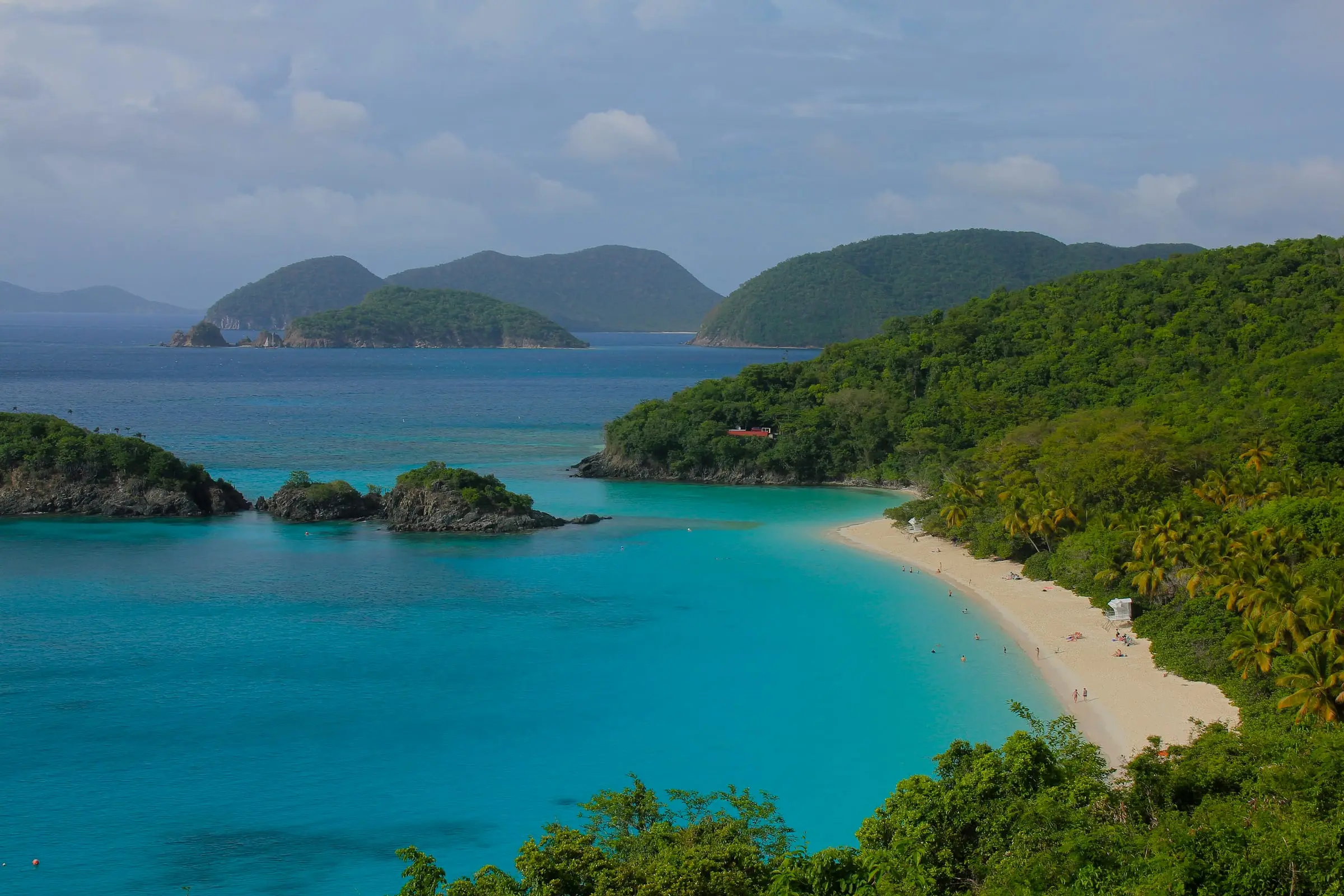
Photo: Navin75, CC BY-SA 2.0
Questions
How do I register a car in the USVI?
Register it with the Bureau of Motor Vehicles (BMV). For a vehicle never registered in the territory, the BMV asks for the original title, proof of valid insurance, the Highway User's Tax form, the buyer's ID and the shipping documents, plus a lender's letter if there is a lien. All vehicles entering the territory for the first time must be inspected, and a BMV moving permit lets you drive the car to inspection.
Can I bring my pet to the USVI?
Yes, if you meet the Virgin Islands Department of Agriculture's rules. For dogs and cats coming from the U.S. mainland or Puerto Rico, it asks for a health certificate from an accredited veterinarian, issued within 10 days of arrival and showing a current rabies vaccination, emailed to its Veterinary Services office at least one business day before you arrive. Airlines set their own pet policies, so check with yours too.
How do I set up power and water?
Open an account with the Virgin Islands Water and Power Authority (WAPA), which produces and distributes electricity and drinking water. Its residential application lists a refundable deposit and service fees, and it says transactions can be done by phone or email. Many homes also rely on a rainwater cistern, so ask who maintains it and who pays for water deliveries if it runs low.
Where do children go to school?
The Virgin Islands Department of Education runs public schools in two districts, St. Croix and St. Thomas/St. John, and its registration division decides which school a child attends. You pre-register online, then bring original documents, including a birth certificate, immunization records, school records and proof of residency, to the district registration office. The department also lists 31 registered non-public schools across the three islands.
Sources
- Western Hemisphere Travel Initiative: Frequently Asked Questions, U.S. Customs and Border Protection (accessed October 29, 2026)
- Crown Bay Cargo Port, Virgin Islands Port Authority (accessed October 29, 2026)
- Wilfred Allick Transshipment Center, Virgin Islands Port Authority (accessed October 29, 2026)
- Ferry and Cargo Schedules, Virgin Islands Port Authority (accessed October 29, 2026). Car barges between Red Hook and Enighed Pond.
- Travel FAQ, Virgin Islands Port Authority (accessed October 29, 2026). REAL ID at airport checkpoints and airline pet policies.
- Bureau of Motor Vehicles, Virgin Islands Bureau of Motor Vehicles (accessed October 29, 2026). Online appointments for each island's office.
- Vehicles, Virgin Islands Bureau of Motor Vehicles (accessed October 29, 2026)
- Frequently Asked Questions, Virgin Islands Bureau of Motor Vehicles (accessed October 29, 2026)
- Fees, Virgin Islands Bureau of Motor Vehicles (accessed October 29, 2026)
- Drivers License, Virgin Islands Bureau of Motor Vehicles (accessed October 29, 2026)
- Tax Structure Booklet of the U.S. Virgin Islands, Virgin Islands Bureau of Internal Revenue (accessed October 29, 2026). Highway users tax section. The edition posted at tax_Structure_2021-01-31.pdf has the same wording.
- Virgin Islands National Park: Basic Information, National Park Service (accessed October 29, 2026). Source for driving on the left in the Virgin Islands.
- Virgin Islands National Park: Superintendent's Compendium (2026 update), National Park Service (accessed October 29, 2026)
- Animal Import Regulations for the Virgin Islands, Virgin Islands Department of Agriculture (accessed October 29, 2026)
- About Us, Virgin Islands Water and Power Authority (accessed October 29, 2026)
- Virgin Islands Water and Power Authority, Virgin Islands Water and Power Authority (accessed October 29, 2026). Outage map and WAPA alerts sign-up.
- Online Forms, Virgin Islands Water and Power Authority (accessed October 29, 2026)
- Application and Contract for Service (Residential), Virgin Islands Water and Power Authority (accessed October 29, 2026)
- Your Health and Cisterns: A USVI Comprehensive Guide (January 2024), Virgin Islands Department of Planning and Natural Resources (accessed October 29, 2026)
- 2020 Census Demographic Profile, St. Thomas Island: Selected Housing Characteristics (DP4), U.S. Census Bureau (accessed October 29, 2026)
- 2020 Census Demographic Profile, St. Croix Island: Selected Housing Characteristics (DP4), U.S. Census Bureau (accessed October 29, 2026)
- 2020 Census Demographic Profile, St. John Island: Selected Housing Characteristics (DP4), U.S. Census Bureau (accessed October 29, 2026)
- 2020 Island Areas Demographic Profile, U.S. Virgin Islands: variable labels, U.S. Census Bureau (accessed October 29, 2026). Labels used to read the DP4 table codes.
- Public Services Commission, Virgin Islands Public Services Commission (accessed October 29, 2026)
- School Registration, Virgin Islands Department of Education (accessed October 29, 2026)
- Non-Public Schools, Virgin Islands Department of Education (accessed October 29, 2026)
- Hospital General Information: U.S. Virgin Islands, Centers for Medicare & Medicaid Services (accessed October 29, 2026). Lists two acute care hospitals in the territory, both with emergency services.
- Myrah Keating Smith Health Center Receives FEMA Approval for Replacement (September 10, 2021), USVI Office of Disaster Recovery (accessed October 29, 2026)
- Domestic Mail Manual 608: Postal Information and Resources, U.S. Postal Service (accessed October 29, 2026). Section 2, domestic mail and customs forms for the U.S. Virgin Islands.
- Publication 28, Appendix J: Virgin Islands address formats, U.S. Postal Service (accessed October 29, 2026)