Long-Term Rentals in the USVI
In the 2020 Census, median gross rent was highest on St. John and lowest on St. Croix, and most homes on every island reported a cistern. Before you rent, confirm who pays for power and water, how storms are handled and that the landlord is real.
RentingBy USVI Realty Editorial TeamUpdated October 29, 20268 minute read

Renting long term in the U.S. Virgin Islands has a few local features. Water often comes from a cistern, you may open the power and water accounts yourself, and every lease has to plan for hurricane season. This guide covers what rents looked like in the last census, what to check in a home and how to search safely.
USVI Realty does not list rentals or represent landlords or tenants. Our renting hub compares vacation and long-term rentals; this guide goes deeper on long leases.
How much is rent in the USVI?
The most complete public rent figures come from the 2020 Census, which reported gross rent for each island. Gross rent is the contract rent plus the estimated monthly cost of electricity, gas, water and sewer, and fuels, when the renter pays them. Contract rent is the rent agreed to, whatever furnishings, utilities or services it includes. Gross rent therefore lets you compare a furnished unit with power included and an empty one where you pay the bills.
Estimate as of October 2026. In the 2020 Census, median gross rent was $960 a month on St. Thomas, $822 on St. Croix and $1,283 on St. John, against $926 for the territory. Gross rent was $1,000 or more for 42.5 percent of rented homes on St. Thomas, 27.7 percent on St. Croix and 67.6 percent on St. John. In the same count, 40.2 percent of rented homes on St. Thomas, 29.0 percent on St. Croix and 43.3 percent on St. John spent 35 percent or more of 2019 household income on gross rent. These are 2020 figures, not today’s asking rents.
The census also shows how much of each island rents, and how homes get their water:
| 2020 Census | St. Thomas | St. Croix | St. John |
|---|---|---|---|
| Rented homes | 11,711 | 8,011 | 952 |
| Share of occupied homes rented | 59.4% | 44.3% | 51.3% |
| Homes reporting a cistern | 72.6% | 70.1% | 85.2% |
| Homes reporting water trucks | 18.3% | 7.6% | 20.6% |
| Homes reporting the public system | 37.8% | 42.1% | 20.5% |
The water rows cover all housing units, and a home can report more than one source.
HUD Fair Market Rents
HUD also publishes Fair Market Rents for the Virgin Islands. A Fair Market Rent is HUD’s estimate of the gross rent for modest, decent rental housing, aimed at the 40th percentile of what recent movers pay. It is the basis for payment standards in the Housing Choice Voucher program. Because the American Community Survey is not conducted in the territory, HUD builds the Virgin Islands figures from the 2020 Census long-form survey and updates them to 2024 using the growth in national American Community Survey data. Its fiscal year 2027 figures took effect on October 1, 2026.
We could not open HUD’s data tables to confirm the Virgin Islands amounts for this guide. Look them up on the Fair Market Rents page of HUD’s HUD User website. Neither HUD’s figures nor the census medians are asking rents, so for current rents, ask licensed property managers.
What comes with a long-term rental?
Furnished or unfurnished
Ask early whether a home is furnished, partly furnished or empty, and get a written inventory of what comes with it, from beds to appliances. Agree who repairs or replaces those items when they wear out, and photograph them on the day you move in.
Who pays for power and water?
Leases differ, so get the answer in writing. The Virgin Islands Water and Power Authority (WAPA) supplies electricity and potable water. If an account will be in your name, WAPA’s residential application lists a refundable deposit and non-refundable service fees. Its landlord-tenant form says that if you do not have a valid written lease, or cannot give WAPA a copy, your landlord must complete and notarize the form and attach a copy of the deed or other ownership documents.
Ask what the power bills have been, whether the unit has its own meter and how outages are handled. WAPA’s service contract says it does not guarantee uninterrupted service, and its website has an outage map and an alert sign-up. If the home has a generator, VITEMA says to run it outside, at least 20 feet from windows and doors.
Cisterns
Many homes collect rain from the roof, through gutters and downspouts, into a cistern. A January 2024 guide posted by the Department of Planning and Natural Resources (DPNR) warns that stored water can carry contaminants. It cites a 2019 Department of Health study that found E. coli in 80 percent of samples taken directly from cisterns and 58 percent of samples from kitchen taps.
The same guide calls for inspecting the system every three months, checking weekly for blockages and draining, cleaning and disinfecting the cistern whenever sludge builds up. It notes that routine water testing is the cistern owner’s cost. Ask the landlord who pays for a water truck when the cistern runs low, when it was last cleaned and how the water is treated. Keep your own emergency supply as well: the guide suggests about 1 gallon per person per day, ideally for two weeks and at least for three days.
Storm shutters and hurricane season
NOAA’s National Hurricane Center says the Atlantic hurricane season runs from June 1 to November 30. The peak is September 10, with most activity between mid-August and mid-October.
Ask whether the home has storm shutters, who puts them up and how much notice you will get. The territory’s insurance regulator calls permanent shutters the best protection, with plywood panels cut to fit each window as a lower-cost approach. Ask too where the safest interior room is, and what happens to the lease and the rent if a storm makes the home unlivable.
Insure your own belongings. The Lieutenant Governor’s office, which regulates insurance, advises renters to buy renter’s insurance for their contents. FEMA notes that most standard policies do not cover flooding, while the National Flood Insurance Program also covers renters. New flood policies typically take 30 days to take effect. Our guide to hurricane and flood insurance explains more. Sign up for Alert VI, VITEMA’s emergency notification system, for alerts by call, text and email.
How do you find a rental safely?
USVI Realty does not list rentals or recommend listing websites. Our directory lists property managers you can contact directly.
Wherever you search, the Federal Trade Commission (FTC) warns of two common scams. In one, scammers copy a real listing and swap in their own contact details. In the other, they advertise a place that is not for rent or does not exist, often at a low price, and claim to be abroad so they cannot show it. The FTC’s advice:
- Search the owner’s or company’s name with words such as “complaint,” “review” or “scam.”
- Be wary of rent far below the local market, and walk away from anyone rushing you.
- See the home in person or by video, knowing that even a tour is not proof.
- Check the owner’s name against tax assessment records. The Office of the Tax Assessor links to an online parcel search.
- Never pay by wire transfer, gift card or cryptocurrency, which are hard to recover.
- Hold off on sharing your Social Security number or other sensitive details until you have agreed to rent.
If you are targeted, report it to local police, to the website where the ad appeared and to the FTC at ReportFraud.ftc.gov. If a broker or manager is involved, check any license they hold with the online license search from the Department of Licensing and Consumer Affairs (DLCA).
What should you ask before you sign?
Bring these questions to every viewing, and ask for the important answers in writing:
- Are you the owner, or a manager with written authority to rent the home?
- What does the rent include: water, electricity, internet, trash, furniture, yard care?
- Whose name will the WAPA accounts be in, and will you sign WAPA’s landlord-tenant form if I need it?
- How does the home get water? How large is the cistern, when was it last cleaned and who pays for a truck delivery?
- What have the electric bills been over the past year?
- Is there a generator or other backup power, and who fuels and maintains it?
- Who puts up the storm shutters, and when?
- What happens to the lease and the rent if a storm makes the home unlivable?
- Has the home had leaks, mold or storm damage, and how was it repaired?
- How do I request repairs, and how quickly are they handled?
- How much is the deposit, where is it held, and how and when is it returned?
- What are the rules on pets, guests, parking and subletting?
What about the lease and the deposit?
Get the whole agreement in writing and keep a copy. A written lease also helps with utilities, since WAPA asks for one when you open service in your own name.
This guide does not summarize the territory’s landlord and tenant law, and we could not open an official copy of it for this guide. Before you sign, ask a real estate attorney how the law treats security deposits, notice periods, repairs and ending a lease early.
A few habits protect you on any lease:
- Walk through the home with the landlord before you move in, and record any damage in writing with dated photos.
- Get a receipt for the deposit and for every rent payment.
- Put repair requests in writing and keep copies.
- Ask what the landlord’s insurance covers, and what your own policy must cover.
If a property management business is involved and a dispute cannot be settled, DLCA’s Consumer Affairs division advises consumers on formal complaints against businesses and tries to resolve them.
Where to go next
Compare the islands with our guides to St. Thomas, St. Croix and St. John, or read which USVI island is right for you. For a budget beyond rent, see our guide to the cost of living in the USVI, and for the move itself, moving to the USVI. Renter updates and our monthly newsletter are on the resources page.

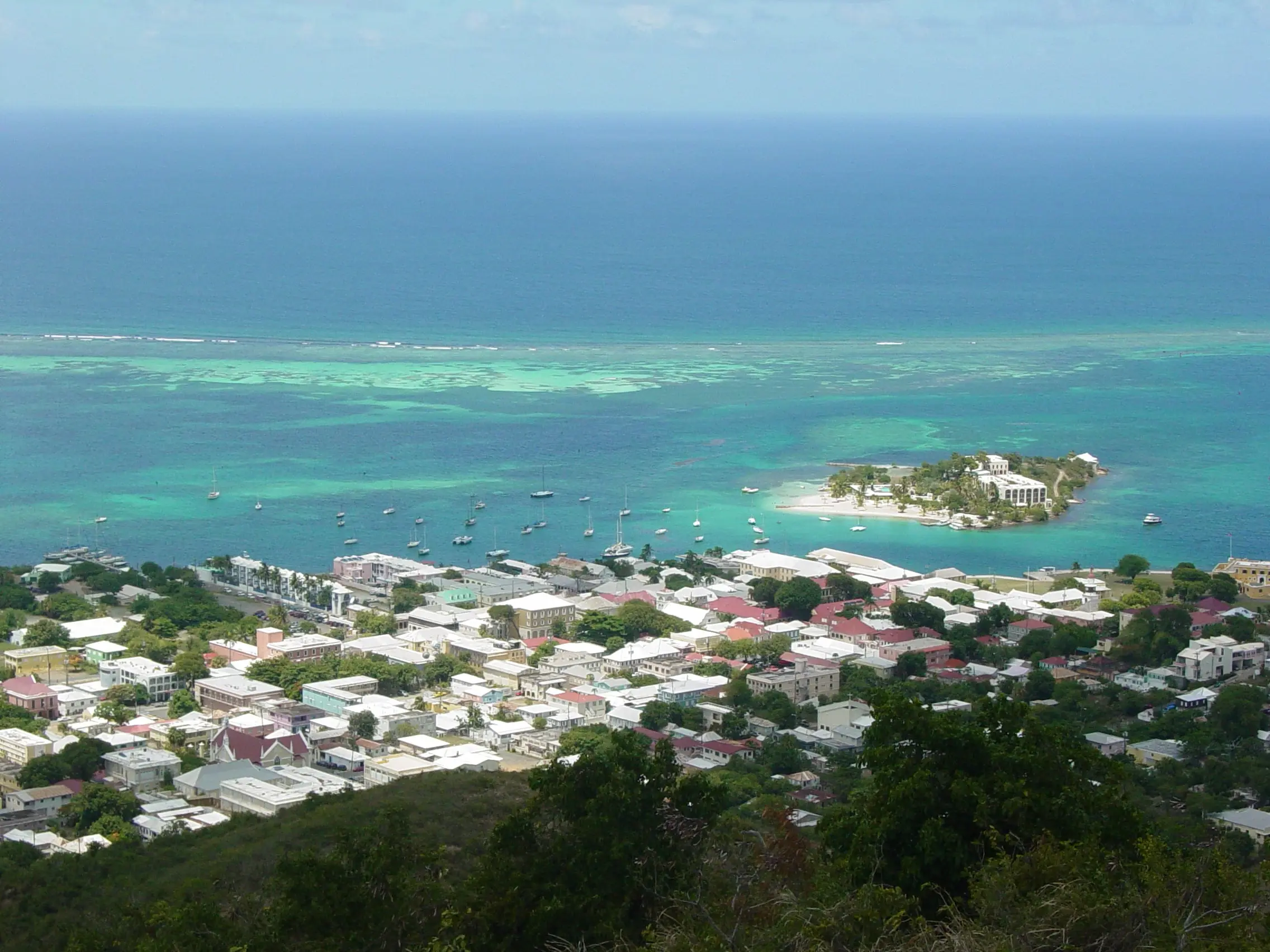
Photo: Jason P. Heym, CC BY-SA 3.0

Photo: Navin75, CC BY-SA 2.0
Questions
How much is rent in St. Thomas?
In the 2020 Census, the median gross rent on St. Thomas was $960 a month, compared with $822 on St. Croix and $1,283 on St. John. Gross rent includes the utilities and fuels a renter pays. These are 2020 figures, so ask licensed local property managers about current rents.
How do I find a long-term rental?
USVI Realty does not list rentals or recommend listing websites. Our directory lists property managers you can contact directly. Wherever you search, the FTC advises seeing the home in person or by video, checking the owner's name against tax assessment records and never paying by wire transfer, gift card or cryptocurrency.
Are utilities included in the rent?
It depends on the lease, so get the answer in writing. WAPA bills for electricity and water, and to open an account in your name it asks for a copy of your lease or a notarized form from your landlord with proof of ownership. Its application lists a refundable deposit and non-refundable service fees.
What is a cistern and who pays for water?
A cistern is a storage tank, usually filled with rainwater collected from the roof. In the 2020 Census, about 70 to 85 percent of homes on each island reported a cistern as a water source. Ask the landlord who pays for a water truck when it runs low, when it was last cleaned and how the water is treated.
How do I avoid rental scams?
The FTC warns that scammers copy real listings or invent fake ones, often at low rents, and claim to be abroad so they cannot show the home. See it in person or by video, confirm the owner through tax assessment records and never pay by wire transfer, gift card or cryptocurrency. Report scams at ReportFraud.ftc.gov.
Sources
- 2020 Census Demographic Profile, St. Thomas Island: Selected Housing Characteristics (DP4), U.S. Census Bureau (accessed October 29, 2026)
- 2020 Census Demographic Profile, St. Croix Island: Selected Housing Characteristics (DP4), U.S. Census Bureau (accessed October 29, 2026)
- 2020 Census Demographic Profile, St. John Island: Selected Housing Characteristics (DP4), U.S. Census Bureau (accessed October 29, 2026)
- 2020 Census Demographic Profile, U.S. Virgin Islands: Selected Housing Characteristics (DP4), U.S. Census Bureau (accessed October 29, 2026)
- 2020 Island Areas Censuses Demographic Profile Summary File: Technical Documentation, U.S. Census Bureau (accessed October 29, 2026). Appendix B definitions of contract rent and gross rent
- Fair Market Rents for the Housing Choice Voucher Program and Other Programs, Fiscal Year 2027, U.S. Department of Housing and Urban Development, in the Federal Register (accessed October 29, 2026). Notice published September 1, 2026; FY 2027 FMRs effective October 1, 2026. HUD's Virgin Islands figures were not confirmed for this guide.
- Rental Listing Scams, Federal Trade Commission (accessed October 29, 2026). Dated June 2026
- Application and Contract for Service (Residential), Virgin Islands Water and Power Authority (accessed October 29, 2026)
- Landlord-Tenant Form (Residential), Virgin Islands Water and Power Authority (accessed October 29, 2026). Last updated April 3, 2019
- Virgin Islands Water and Power Authority (outage map and WAPA Alerts), Virgin Islands Water and Power Authority (accessed October 29, 2026)
- Your Health and Cisterns: A USVI Comprehensive Guide, Virgin Islands Department of Planning and Natural Resources (accessed October 29, 2026). Dated January 2024
- Tropical Cyclone Climatology, NOAA National Hurricane Center (accessed October 29, 2026)
- Hurricane Awareness Brochure, Office of the Lieutenant Governor, Division of Banking, Insurance and Financial Regulation (accessed October 29, 2026). 2019 brochure
- Lieutenant Governor Roach Encourages Residents to Be Ready/Be Insured for the 2026 Hurricane Season, Office of the Lieutenant Governor (accessed October 29, 2026). Undated release for the 2026 hurricane season
- Flood Insurance, Federal Emergency Management Agency (accessed October 29, 2026). Page last updated October 20, 2026
- Protect Your Property: Flood Insurance is Vital in New Mexico, Federal Emergency Management Agency (accessed October 29, 2026). Press release dated January 28, 2025; cited for national NFIP rules on renters
- Hurricanes, Virgin Islands Territorial Emergency Management Agency (accessed October 29, 2026)
- Office of the Tax Assessor (parcel search), Office of the Lieutenant Governor (accessed October 29, 2026)
- Consumer Affairs (license search and complaints), Department of Licensing and Consumer Affairs (accessed October 29, 2026)