The town
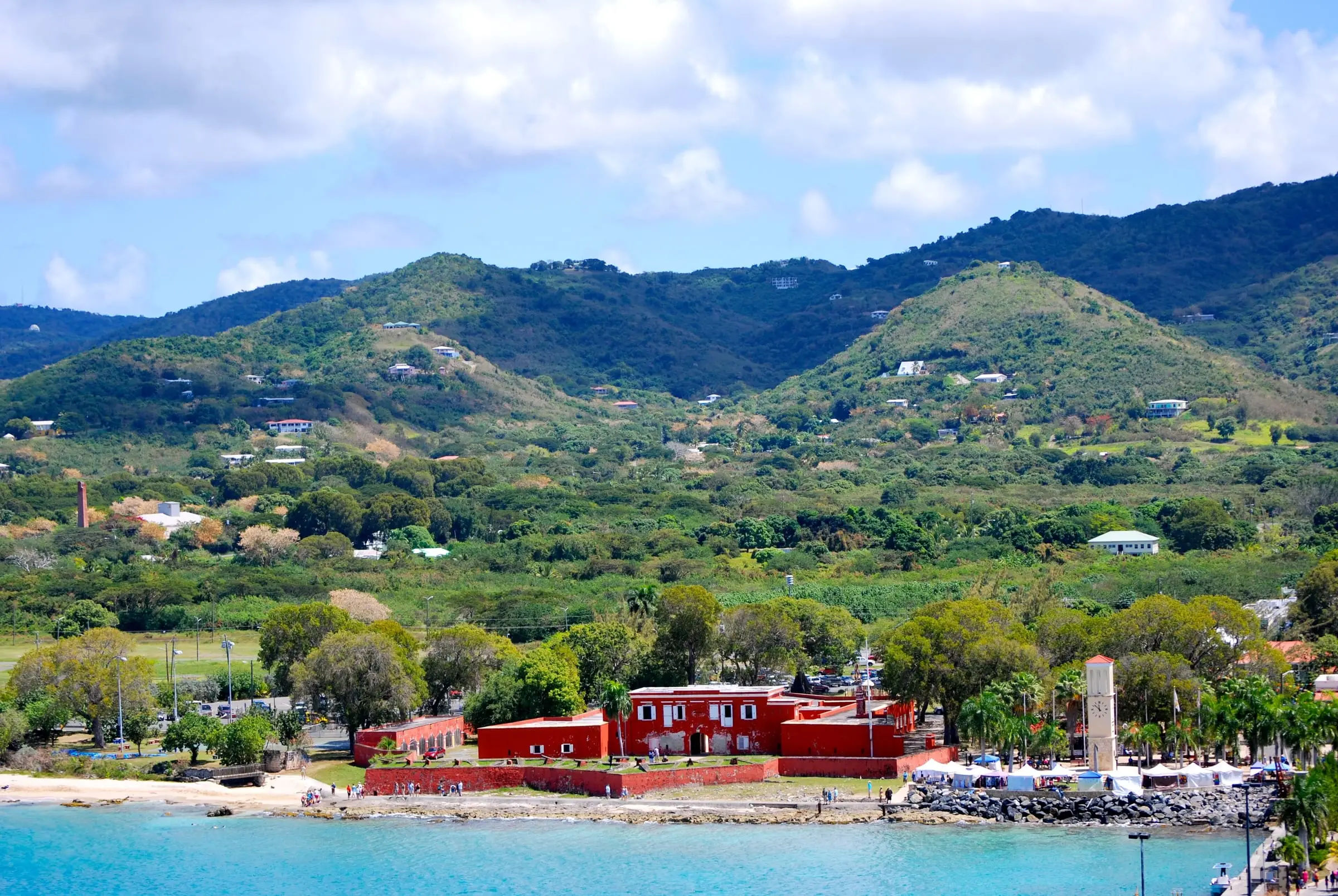
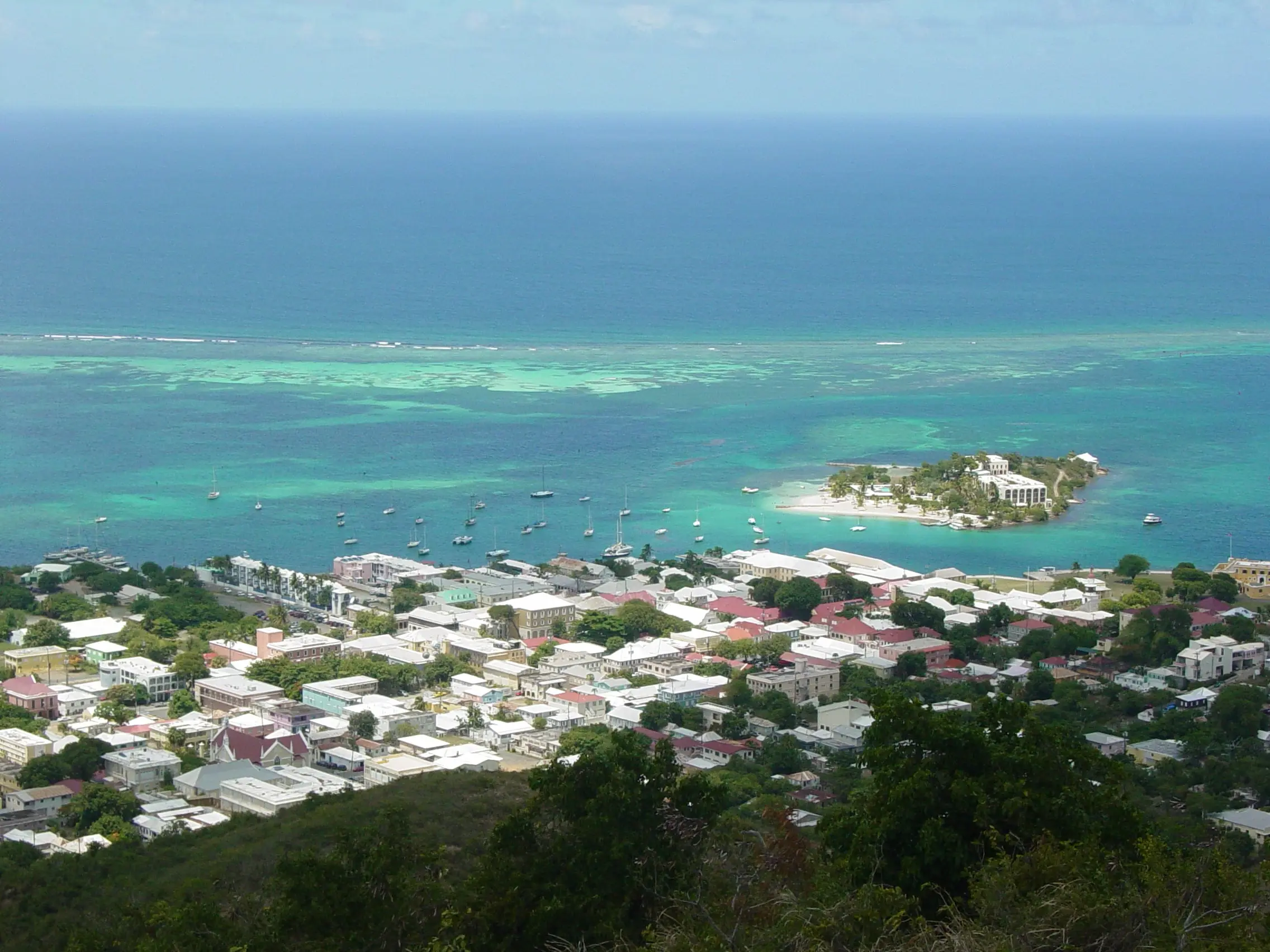
The Danes purchased St. Croix from France in 1733 and named their new town Christiansted, “Christian’s Place,” in honor of King Christian VI of Denmark-Norway, according to the National Park Service. They chose a reef-protected harbor and built on the ruins of a small port town the Dutch had started in the 1640s. The royal governor-general took up residence in the new capital.
The Park Service describes Christiansted’s heritage as built on the trade in enslaved people, sugar and rum. The town’s fortunes followed the island’s sugar industry, and the Park Service lists the loss of slave labor with emancipation in 1848 among the causes of its economic decline.
Today Christiansted is the larger of St. Croix’s two towns. The 2020 Census counted 1,770 residents on about half a square mile, down 27 percent from 2,433 in 2010.
The Office of the Lieutenant Governor’s St. Croix office at 1131 King Street houses the Recorder of Deeds, the Tax Assessor, the Tax Collector and the Division of Banking, Insurance and Financial Regulation. The Virgin Islands Department of Education’s St. Croix District office is at 2133 Hospital Street.
The historic district
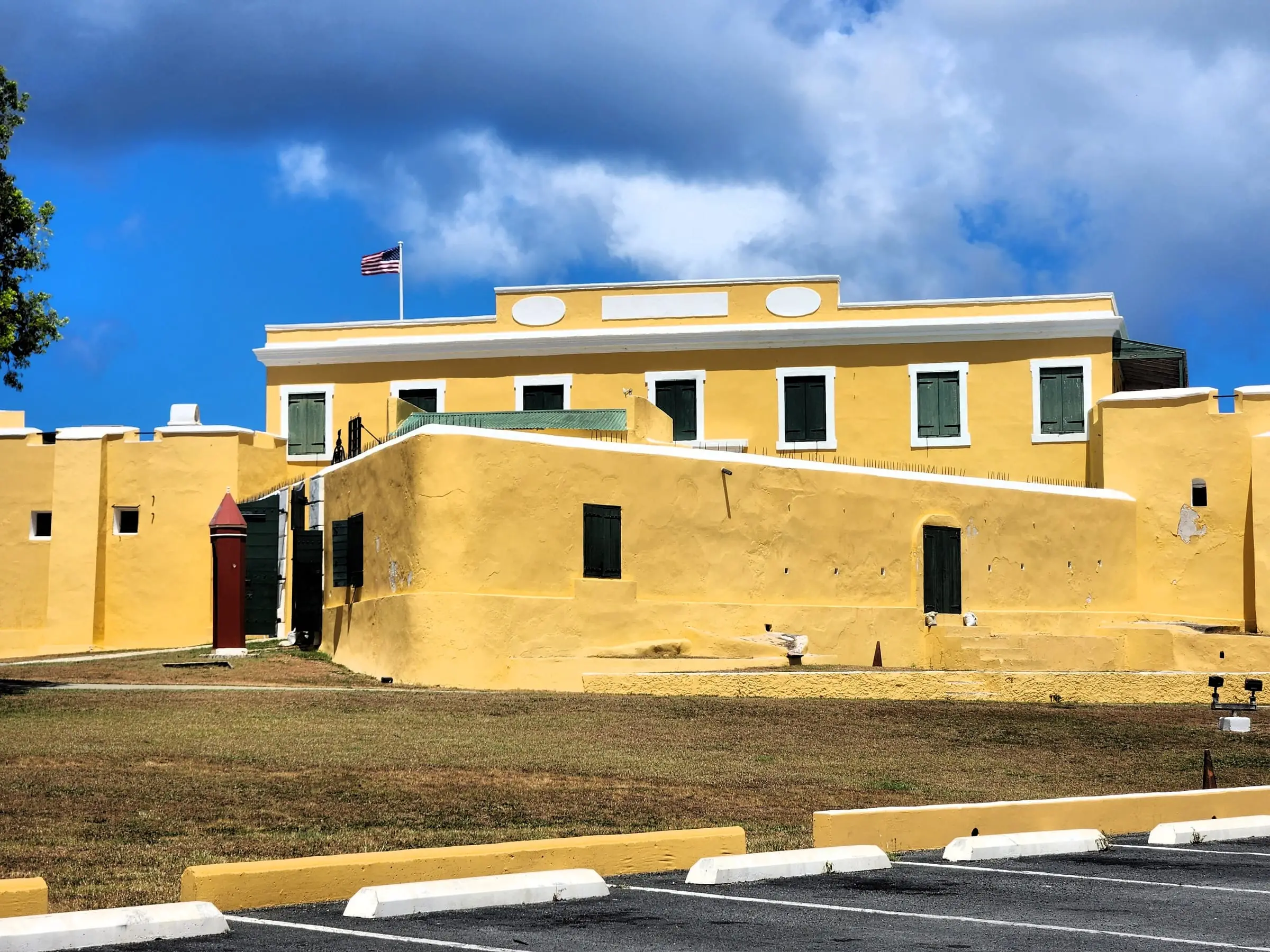
Christiansted National Historic Site was established in 1952 as the first National Park Service unit in the Virgin Islands. It covers more than seven acres and tells the story of the Danish era, from 1734 to 1917. Its buildings include:
- Fort Christiansvaern, completed in 1749, which served as the residence of the colony’s governor and later of the fort’s commandant.
- The Danish West India and Guinea Company Warehouse, from 1749.
- The Steeple Building, from 1753, first known as the Church of Our Lord of Zebaoth. Its steeple tower was built between 1793 and 1796.
- The Scale House, from 1856, and the Customs House.
Estimate as of October 2026. The Park Service lists an entrance fee of $10 for adults 16 and older, with children under 16 free. The fee covers Fort Christiansvaern for three days. Two-hour parking at the fort is available until 4:30 p.m.
The historic district is wider than the park. DPNR’s boundary description for the Christiansted Historic District takes in the National Historic Site and “areas adjacent thereto,” with lines drawn along streets including Lobster, Hospital, New, Princess, East, Western Suburb and West streets, and along the harbor shoreline.
Inside the district, the St. Croix Historic Preservation Committee reviews changes to buildings. Its application covers signs, paint colors, masonry, windows, doors, roofs and porches, as well as air conditioning, solar panels, additions, new construction, significant interior changes and demolition.
The form, last revised in 2013, says applications are due two weeks before the committee’s meeting on the first Friday of each month (unless otherwise announced), and the applicant must attend.
How people live here
A seaplane terminal in Water Gut has daily flights to downtown Charlotte Amalie on St. Thomas, and boats to Buck Island Reef National Monument leave from downtown. The Gallows Bay Marine Facility serves small cargo vessels, ferries and yachts.
VITRAN buses run between Christiansted and Frederiksted, and Henry E. Rohlsen Airport is about six miles southwest of town. Gov. Juan F. Luis Hospital and Medical Center has a Christiansted address, at 4007 Estate Diamond Ruby.
Estimate as of October 2026. In the 2020 Census, 684 of Christiansted town’s 849 occupied homes (81 percent) were rented, and 433 of its 1,282 housing units (34 percent) were vacant. About 73 percent of units reported a public water system and 34 percent a cistern, and 74 percent were on public sewer, well above the island-wide shares of about 42 percent and 40 percent.
Housing you will find
Estimate as of October 2026. In the 2020 Census, 420 of Christiansted town’s 1,282 housing units (33 percent) were detached single-family homes and 100 (8 percent) were attached single-unit homes. More than half, 750 units, were in buildings with two or more units, including 332 in buildings with five to nine units. The median gross rent was $695 a month. Only 165 homes were owner-occupied, so the median value owners reported, $229,545, rests on a small number of homes.
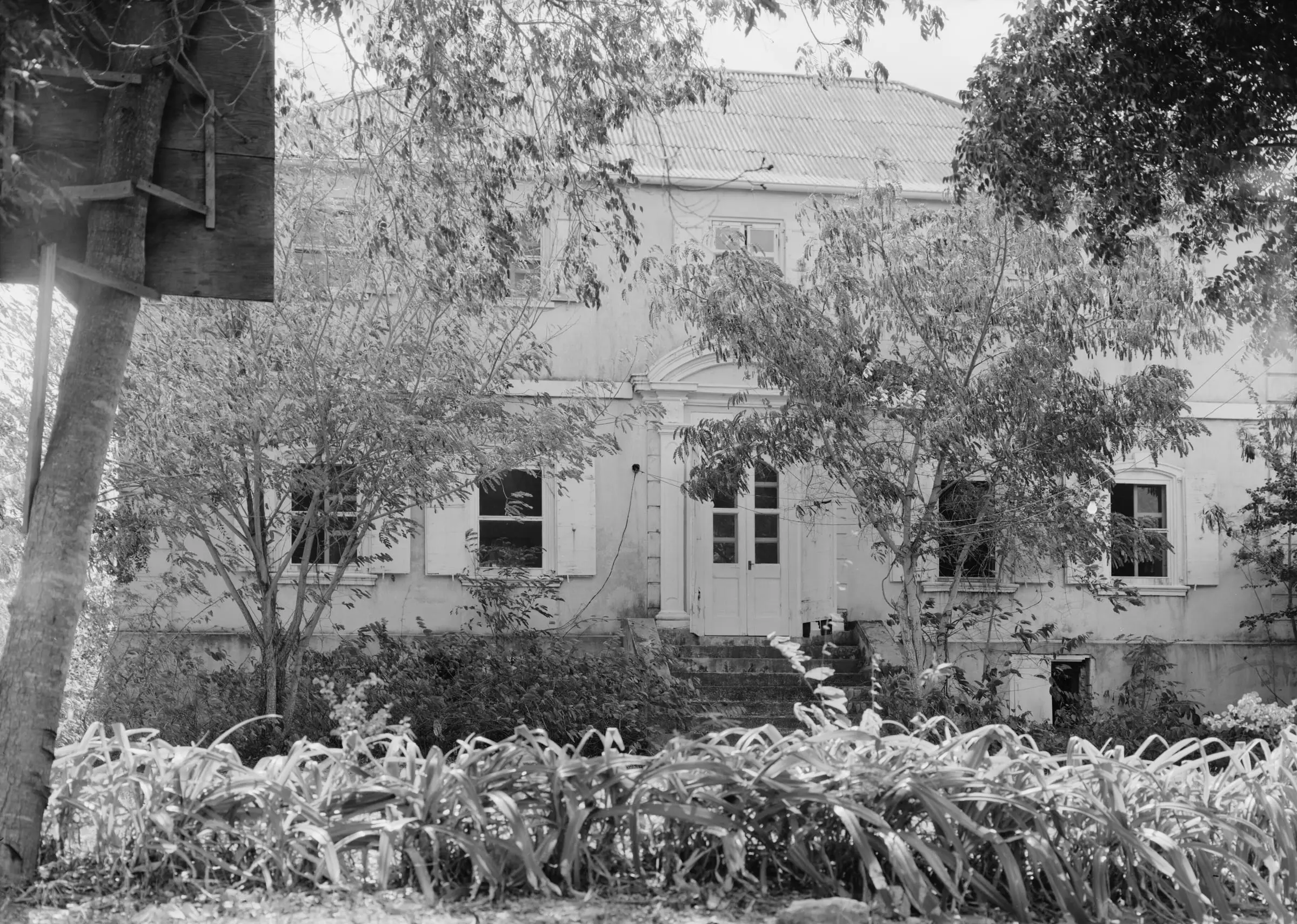
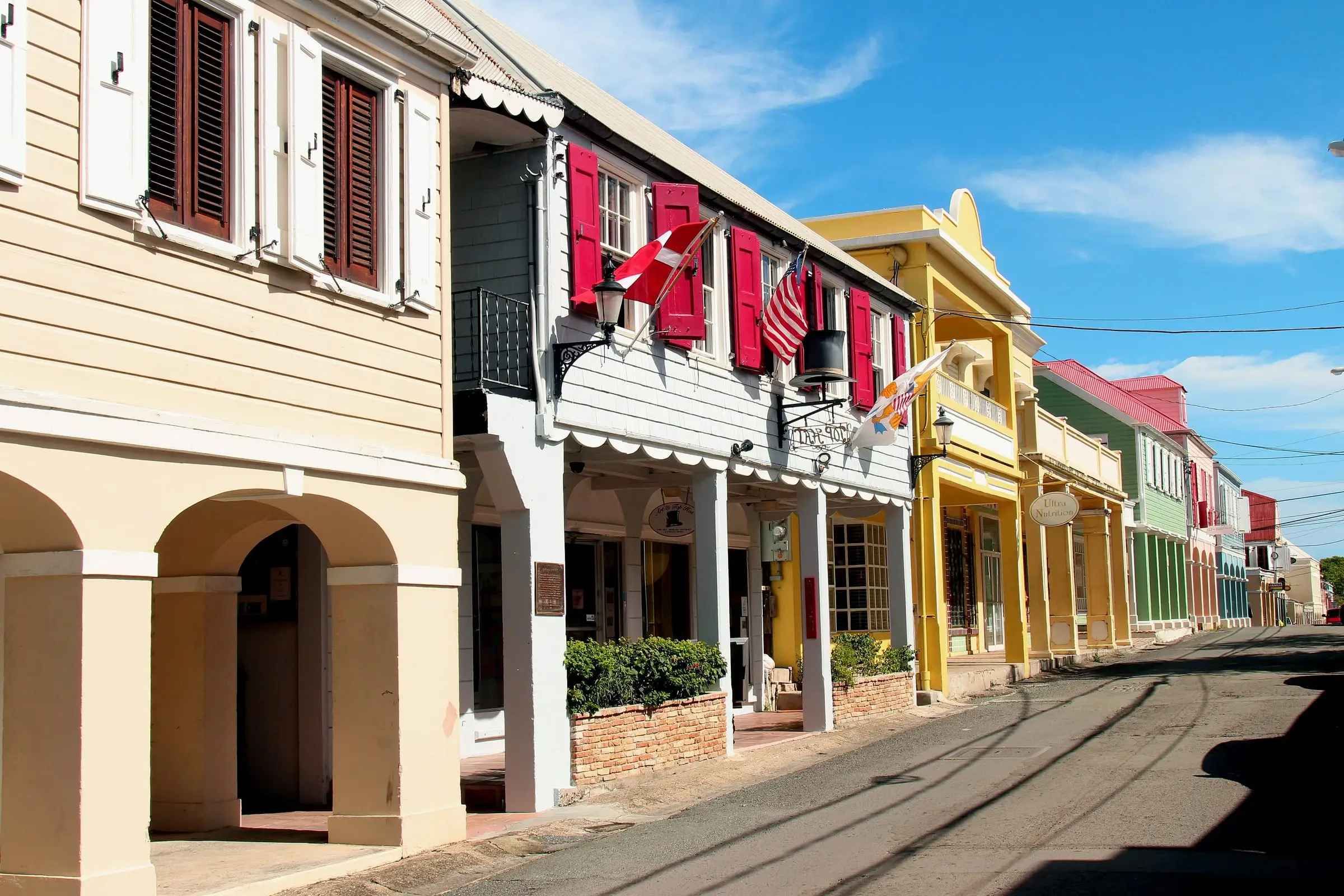
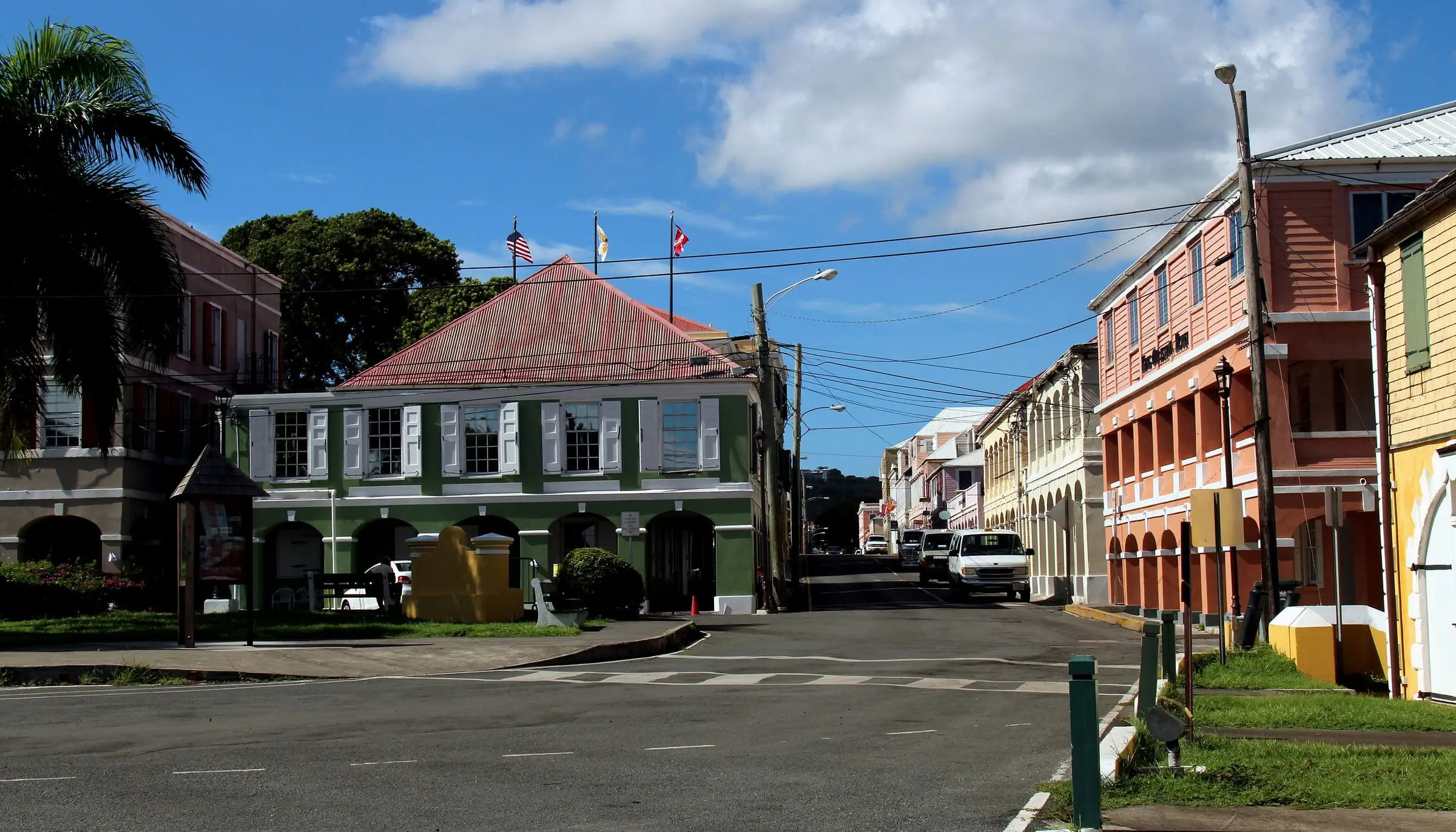
Historic buildings with arched sidewalk galleries, like the ones pictured on this page, line some downtown streets. The Historic Preservation Committee’s application asks whether a building’s use is commercial, residential or combined, and it has a box for a “waiver of off-street parking.” Ask how any building you are considering is zoned and where its occupants park.
For a unit in a building with an association, read the rules, budget and insurance policy, and ask about past storm repairs. Beyond the town, explore the surrounding estates on our estates map.
Before you buy or rent
- Historic district status. Confirm with the State Historic Preservation Office whether the building is inside the district, and get any planned changes approved before work starts. Ask DPNR’s Division of Permits which permits the work also needs.
- Flood and coastal rules. Near the harbor, check FEMA’s Flood Map Service Center and ask DPNR whether the property is in Tier 1 of the coastal zone.
- Water and sewer. Ask whether the building uses the public water system, a cistern or both, and whether it is on public sewer.
- Condition and insurance. For an older building, ask about its storm history and repair permits, and get insurance quotes early. In 2023 the Division of Banking, Insurance and Financial Regulation warned that wooden or mixed-frame buildings may face non-renewal.
- Records and taxes. Search recorded documents through the Recorder of Deeds and check the tax bill with the Tax Assessor and Tax Collector.
- For renters. Ask which utilities you will pay, how the home is protected in storms and what happens to the lease if a storm makes it unlivable.
For the full process, read our St. Croix buyer’s guide or our renting resources. A real estate attorney can review title and contracts.